Why Turntables Require Specialised Audio Cables
The signal generated by a phono cartridge is extremely small compared with typical line-level audio signals. For this reason, turntable cables must protect the signal from noise before it reaches the phono preamp where amplification and equalisation take place.
High-quality turntable cables typically include:
- low-capacitance conductors to preserve cartridge signal accuracy
- heavy shielding to reduce electrical interference
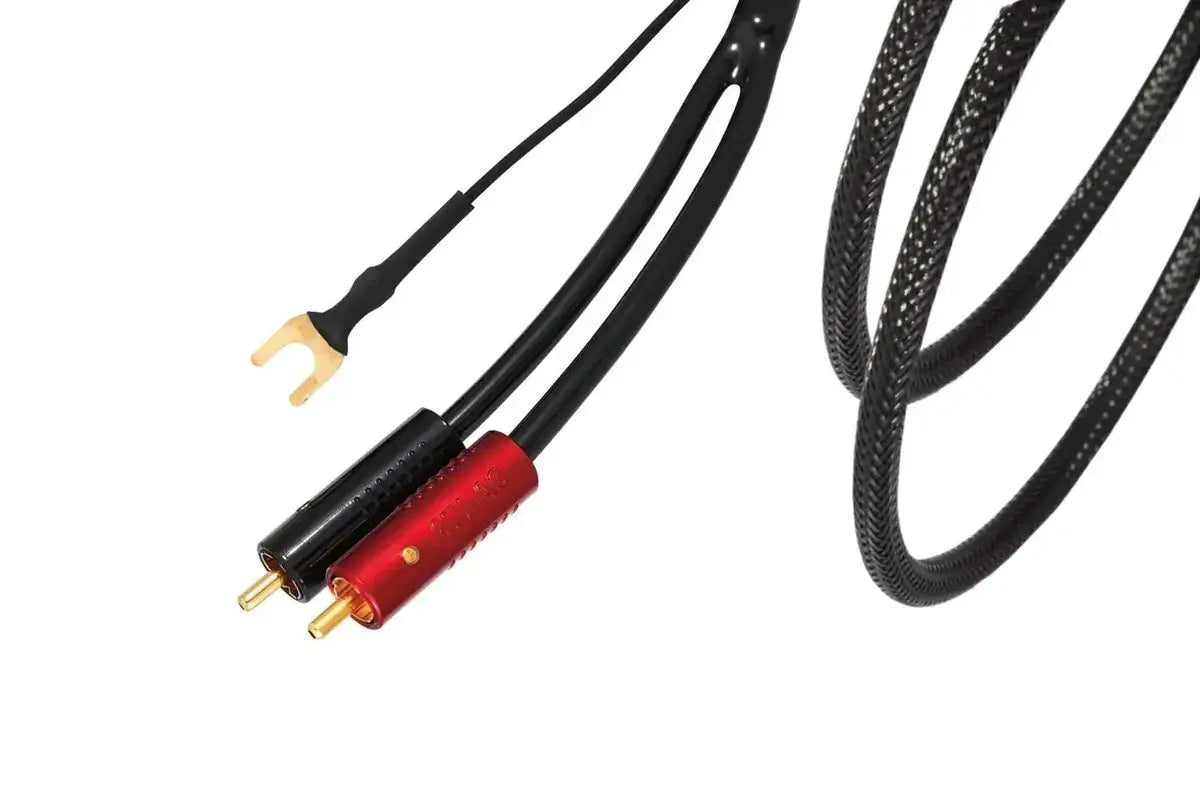
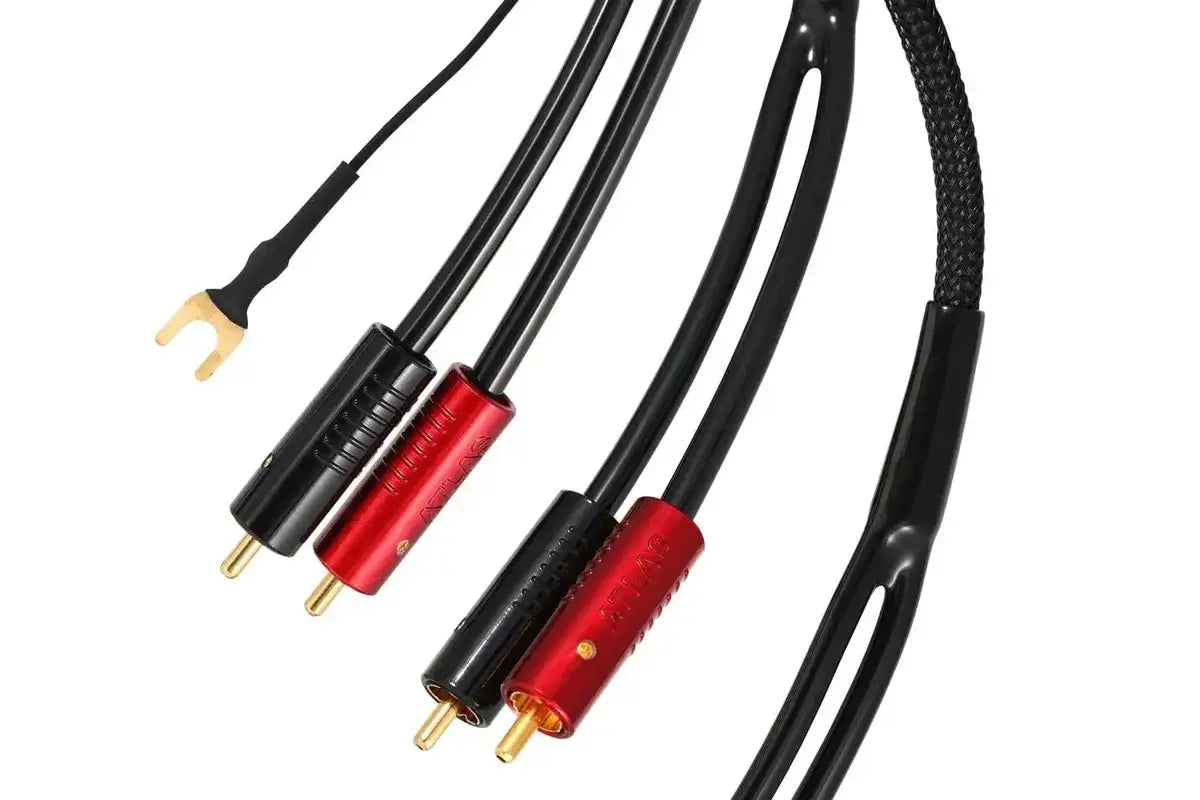
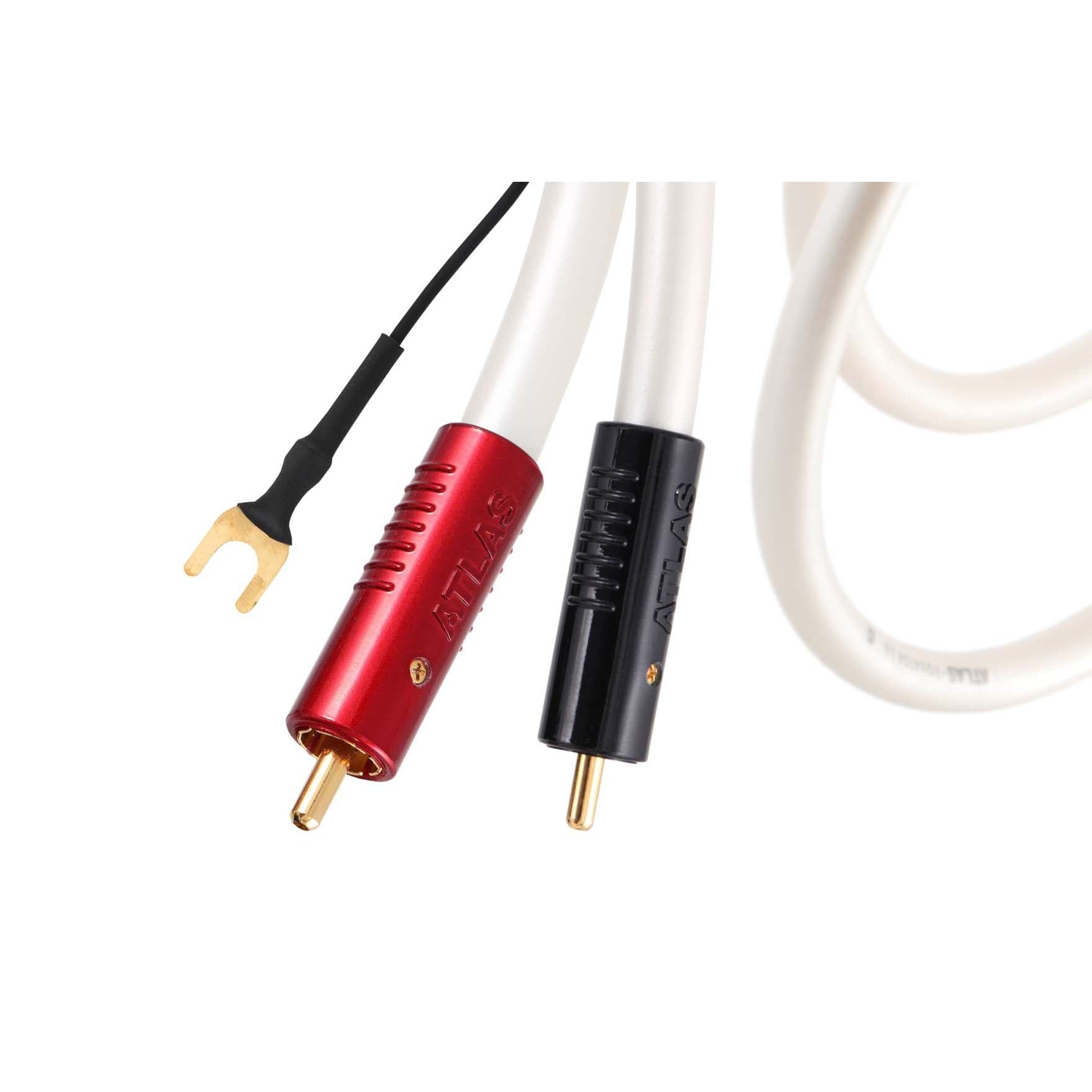
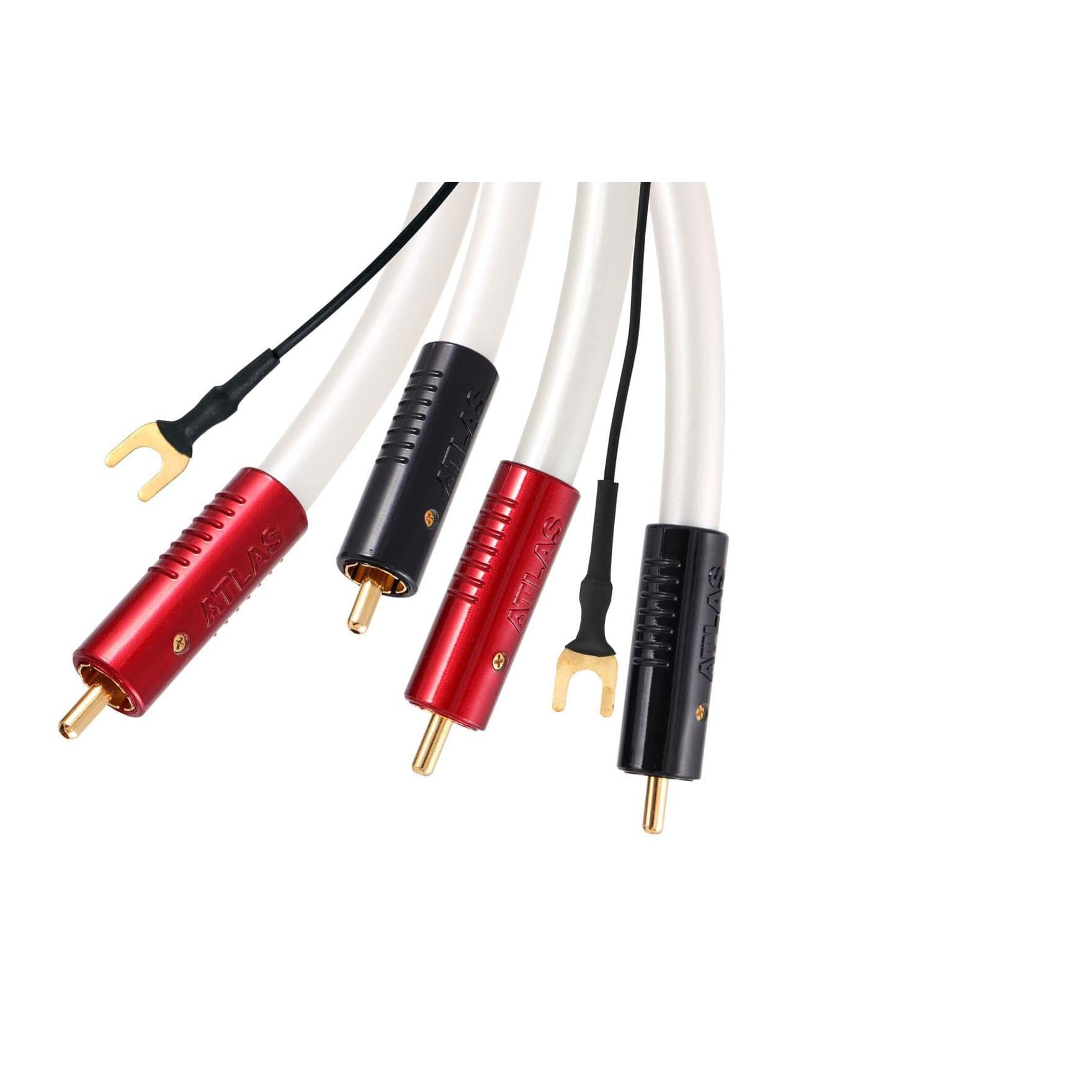
- RCA phono connectors for secure signal transfer
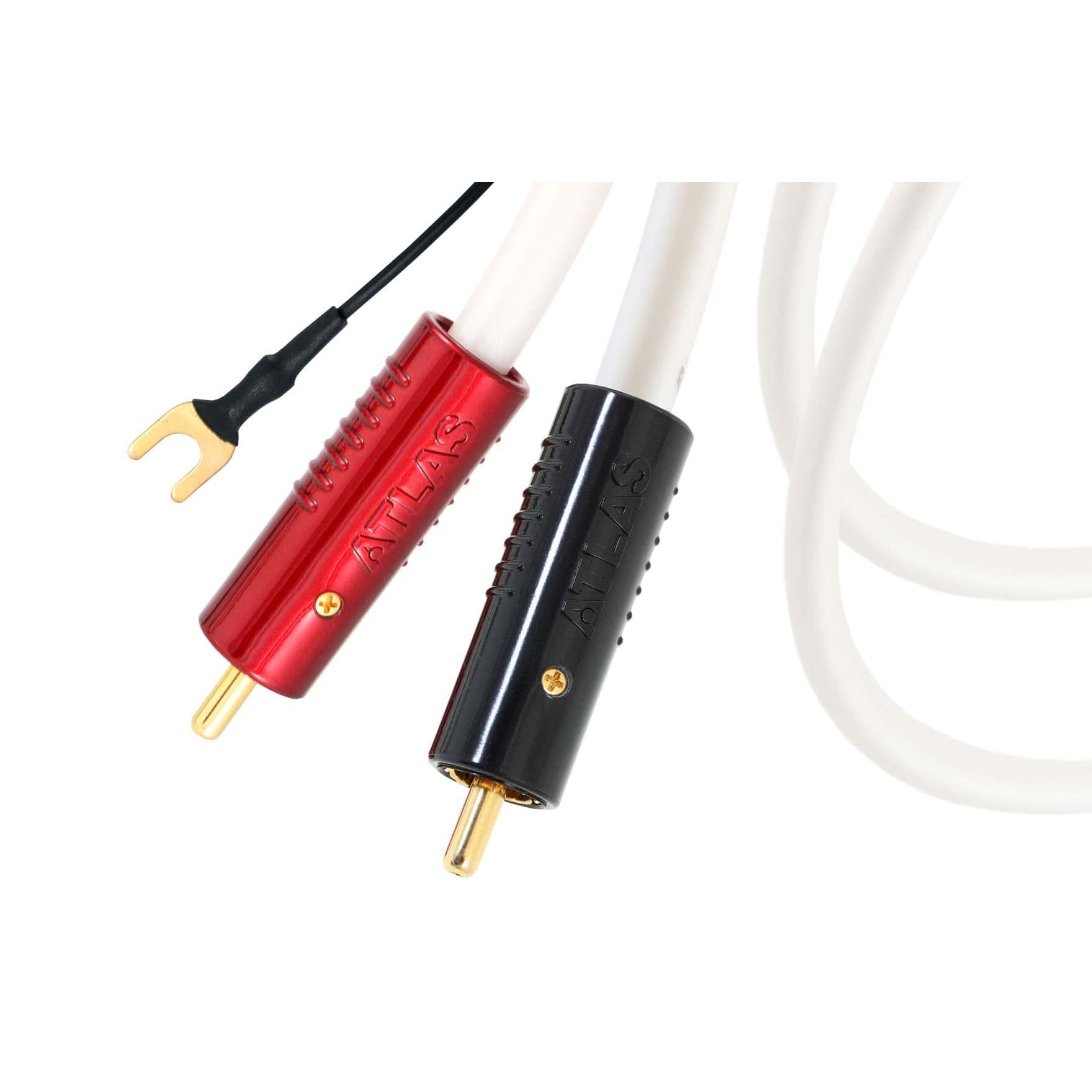
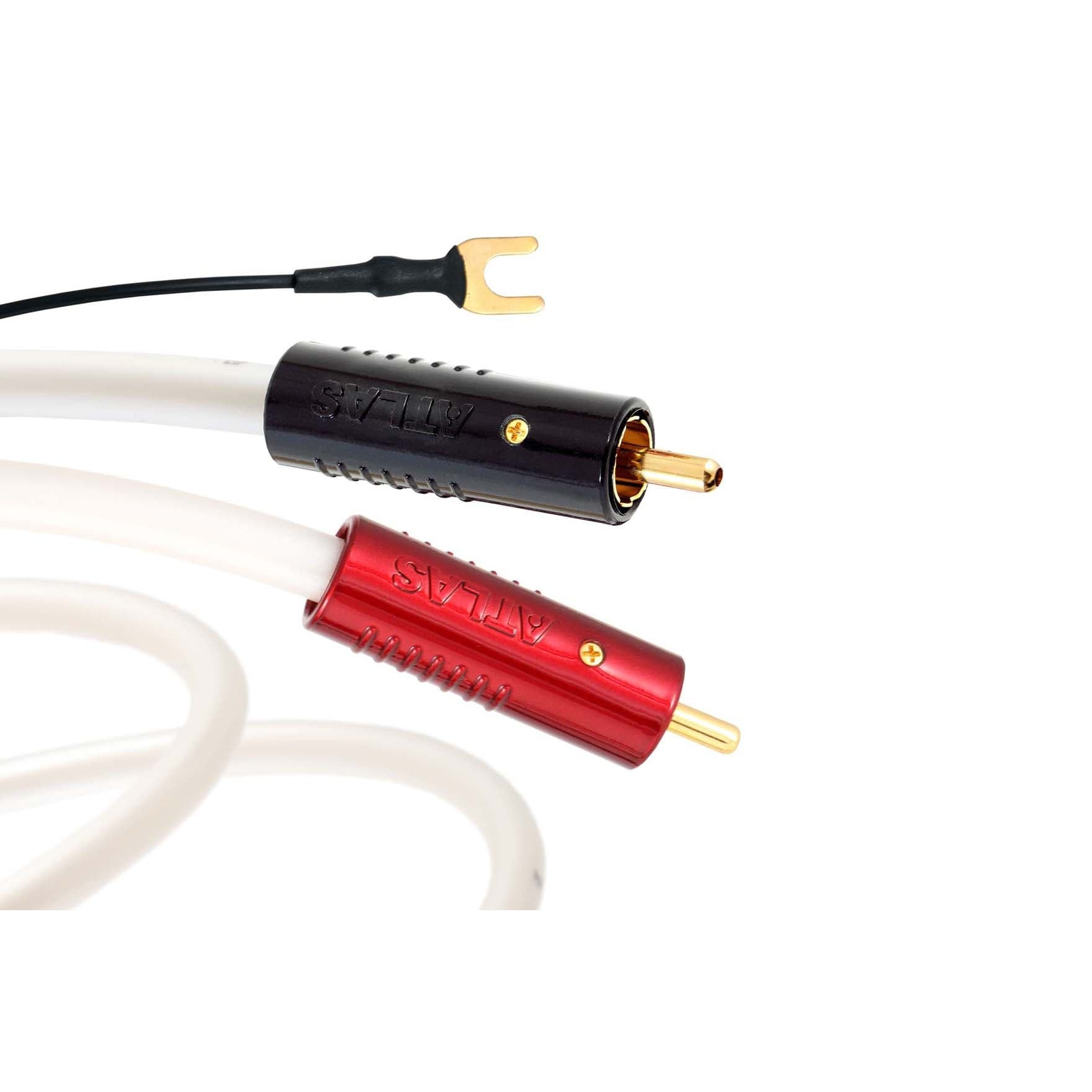
- a dedicated ground wire to prevent hum and ground loops
These design features help ensure the signal travelling from the cartridge to the phono stage remains stable and free from unwanted noise.
RCA Phono Cables for Turntables
Most turntables use RCA phono cables to connect to a phono preamplifier or to an amplifier with a built-in phono stage. These cables carry the left and right channel signals while a separate grounding wire connects the turntable chassis to the amplifier or phono preamp.
Although RCA connectors are widely used across hi-fi equipment, not all RCA cables are suitable for turntable use. Standard line-level RCA interconnects may lack the shielding and grounding required for phono signals, which makes dedicated turntable cables the preferred option for vinyl playback systems.
The Turntable Signal Path
In a typical vinyl playback system, the signal chain follows this path:
Turntable → phono cable → phono preamplifier → amplifier → speakers
The phono stage boosts the very small cartridge signal to line level and applies the RIAA equalisation required for accurate playback. Because the signal is most vulnerable to noise before this amplification stage, the cable connecting the turntable to the phono preamp plays a critical role in maintaining sound quality.
Turntable Interconnect Cables for Vinyl Playback
The Groove Man offers carefully selected turntable interconnect cables designed specifically for vinyl playback systems. Our range includes high-quality phono cables from Atlas Cables, engineered with low-capacitance conductors and effective shielding to protect sensitive cartridge signals.
Whether you are upgrading the connection between your turntable and phono preamp or building a dedicated vinyl listening system, high-quality turntable cables help preserve the accuracy and clarity of the analogue signal from cartridge to amplifier.