Choosing the Right Valve Amplifier
A handful of questions do most of the work before you look at a single spec sheet:
- Start with your speakers. Their sensitivity and impedance narrow the field faster than anything else.
- What's the room like? A larger room asks more of an amplifier's output power than a nearfield setup does.
- Integrated, or building a separates system? That decides whether you're choosing one box or two.
- What's feeding it? A turntable, streamer or DAC all place slightly different demands on the front end.
The first thing we ask is what speakers someone's using. How easily they're driven says more about which amplifier makes sense than anything else in the range.
Most customers assume the answer is more power. Often what actually improves the system is a better match between the amplifier they're considering and the speakers they already own.
What We Ask Before Recommending a Valve Amplifier
- What speakers are you pairing it with, and what's their sensitivity?
- What's the impedance, and does it stay stable across the frequency range?
- Are you after an integrated amplifier, or a power amp for a separates system?
- What's your source: turntable, streamer, DAC, or a mix?
- Is this a first valve amplifier, or an upgrade from something you already have?
Once you know how easily your speakers are driven and what load they present, the shortlist usually becomes much smaller. Circuit topology and tube type are refinements after that, not the starting point.
Matching a Valve Amplifier to Your Speakers
This is the decision that shapes almost everything else. High-sensitivity speakers can be driven well by lower-power designs, including single-ended triode (SET) amplifiers, which use one output device per channel and are commonly paired with sensitive loudspeakers. Less sensitive speakers, or those with a more demanding impedance curve, generally need the higher output and broader load tolerance of a push-pull design, which uses pairs of output tubes to deliver more power and handle a wider range of speaker loads.
Check how easily your speakers are driven, and what load they present across the frequency range, before shortlisting a model. It matters more here than in most other amplifier categories, since valve designs vary more widely in how comfortably they drive a difficult load than solid-state amplifiers typically do.
Integrated vs Power Amplifier
An integrated amplifier combines input selection, volume control and power amplification in one chassis, the simpler option if you don't already have a preamplifier and don't plan to build a modular system.
A power amplifier needs a separate preamp to handle source switching and volume, and is the right call if you're building a separates system, want the flexibility to change preamp and power stages independently, or are already committed to a preamp you like.
If you're not sure which you need, start with whether you already own a preamplifier. If you do, a power amp keeps using it. If you don't, an integrated amplifier is one less decision and one less box.
Valve Amplifiers for Turntables
For a turntable-based system, the signal usually runs turntable → phono stage or phono-equipped preamp → valve amplifier → speakers. Because a phono signal is already a relatively low-level source, the same speaker-matching principles apply just as much here as with any other source, it's still the speakers at the other end that decide what the amplifier needs to deliver.
If your system is built around vinyl, start with matching the amplifier to your speakers rather than the turntable. The turntable itself rarely determines which valve amplifier suits you, the speaker load does.
Your First Valve Amplifier
If this is a first valve amplifier, the goal is usually to get into the format without overcommitting before you know what you like about it. An entry-level integrated amplifier, paired with speakers that are reasonably easy to drive, is the standard starting point, and it leaves room to move toward a separates system or a higher-power design later if you find you want more.
SET vs Push-Pull: Which Suits You?
Single-ended triode designs are prized for their simplicity and their pairing with high-sensitivity speakers, but they generally produce less output power than a push-pull design built around the same tube complement. Push-pull circuits trade some of that single-ended character for higher power and the ability to comfortably drive a wider range of speaker loads.
Neither is a better amplifier in the abstract, it's a question of what your speakers need and what you're prioritising. Class A operation, where the output device conducts through the entire signal cycle, appears in some designs across both circuit types and is generally chosen for its linearity rather than for output power, so it's worth checking separately from the SET-versus-push-pull decision rather than assuming the two always go together.
Where We'd Start
First valve amplifier, sensitive speakers: the entry-level integrated range is built for exactly this, without asking you to commit to a separates system before you're sure you want one.
Ready to move up without building a separates system yet: the mid-range integrated models give more power and refinement while staying in a single box.
Building a reference-level system, or already running separates: the reference integrated models and monobloc power amplifiers are where that conversation goes, and choosing between them comes down to whether you want one box or a dedicated power amp per channel.
Why We'd Recommend Each Amplifier
(Grouped by tier so it's easier to compare similar amplifiers. Pricing appears on the product cards.)
Entry Integrated
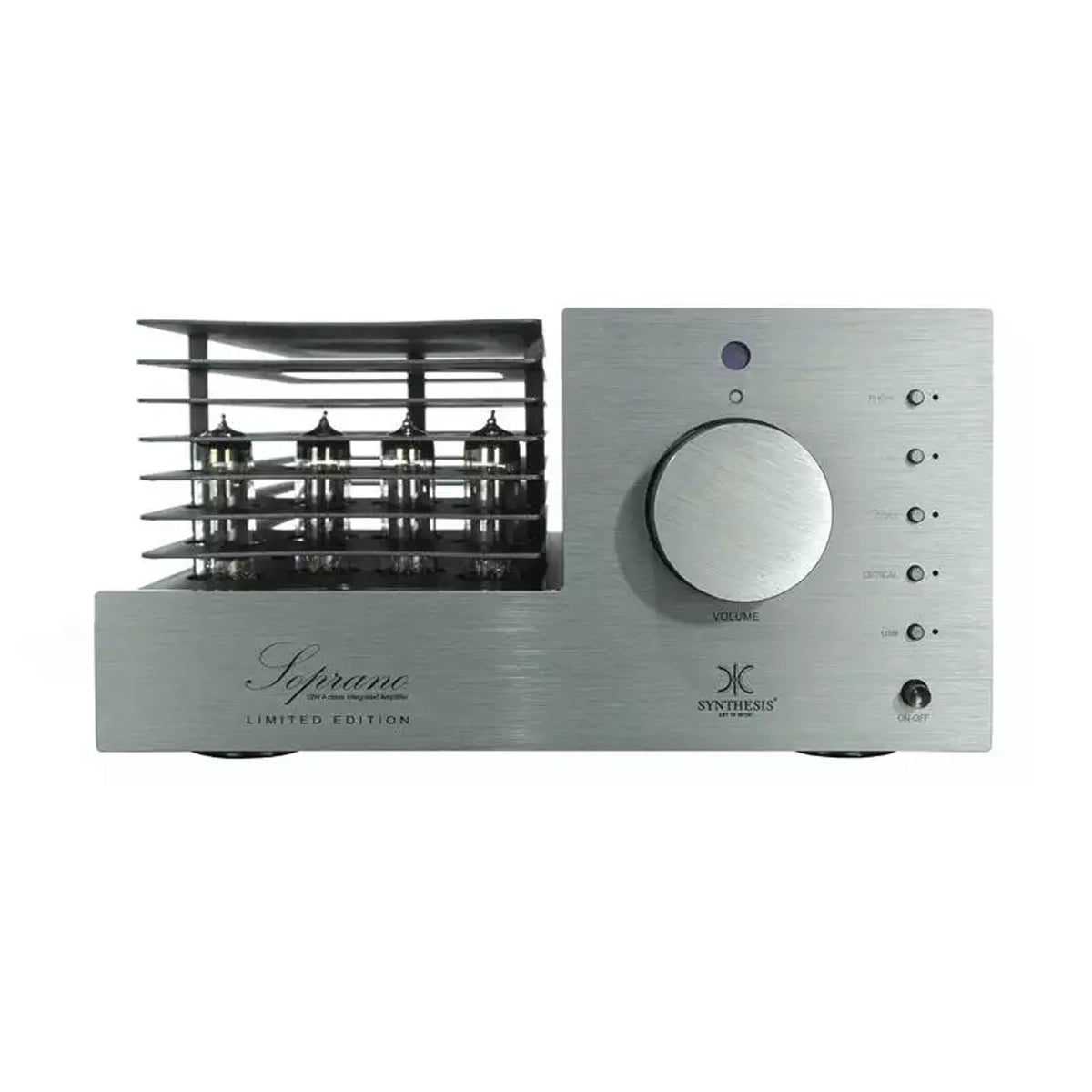
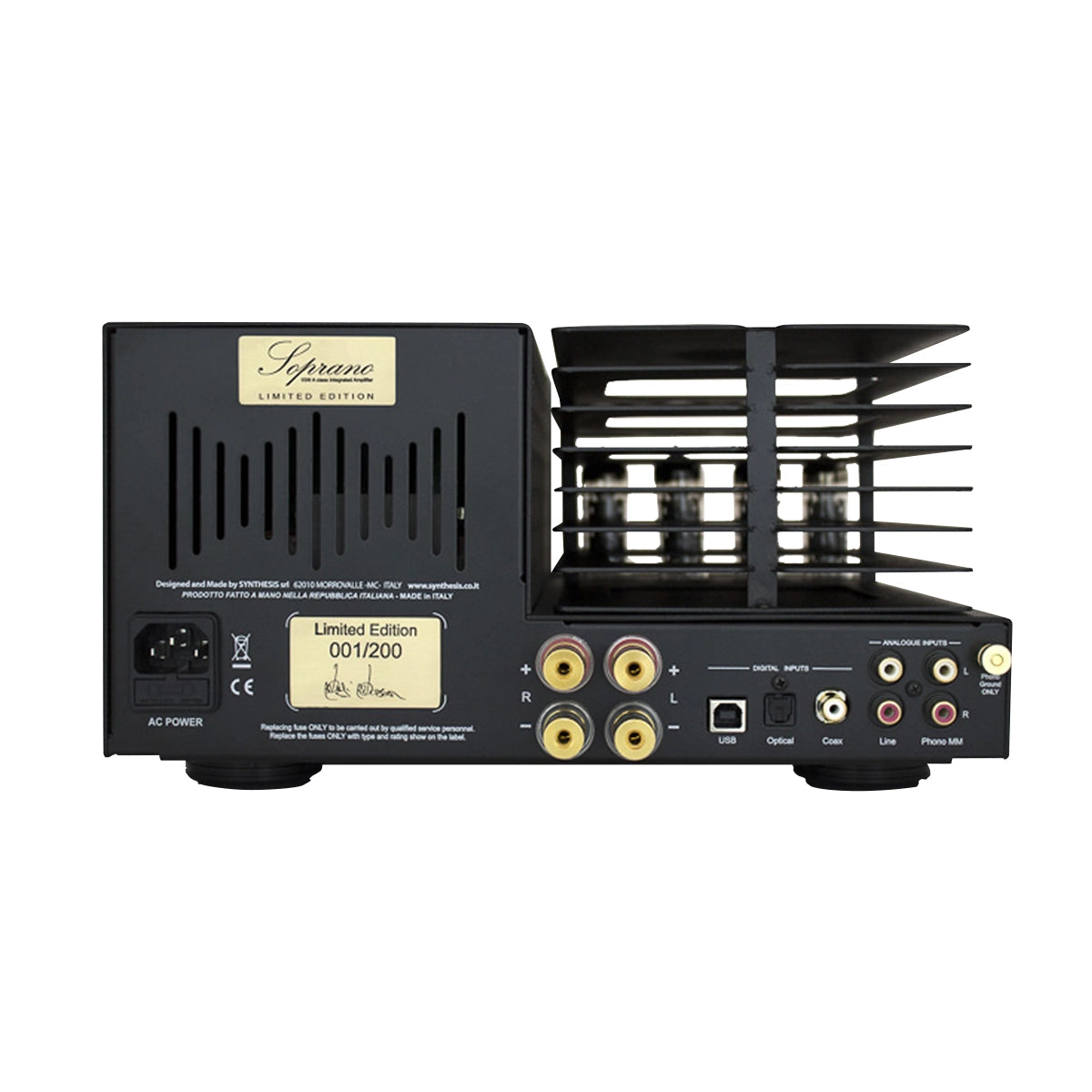
Synthesis Soprano Valve Integrated Amplifier The most accessible integrated amplifier in this range, suited to a first valve amplifier or a secondary system where simplicity matters more than outright power.
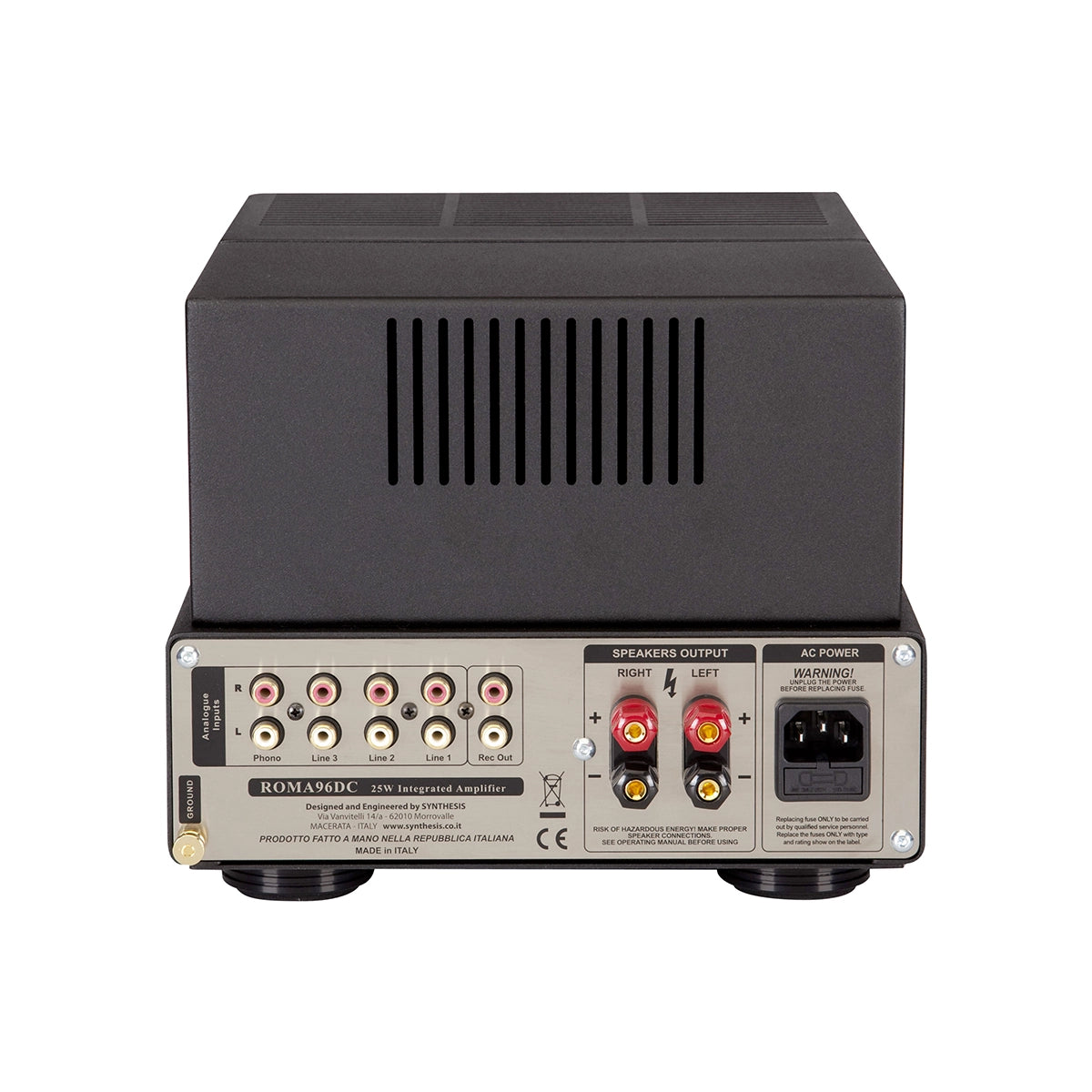
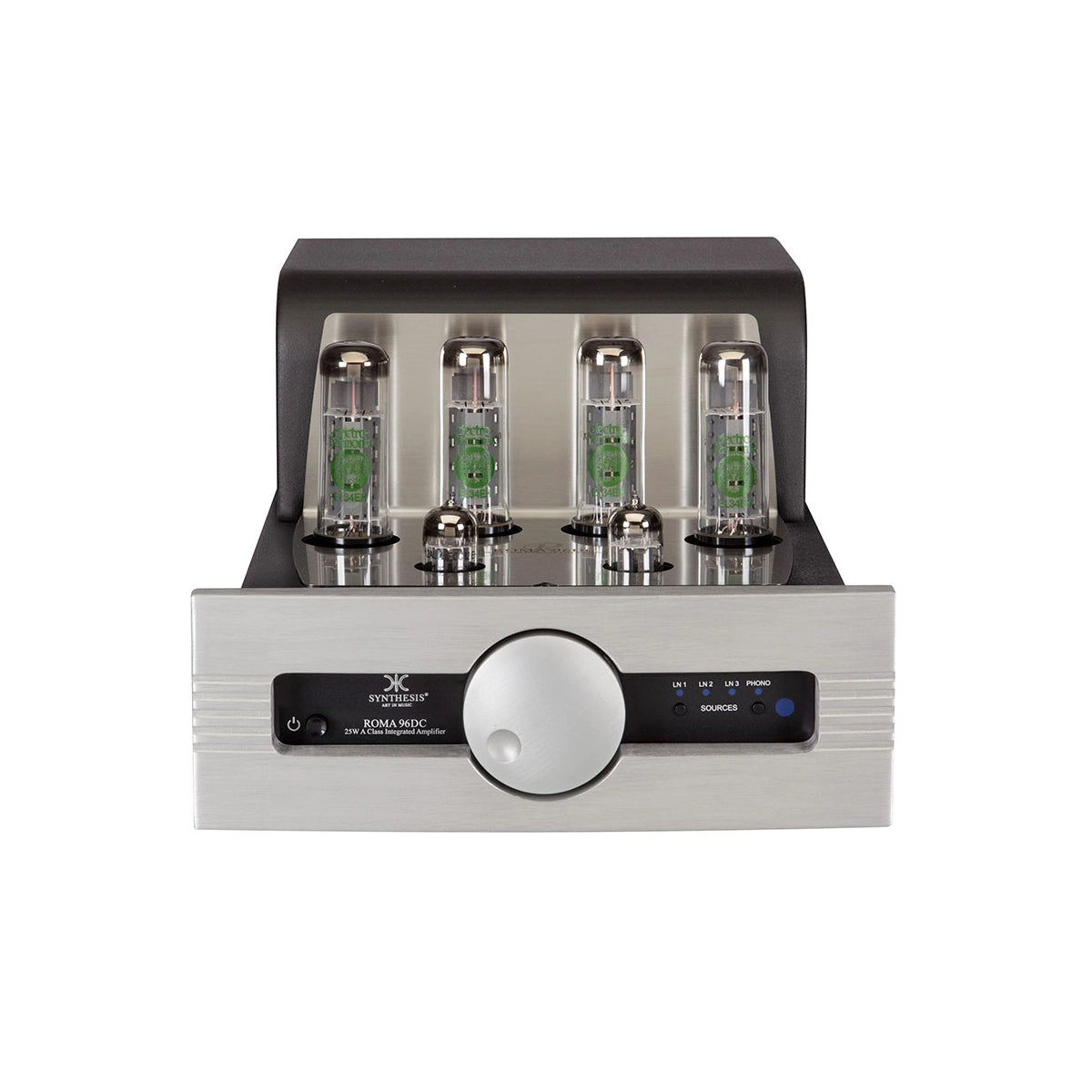
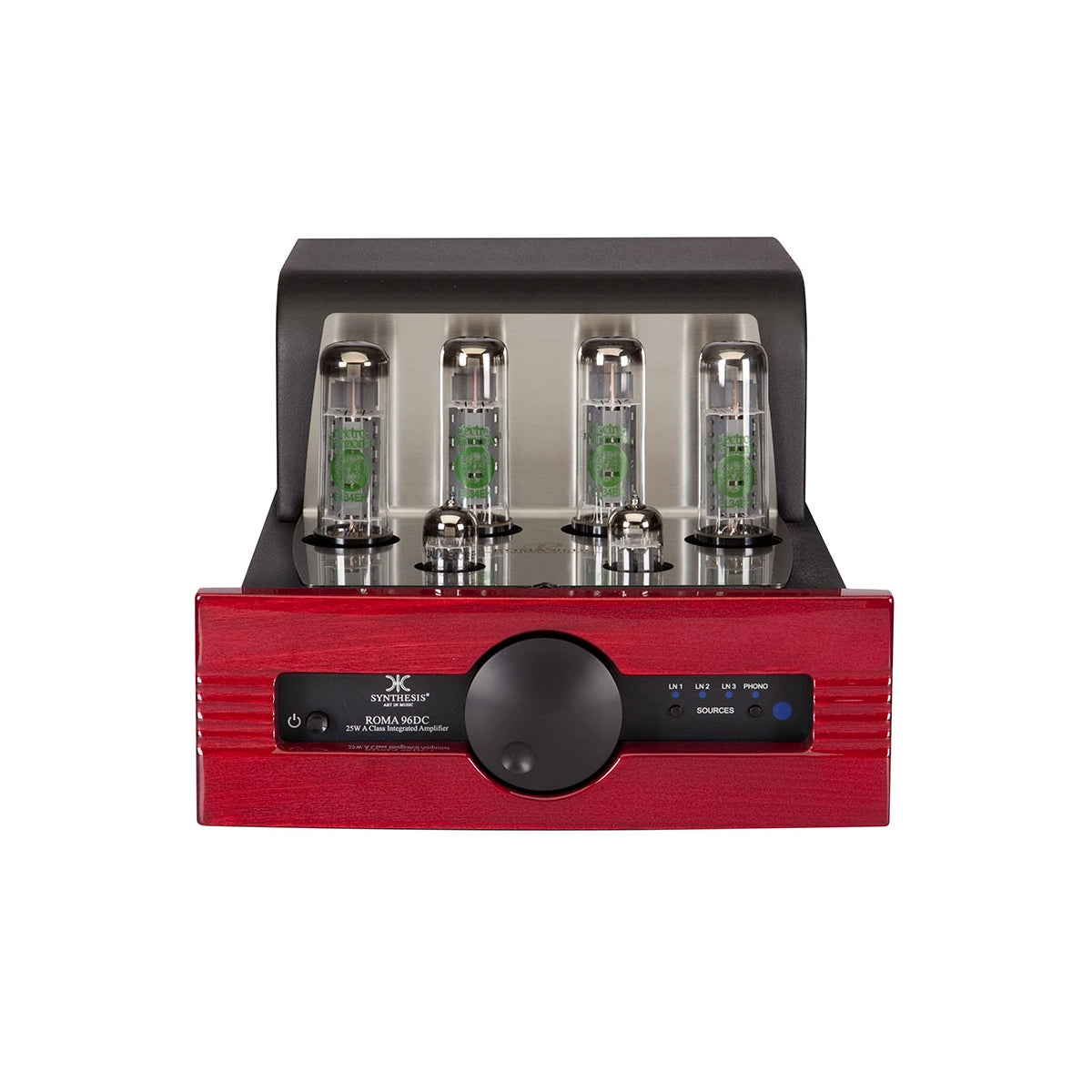
Synthesis Roma 96DC Valve Integrated Amplifier Sits alongside the Soprano as an entry point into the Roma line specifically, a different product family within Synthesis rather than a step up or down from it. See the full spec sheet on the product page if you're deciding between Synthesis's two entry-level lines.
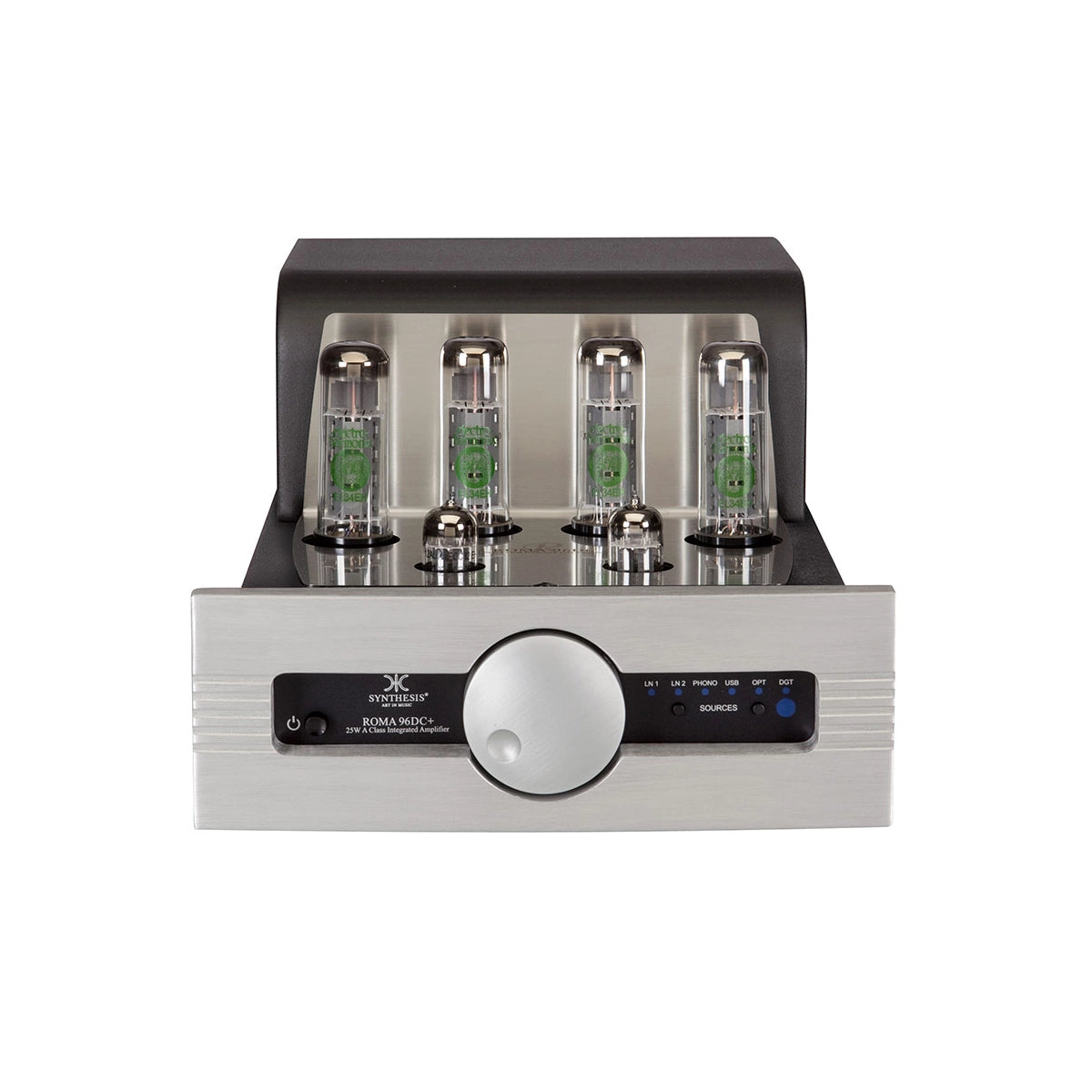
Synthesis Roma 96DC+ Valve Integrated Amplifier The updated version of the 96DC, built on the same platform. The product page has the current spec sheet for exactly what's changed between the two, since that's the detail that actually decides between them.
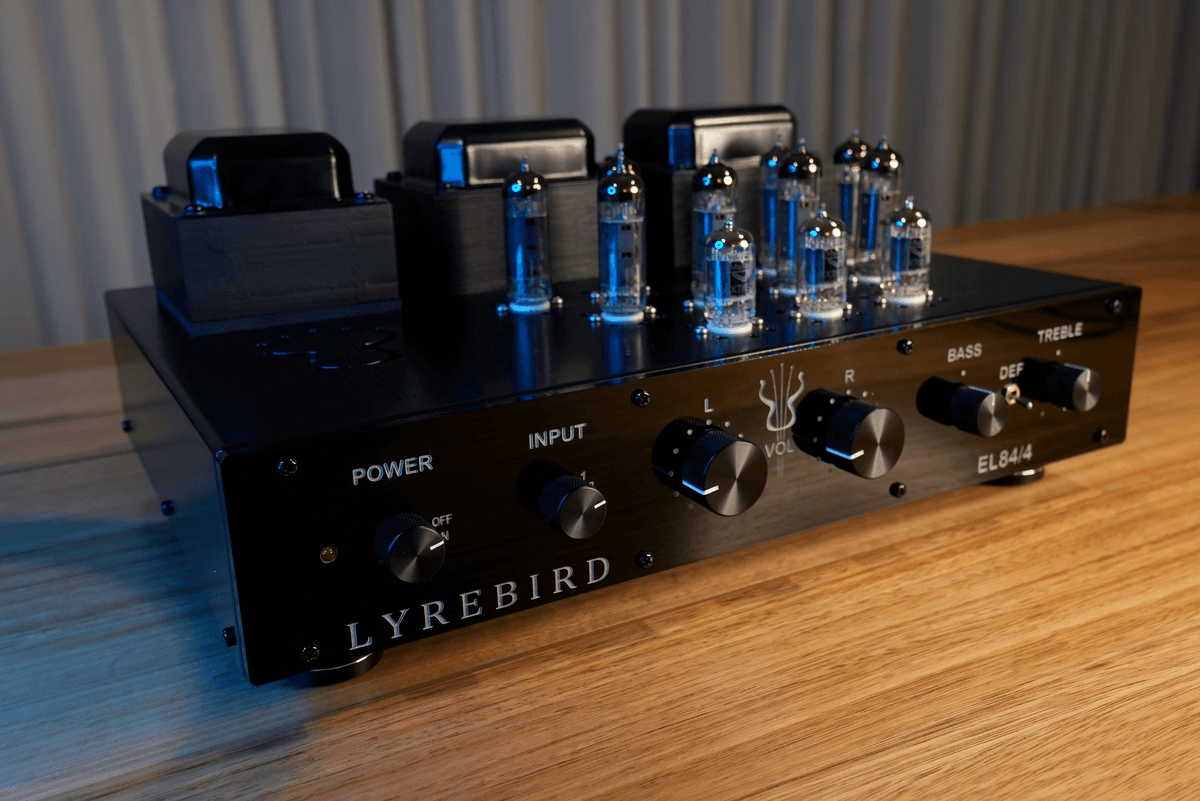
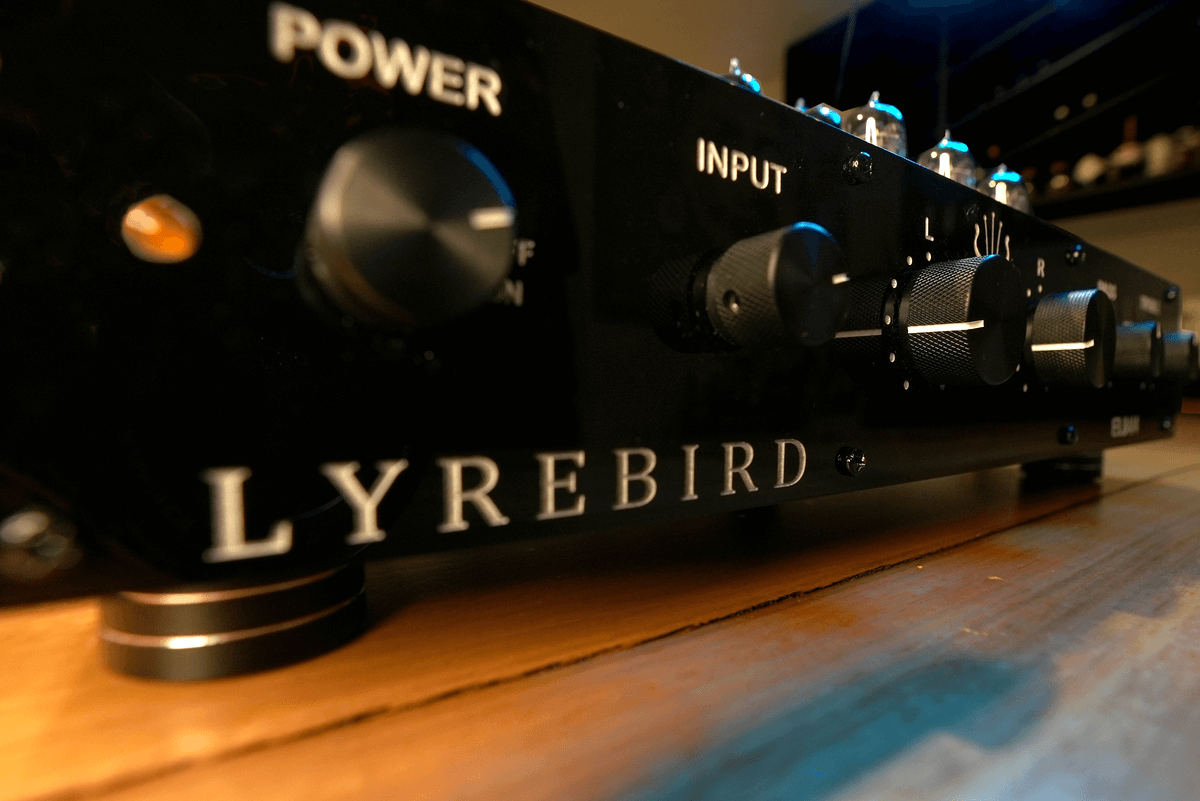
Lyrebird EL84/4 Integrated Tube Amplifier Built around EL84 output tubes rather than the Synthesis house designs, so it's a genuinely different voicing to audition against the Roma entry models, not just a different price point.
Mid-Range Integrated
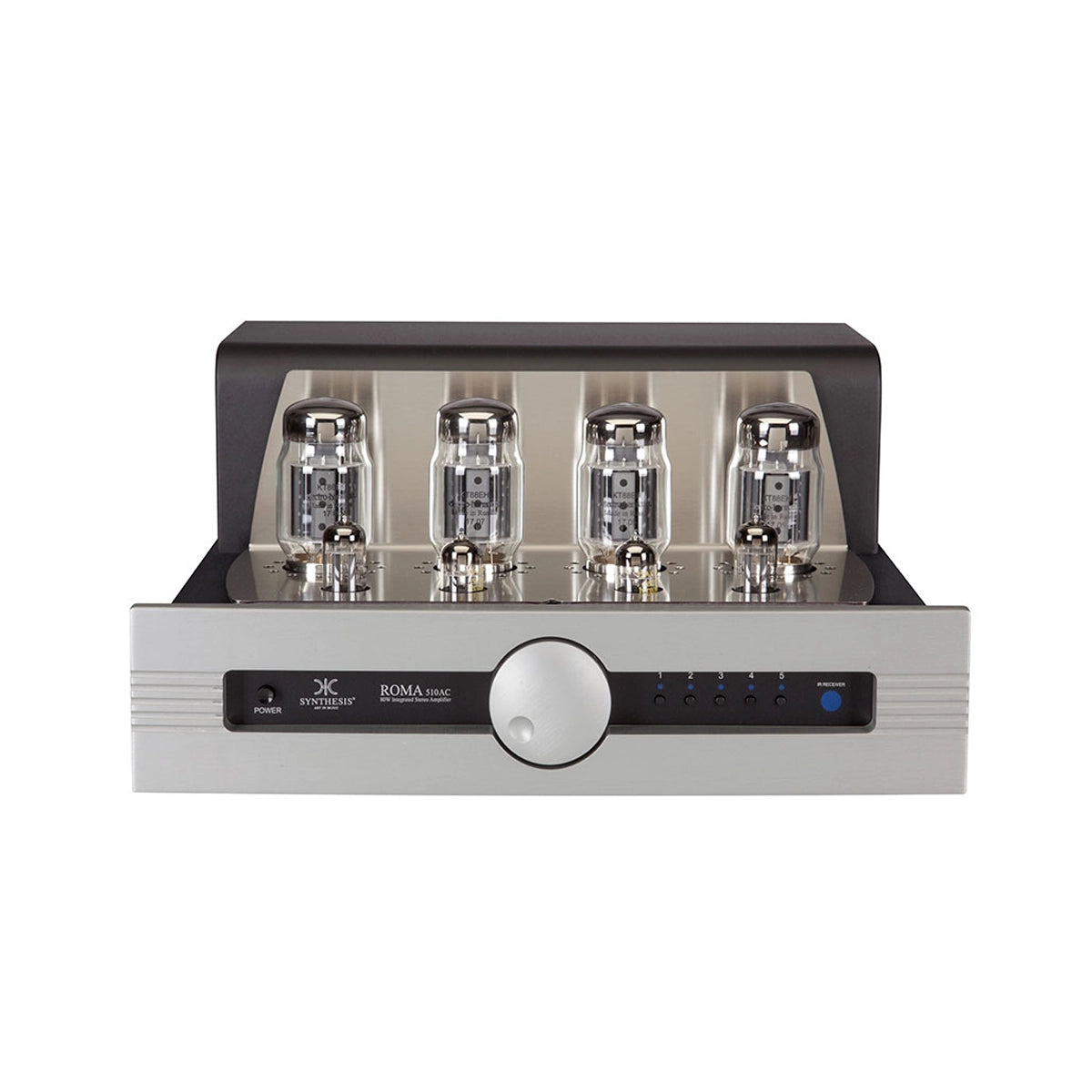
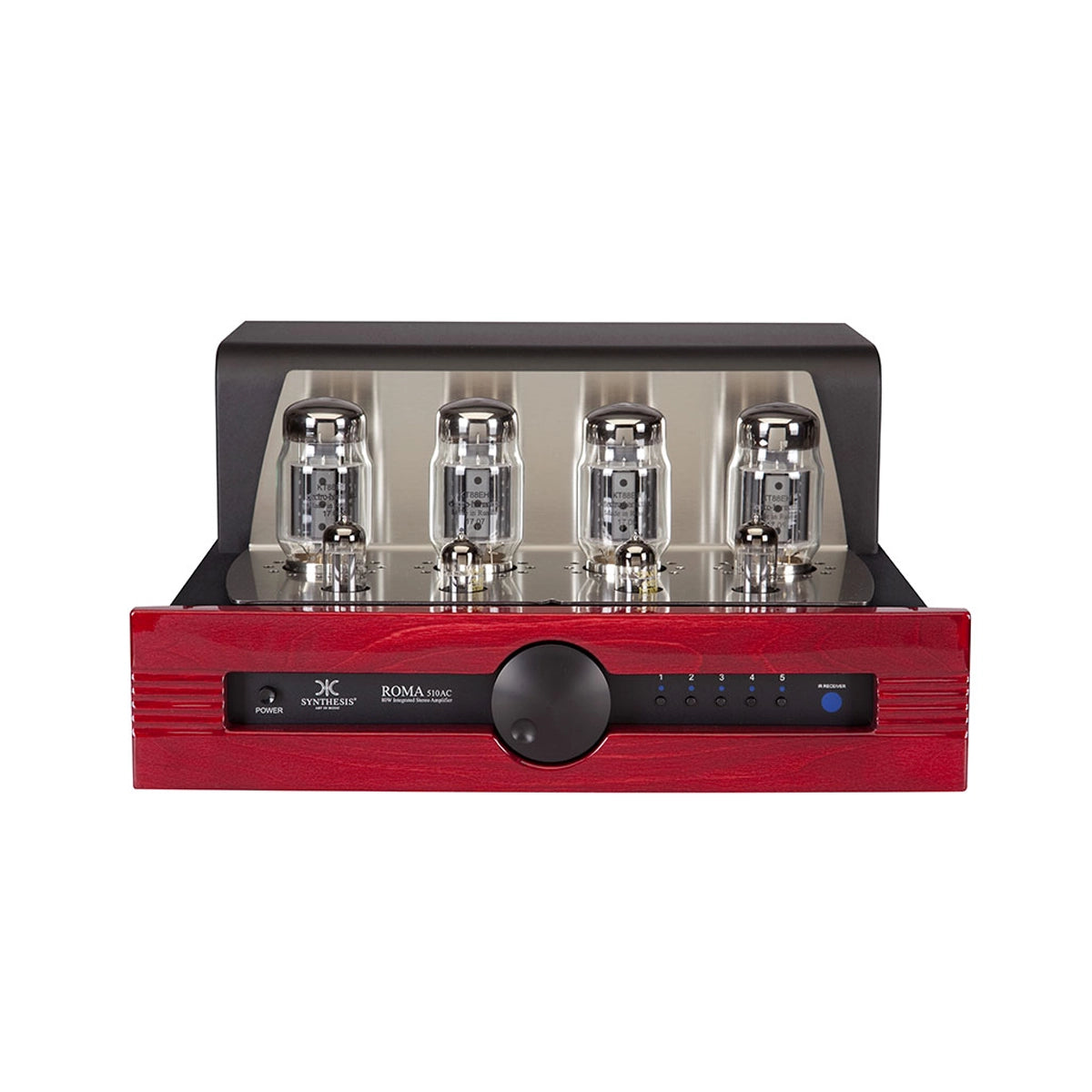
Synthesis Roma 510AC Valve Integrated Amplifier A step up from the entry Roma models for a customer who wants more headroom while staying with the same product family and its established character.
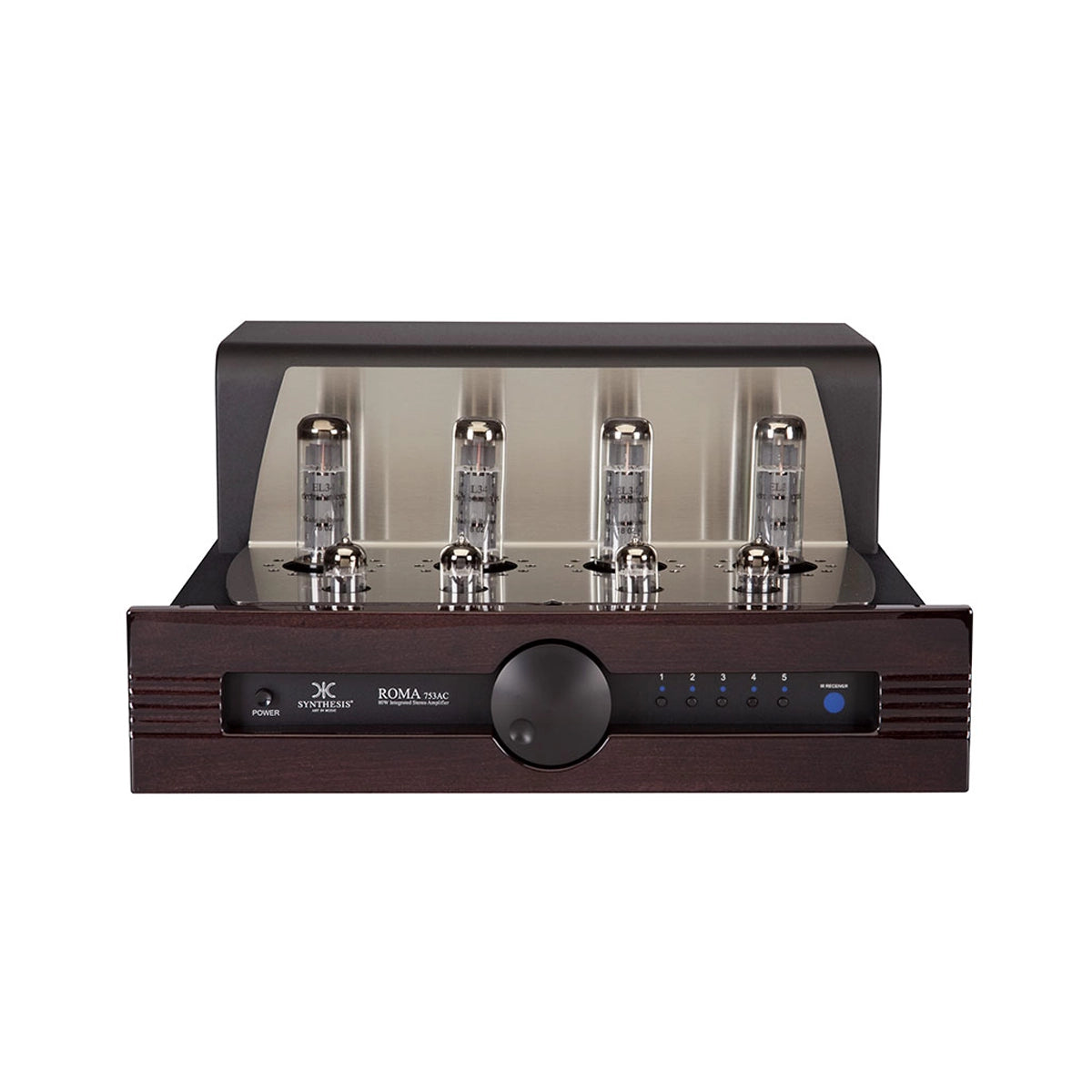
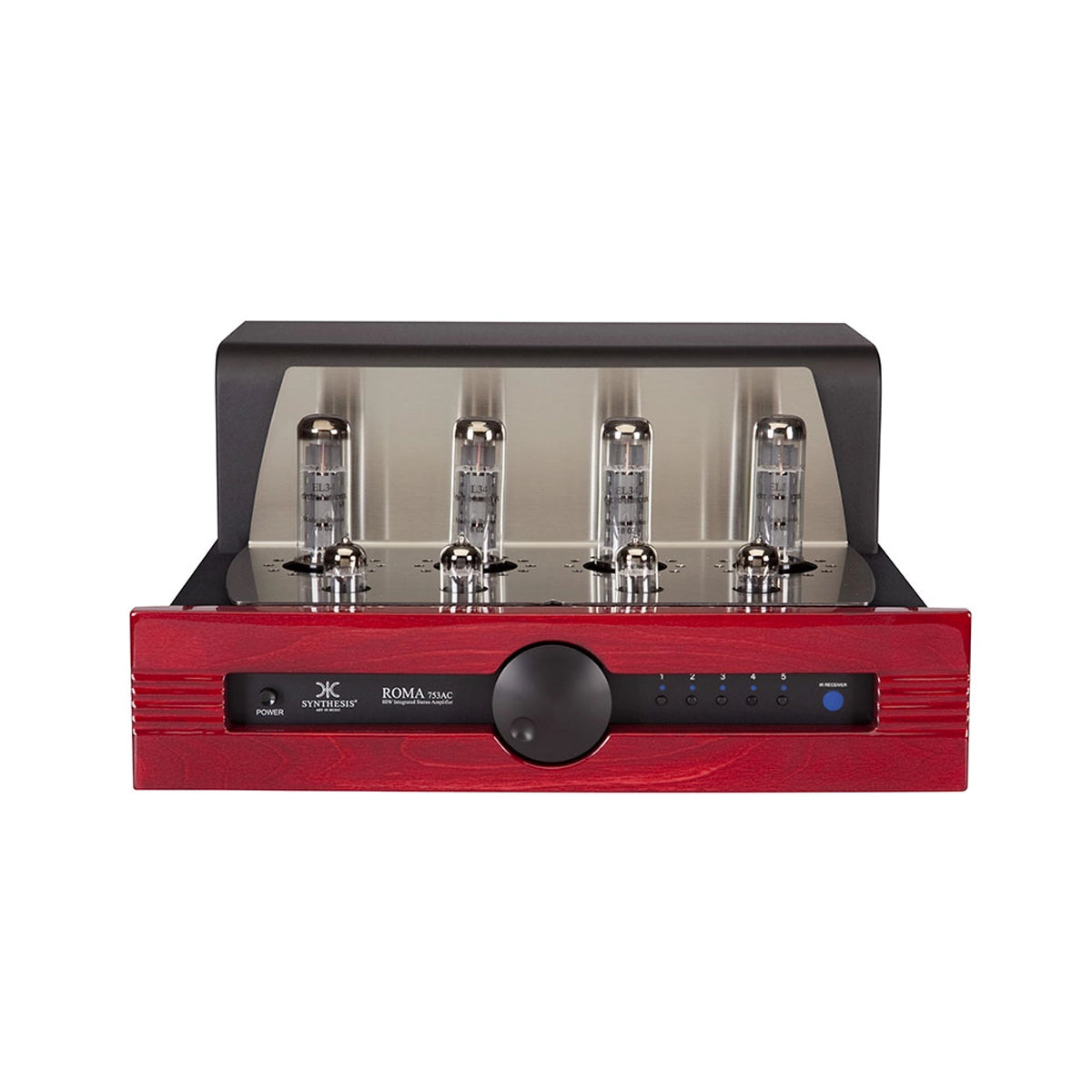
Synthesis Roma 753AC Valve Integrated Amplifier The other mid-tier model in the Roma integrated line alongside the 510AC. The two are close enough in position that the product pages, with full specifications, are the right place to decide between them rather than a general description here.
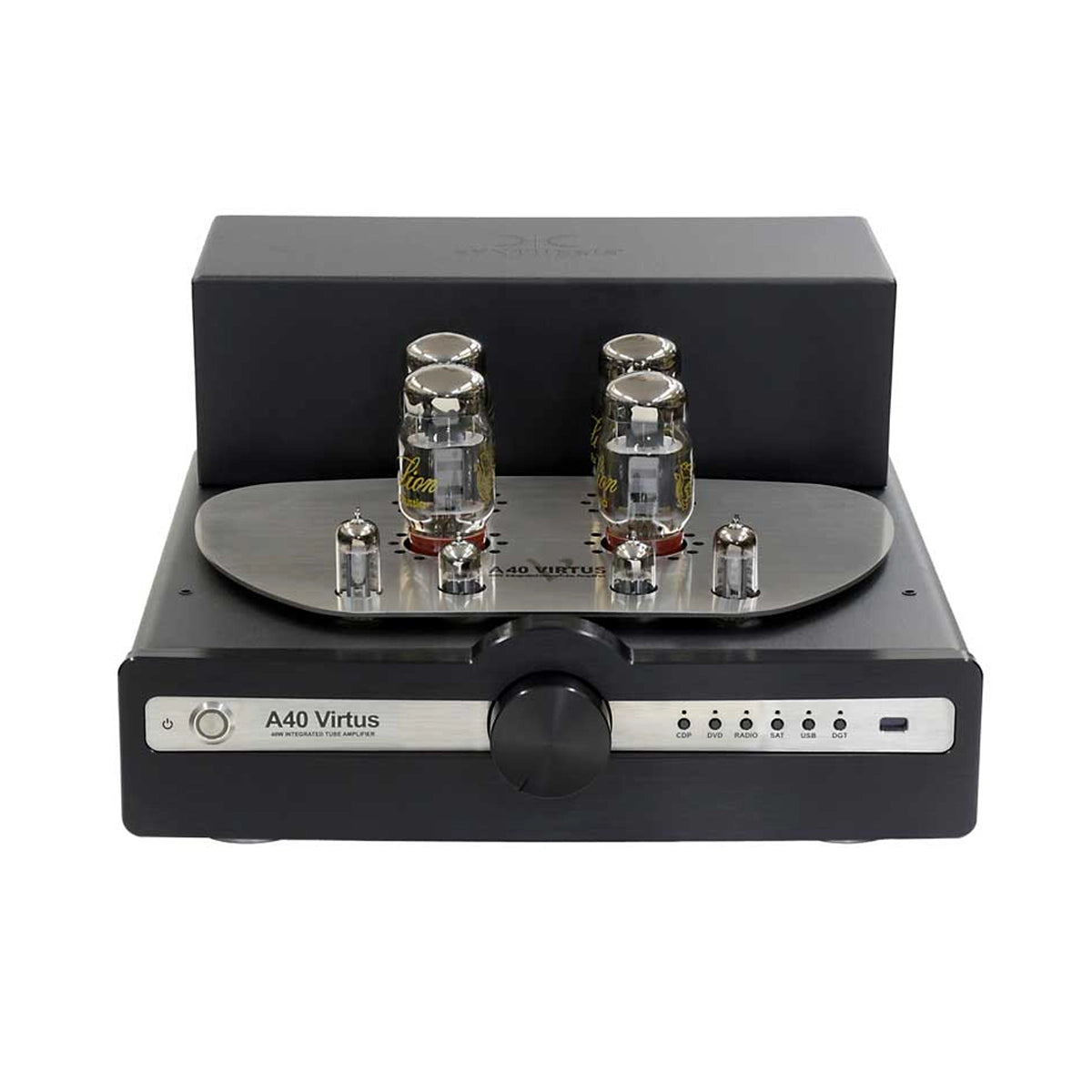
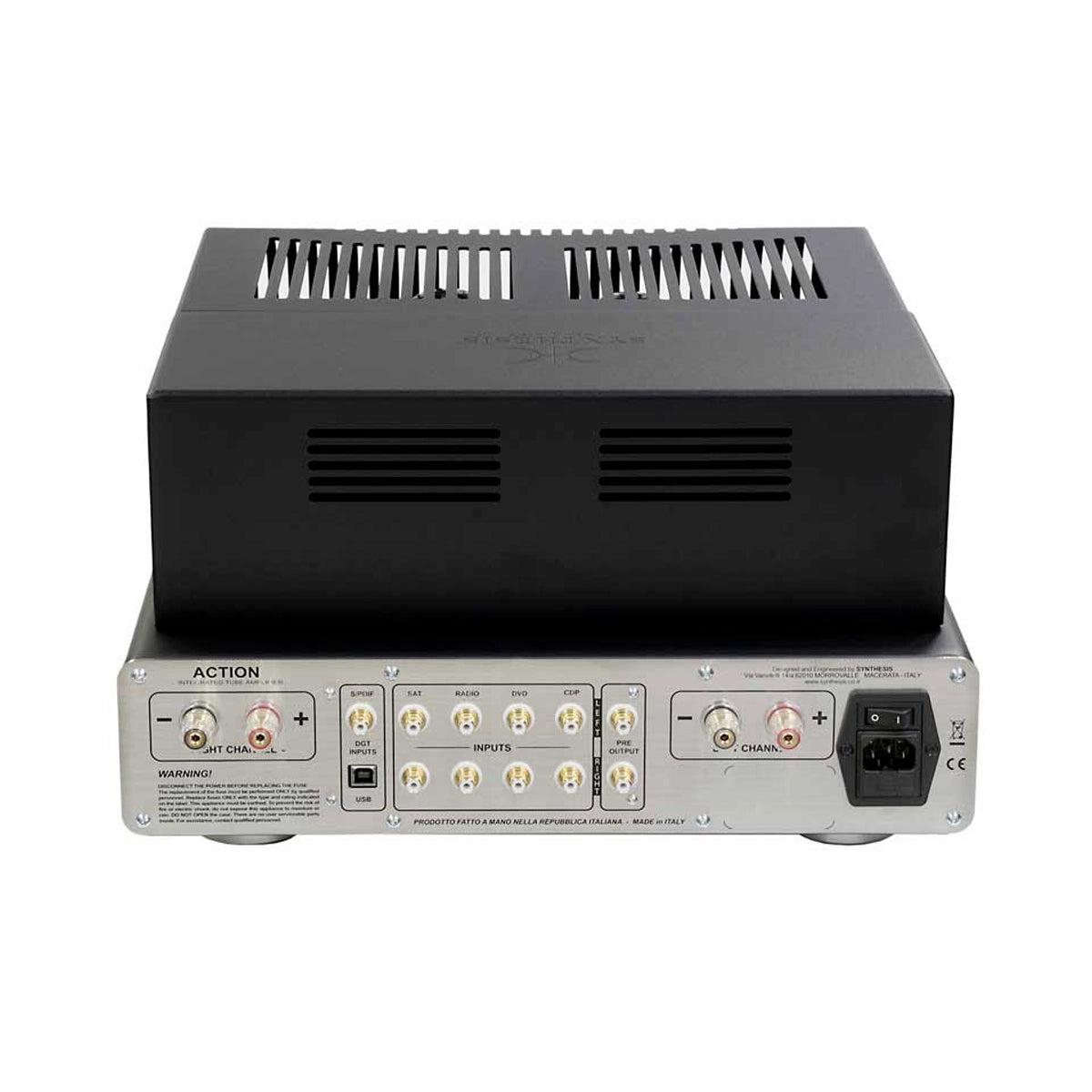
Synthesis A40 Virtus Valve Integrated Amplifier The entry point into Synthesis's A-series, a step beyond the Roma range for a customer who's ready to move into a higher tier of integrated amplifier.
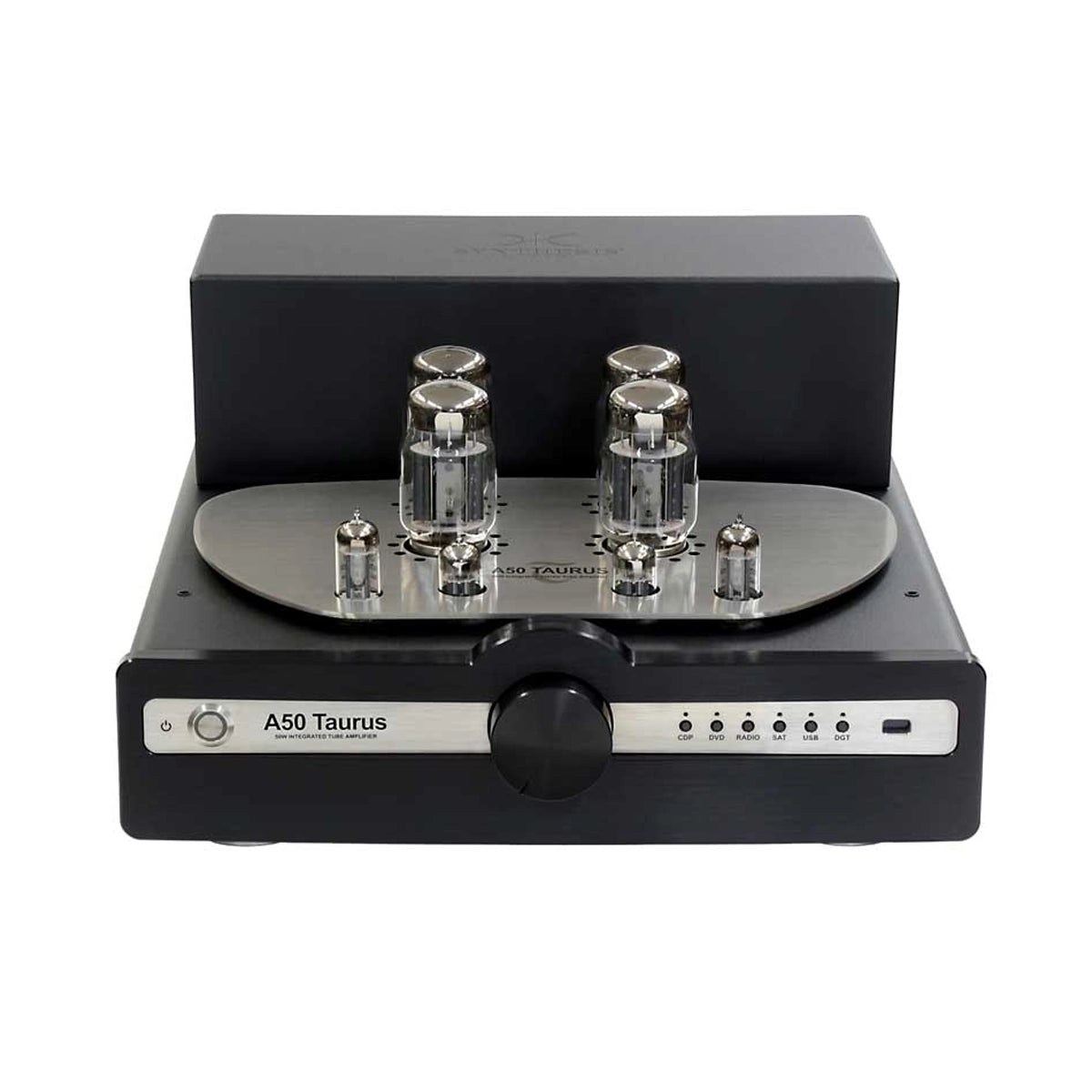
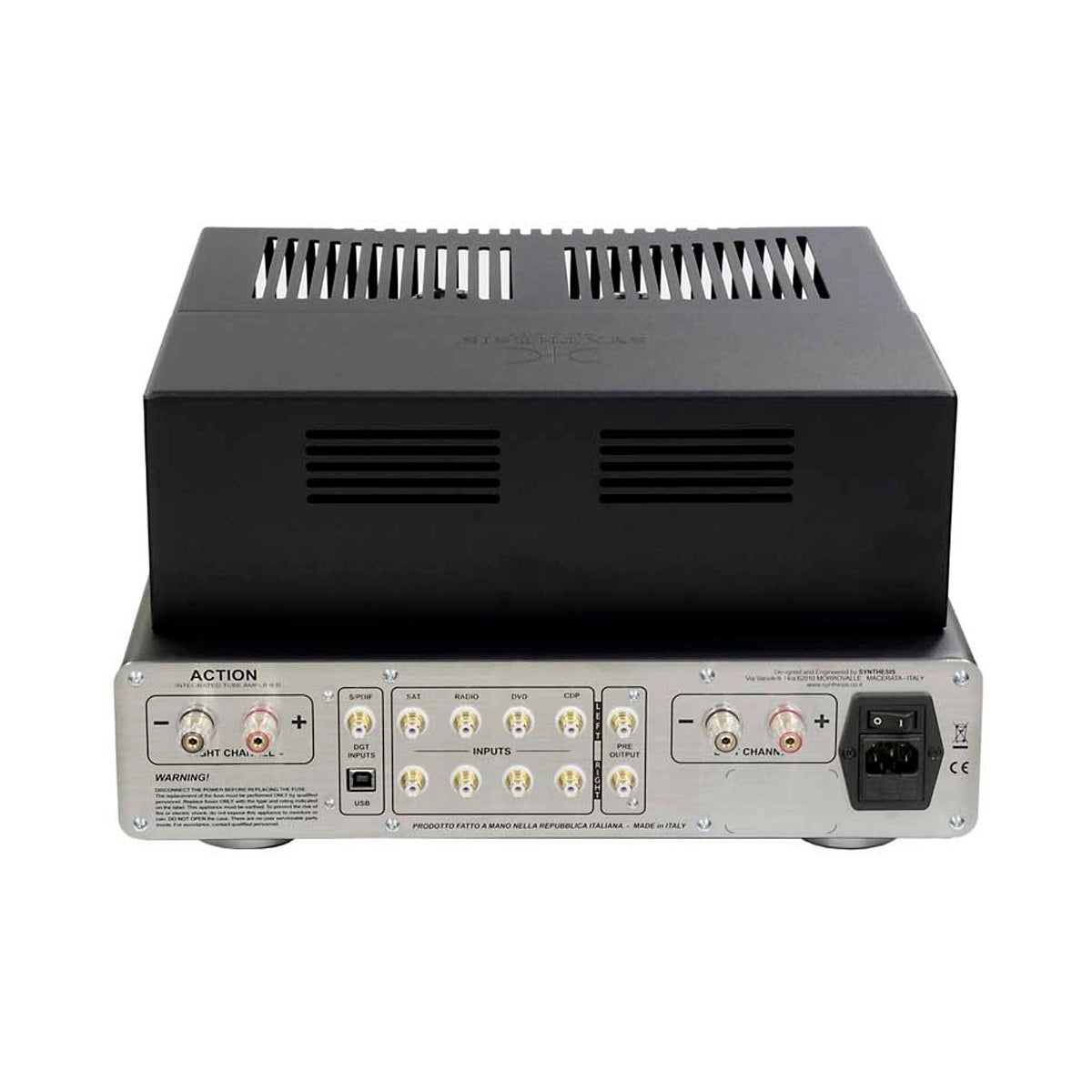
Synthesis A50 Taurus Valve Integrated Amplifier Sits above the A40 in the same series, for a customer who's already decided on the A-series and wants more of what it offers.
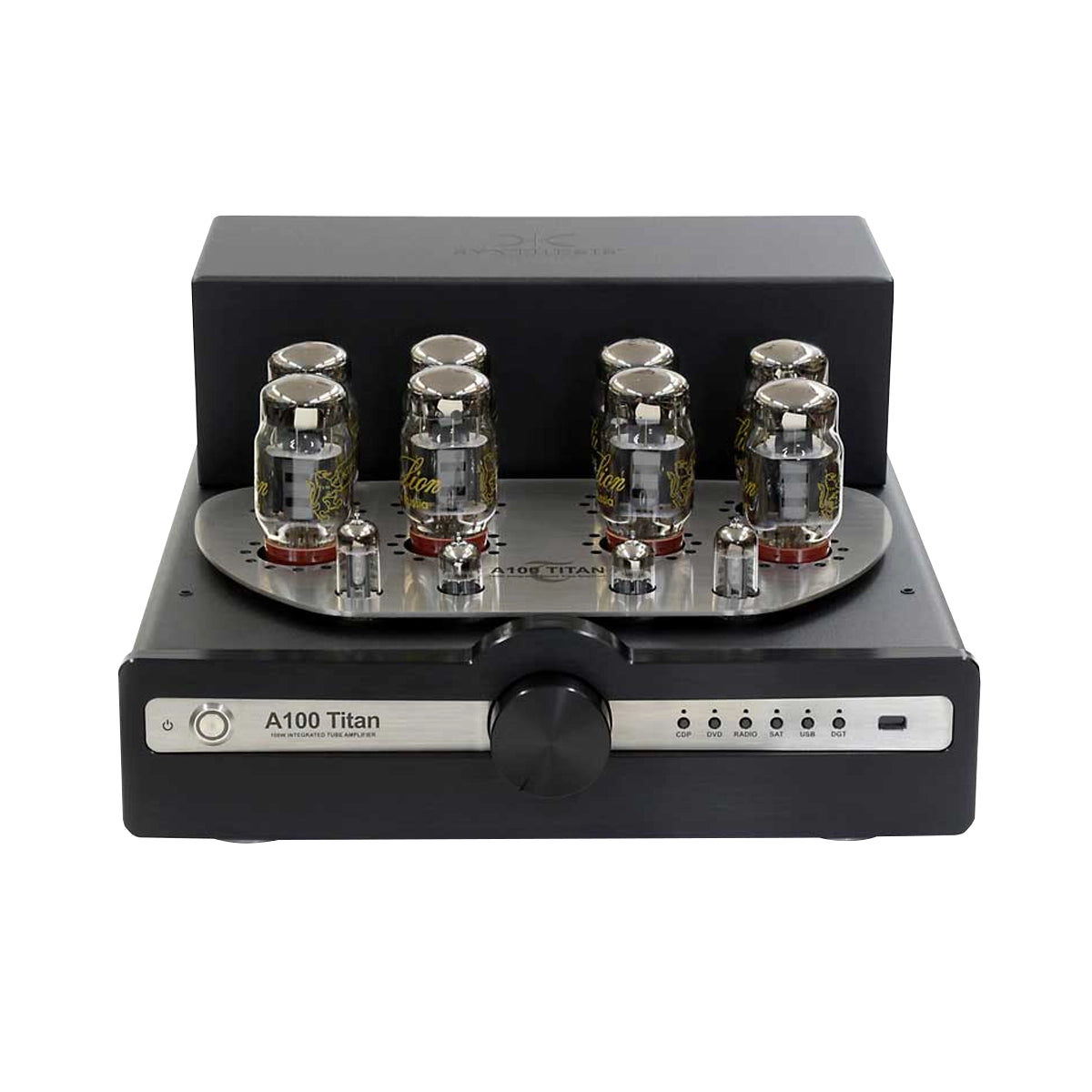
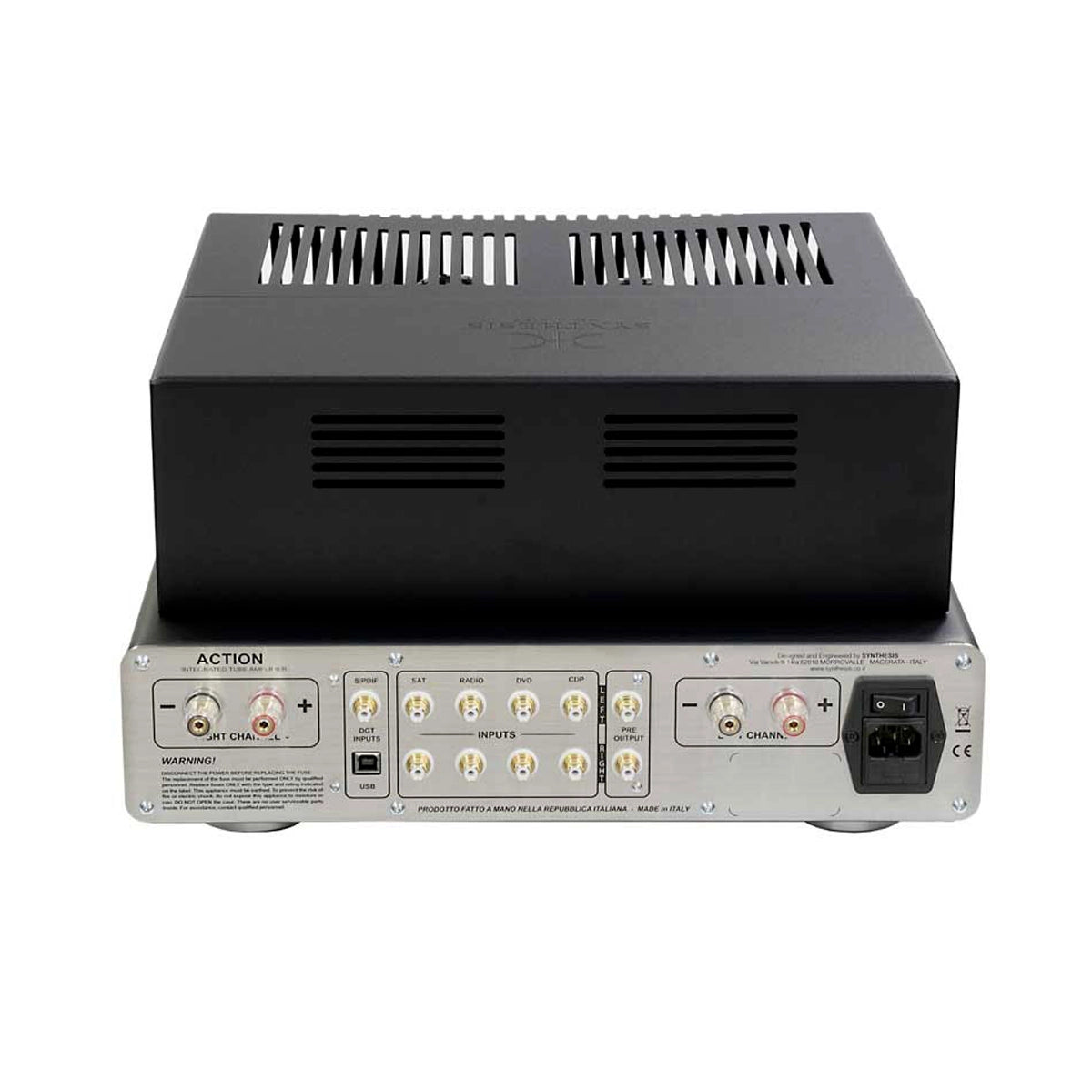
Synthesis A100 Titan Valve Integrated Amplifier The top of the A-series on this page, suited to a system where the rest of the components can already make use of the extra headroom over the A50.
Reference Integrated
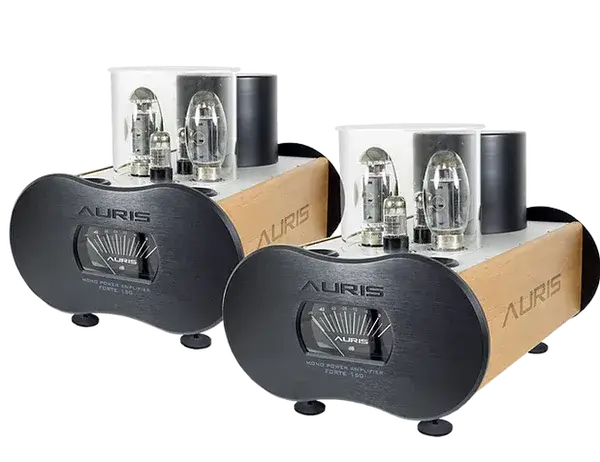
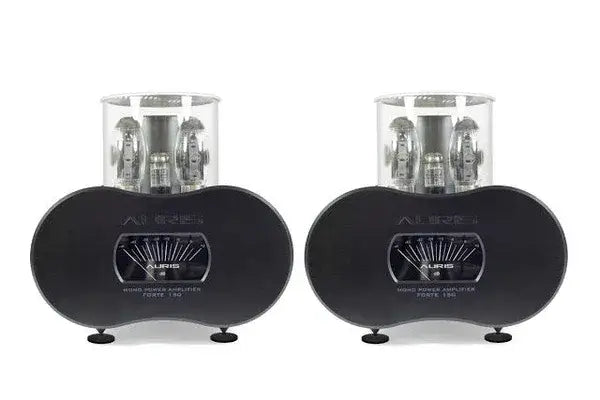
Auris Audio Forte 150 Tube Amplifier The only model on this page from outside the Synthesis range, sitting at a similar price tier to the NYC line. Worth including in the shortlist if you want to compare a different manufacturer's voicing against Synthesis's house sound at a comparable level, ask us for a direct comparison against the NYC 100i if that's the decision you're weighing.
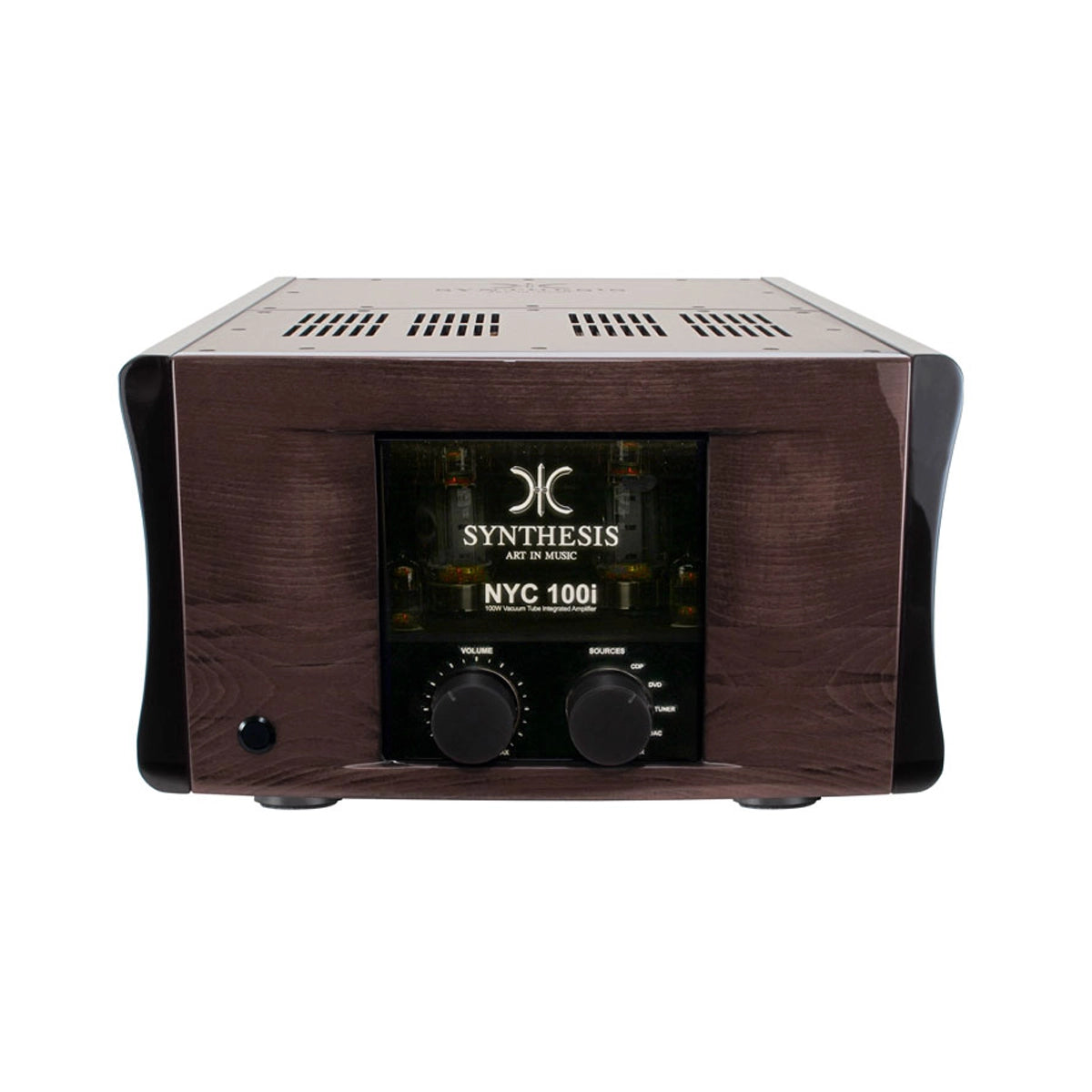
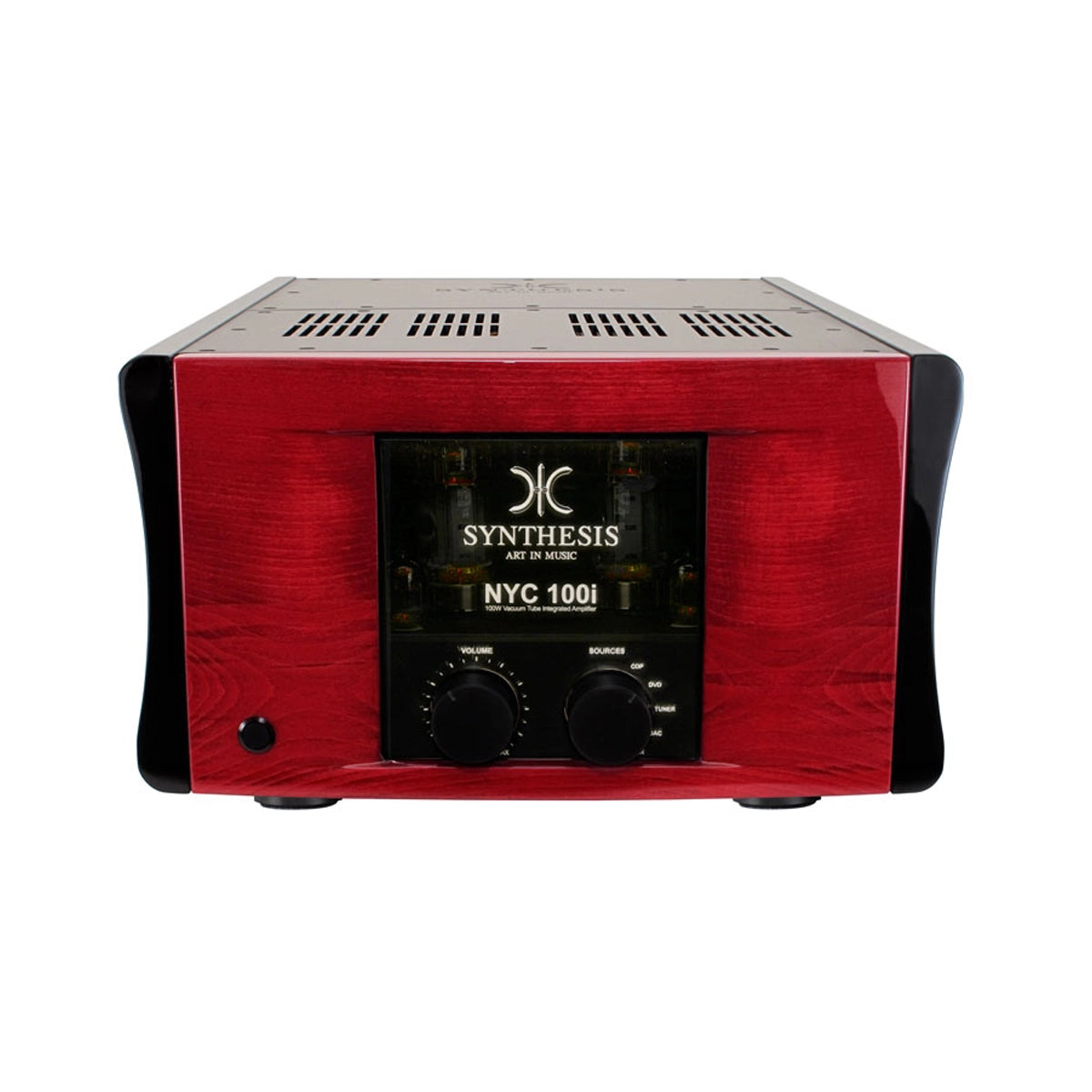
Synthesis NYC 100i Valve Integrated Amplifier The entry point into Synthesis's reference-tier NYC range, for a customer whose system has outgrown the A-series.
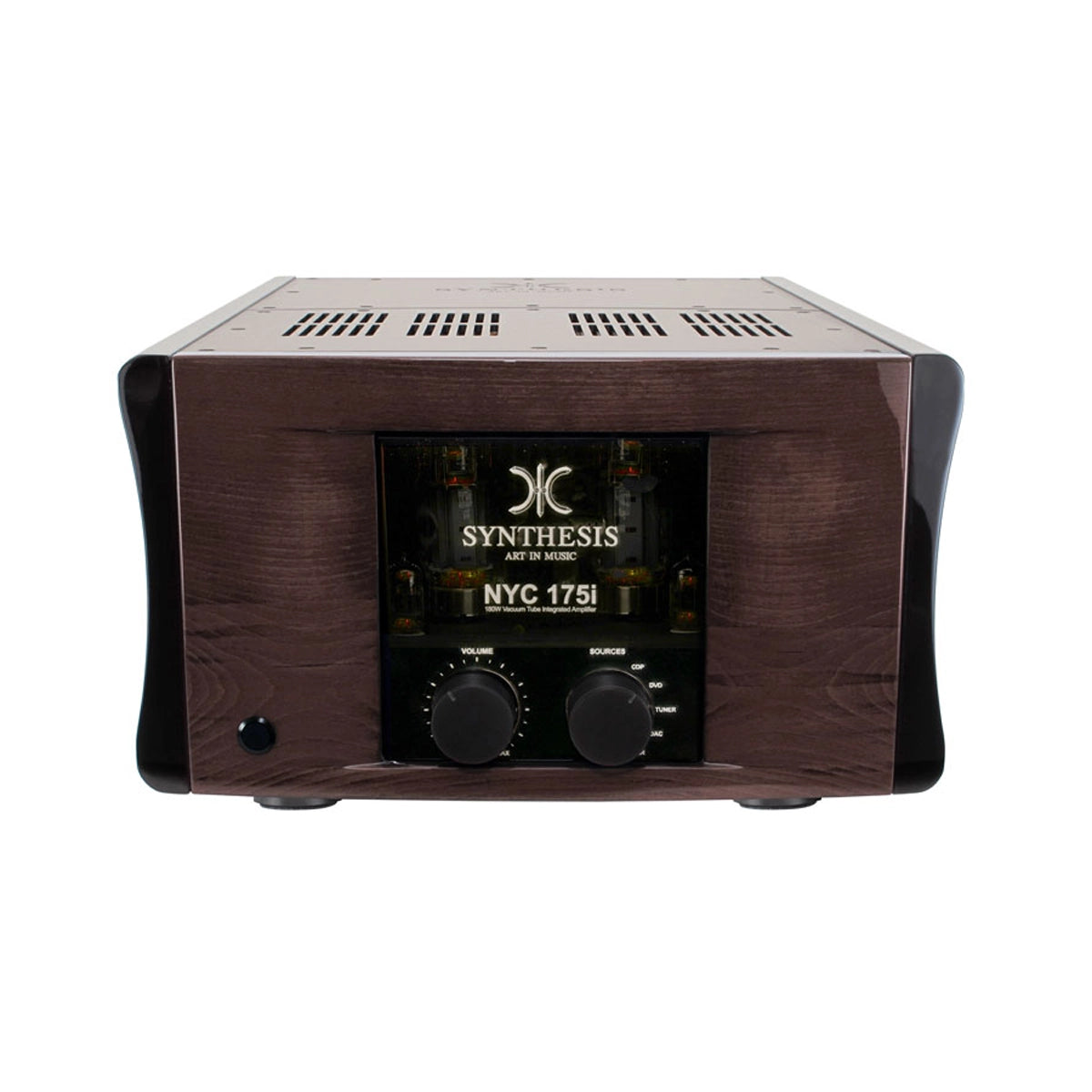
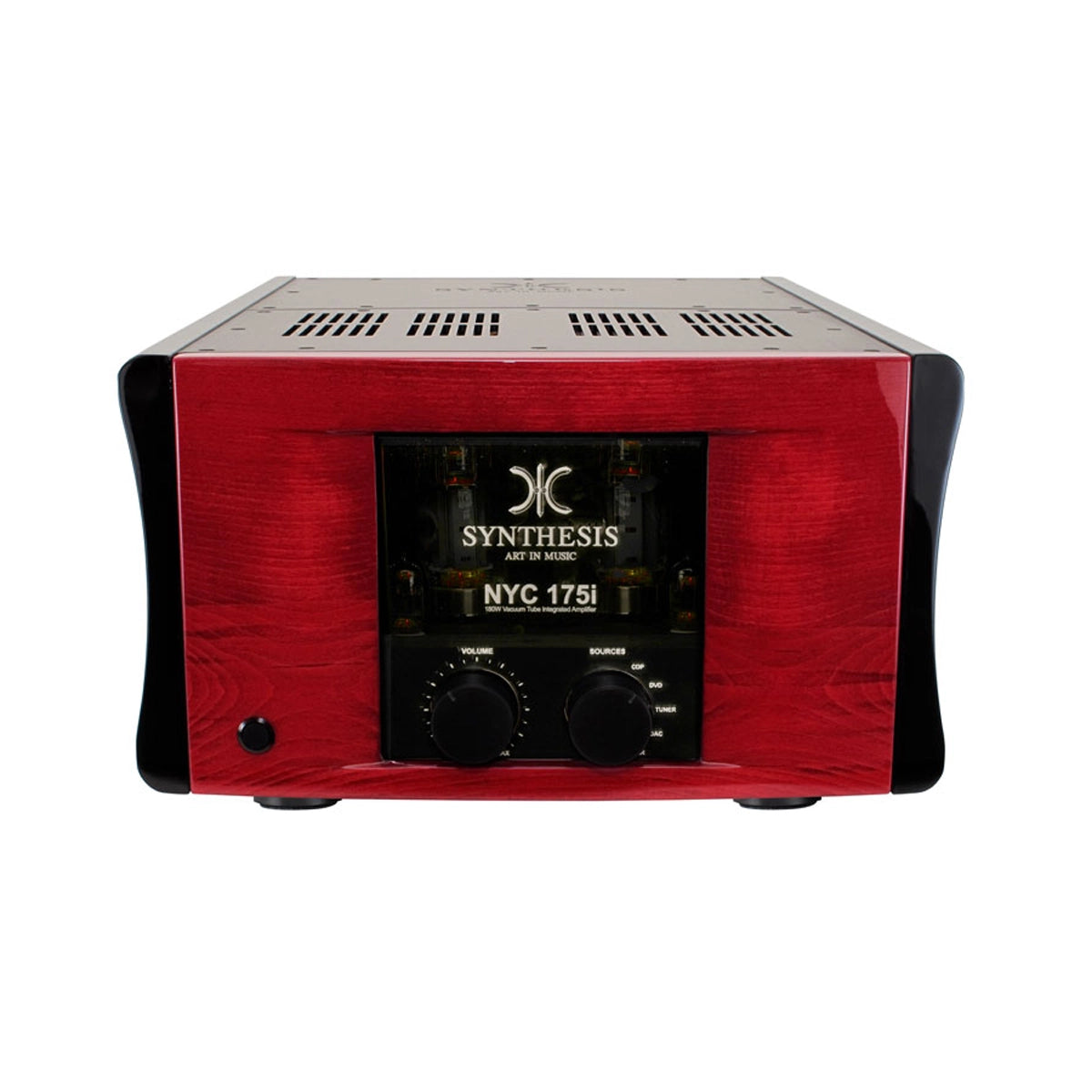
Synthesis NYC 175i Valve Integrated Amplifier A step further into the NYC range, for a system where amplification is being treated as the priority rather than one component among several.
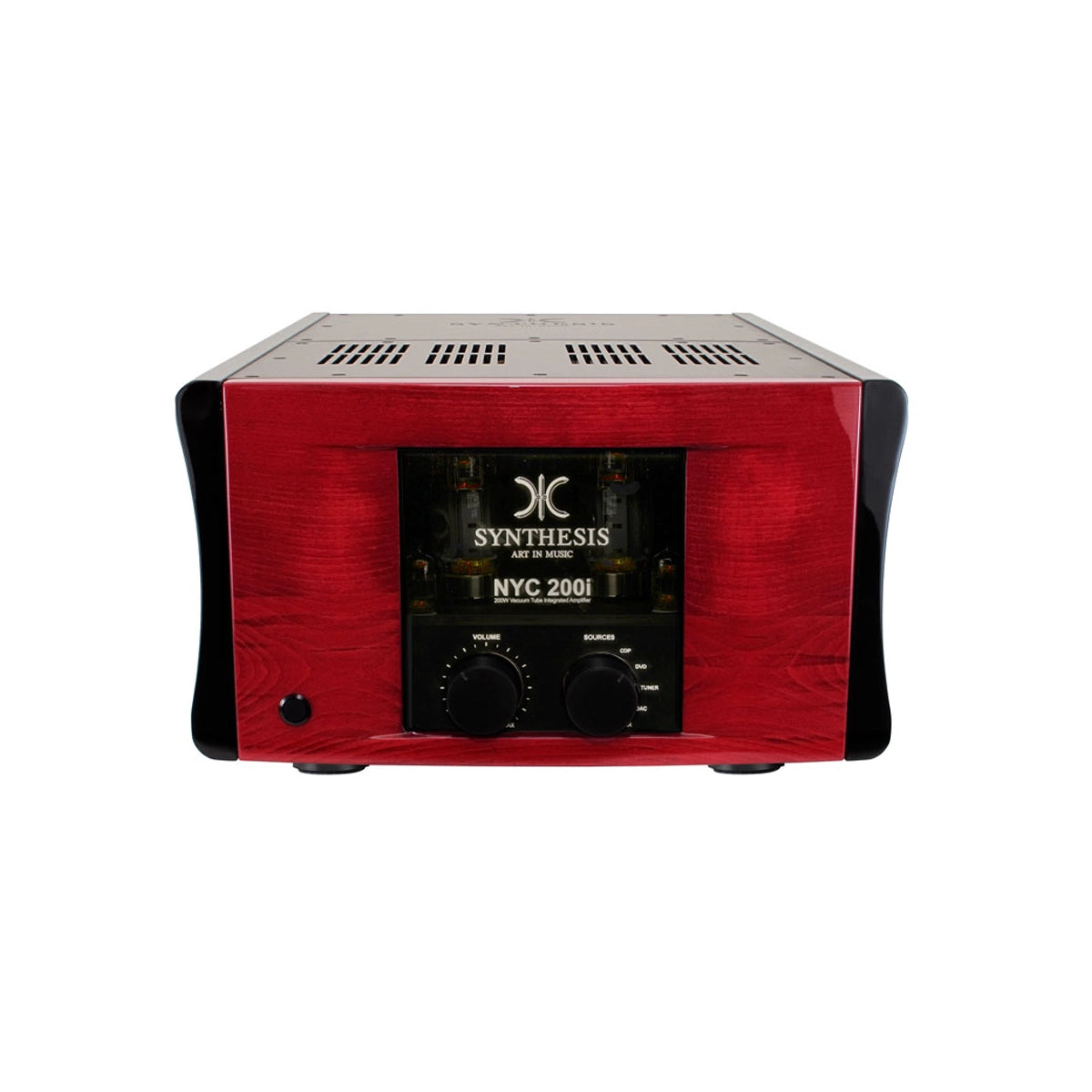
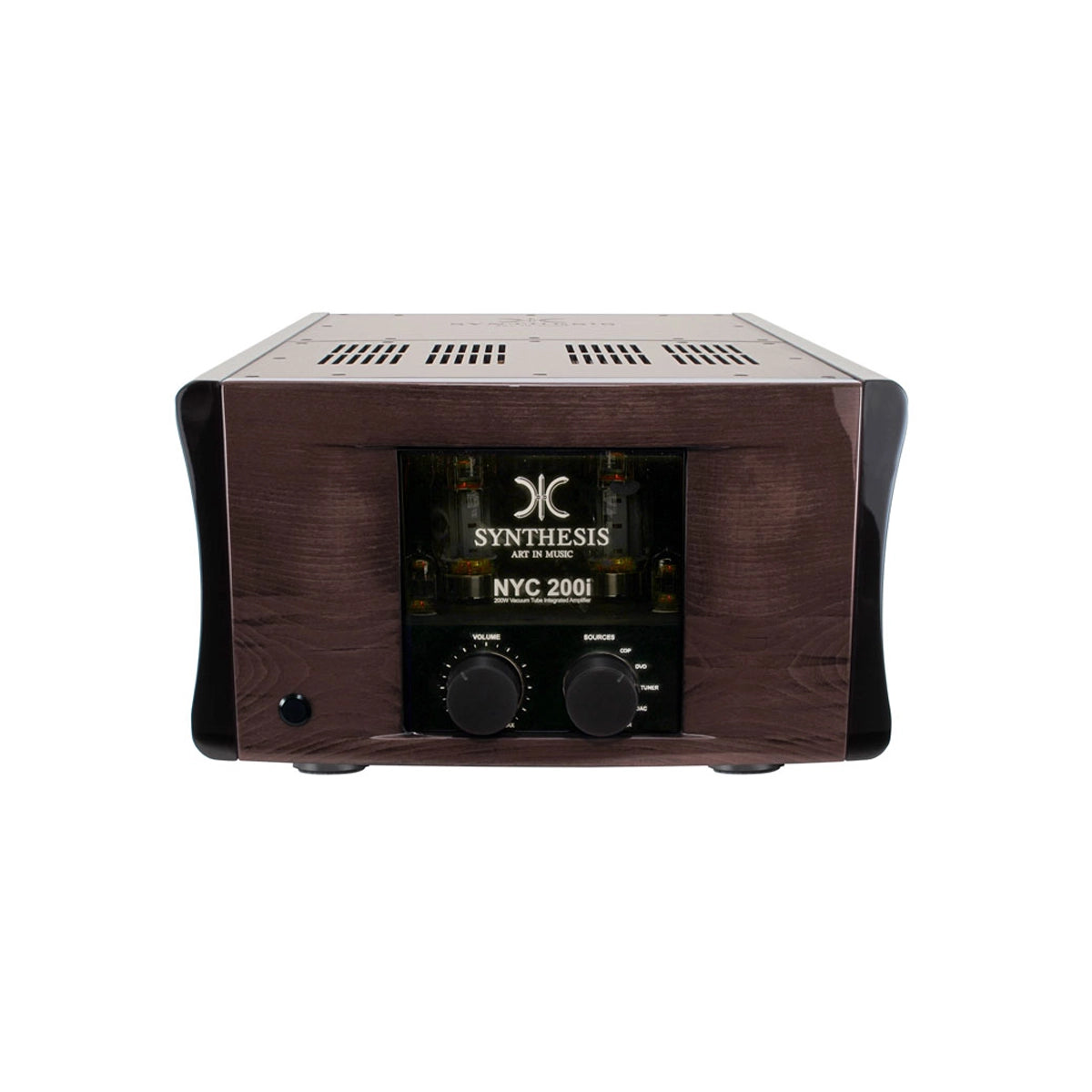
Synthesis NYC 200i Valve Integrated Amplifier The top of the NYC integrated line on this page. Best approached once the rest of the system, particularly the speakers, can genuinely resolve what it offers.
Power Amplifiers
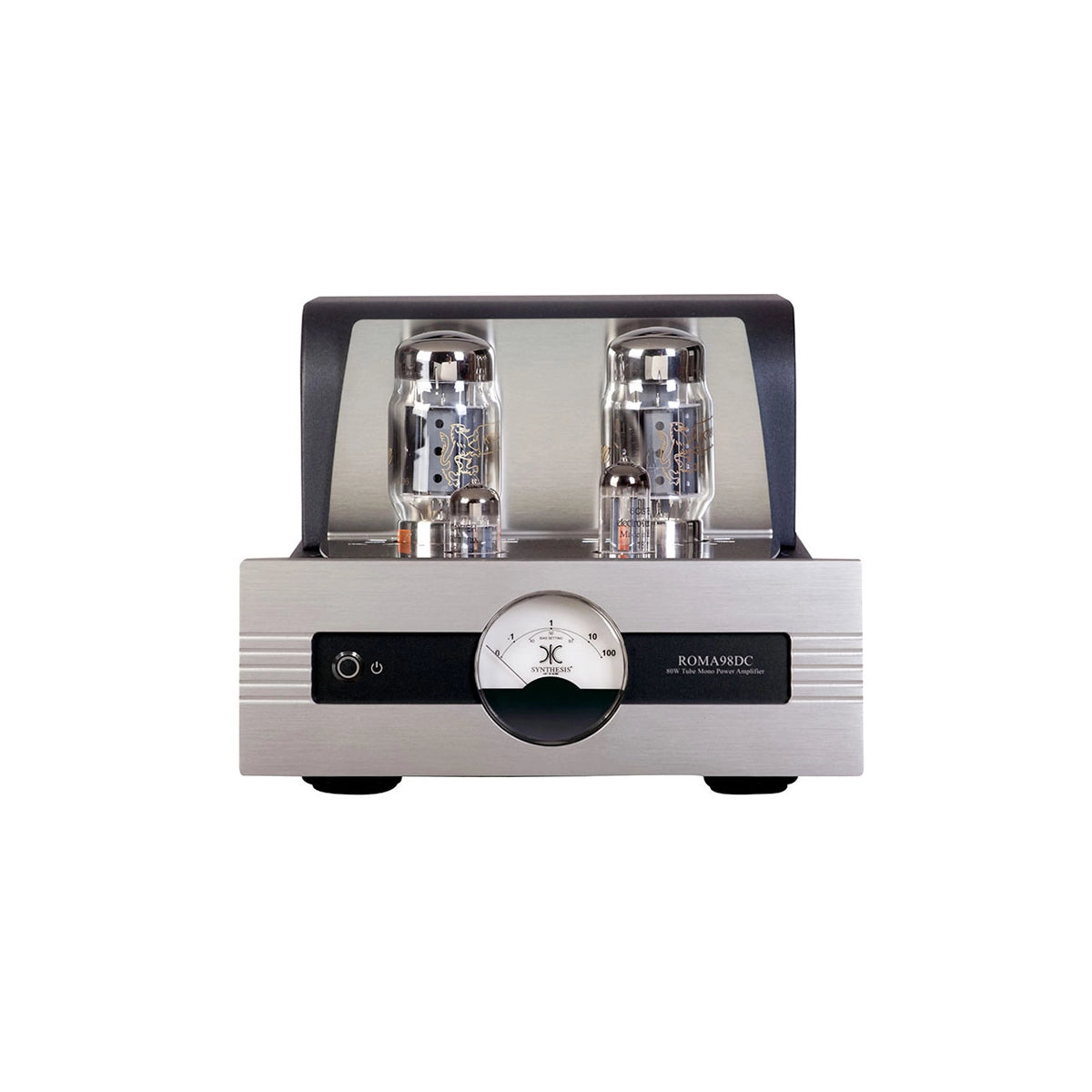
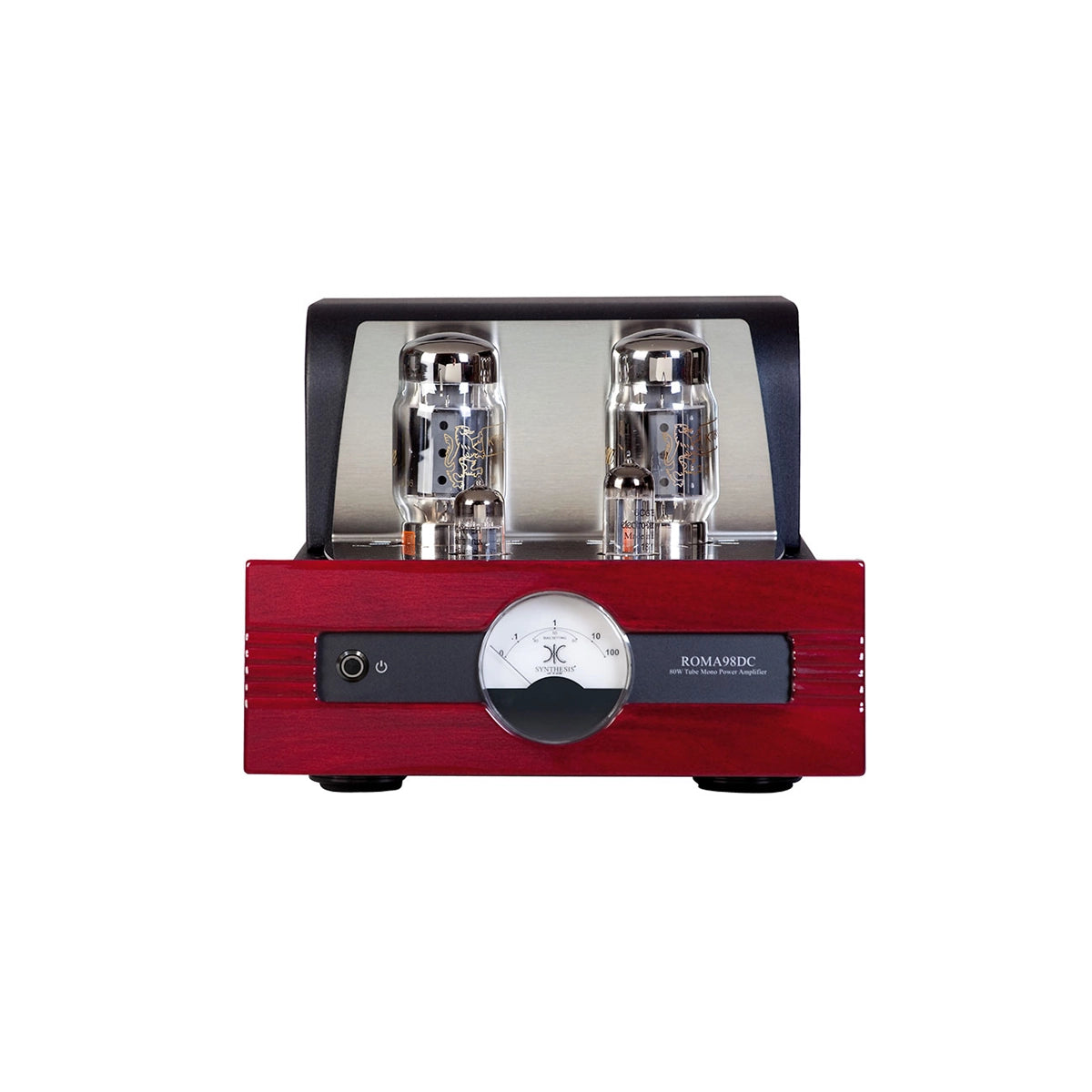
Synthesis Roma 98DC Valve Monobloc Power Amplifier An entry point into a separates system for a customer who already has, or is planning to add, a preamplifier and wants monobloc power amplification without reference-level pricing.
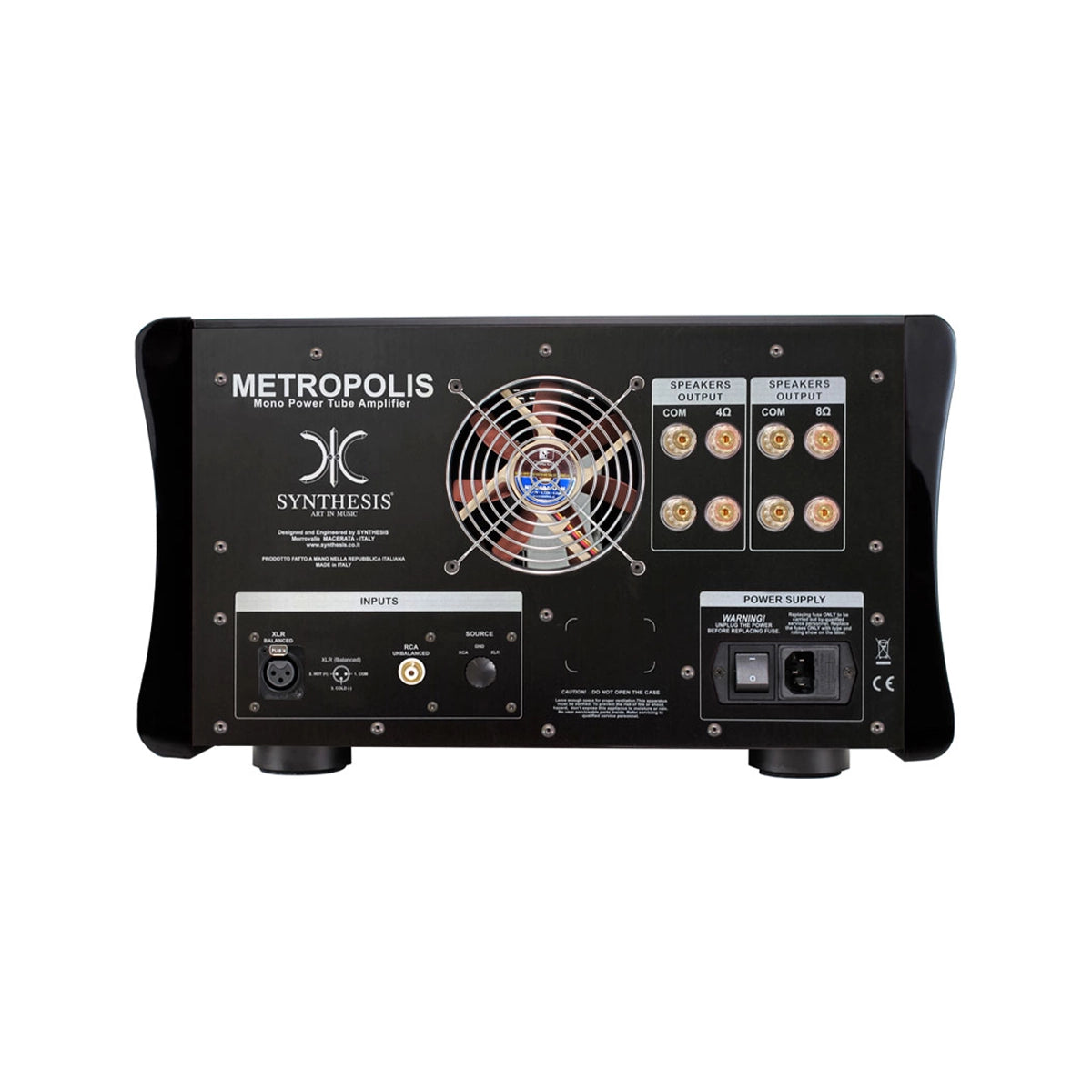
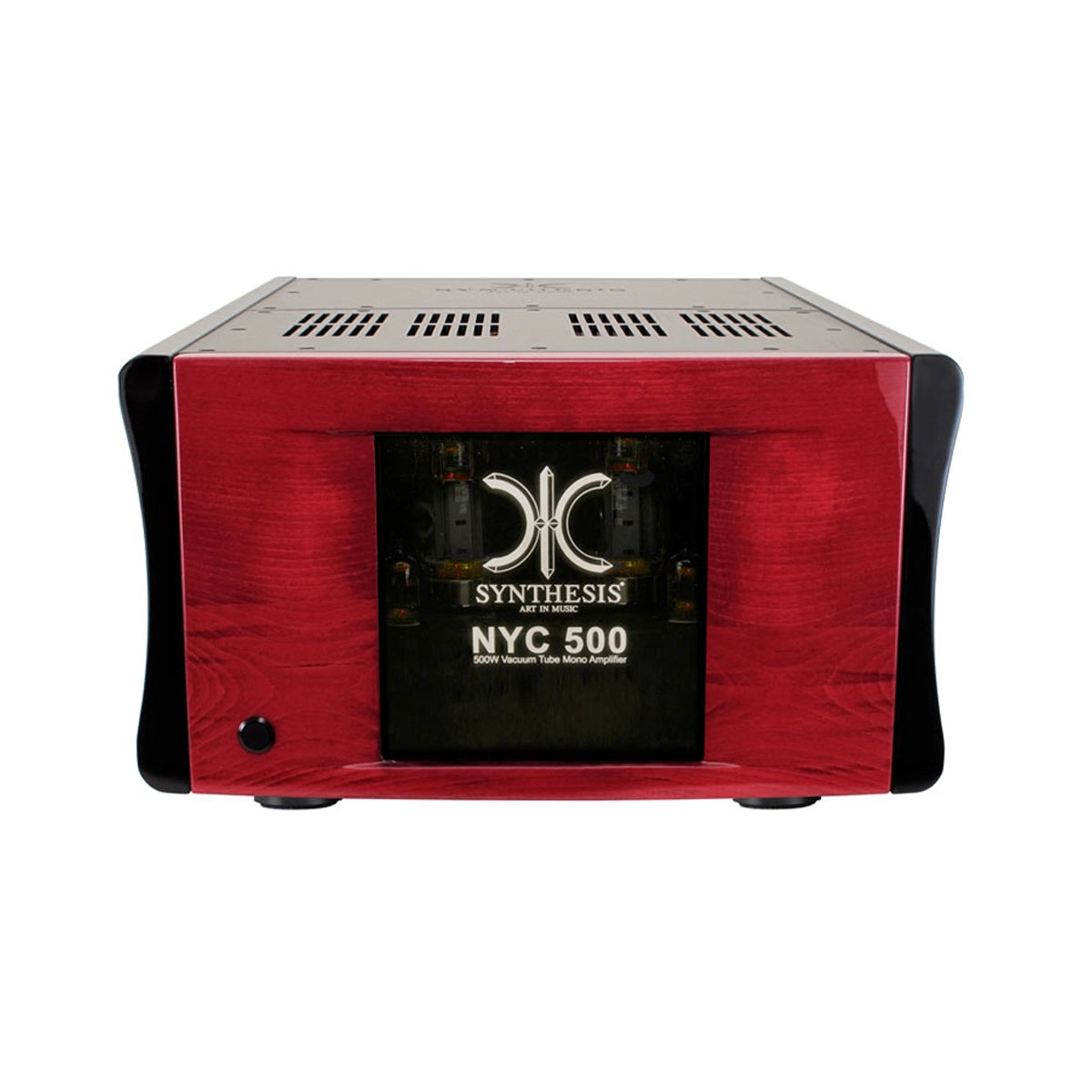
Synthesis NYC 500 Valve Monobloc Power Amplifier The reference-tier power amplifier in this range, suited to a fully built-out separates system rather than a first move into monobloc amplification.
Compare Our Amplifiers
Use the filters on this page (Brand, Product Type and Price) to compare models against your speakers and system rather than by price alone.
Quick match, by starting point:
- First valve amplifier: Synthesis Soprano, Roma 96DC, or Roma 96DC+.
- Stepping up within a single box: Synthesis Roma 510AC or 753AC, then the A-series.
- Reference integrated, or comparing against another manufacturer: Synthesis NYC 100i/175i/200i, or the Auris Audio Forte 150.
- Building or extending a separates system: Synthesis Roma 98DC or NYC 500.
Talk to Us
Customers across Australia work with The Groove Man to match a valve amplifier to their speakers, room and source, whether that's a first integrated amplifier or a full separates system built around monobloc power amps. Get in touch if you'd like help narrowing the range to what will actually drive your speakers well.