Tonearms
Whether you're replacing an existing tonearm, upgrading a reference turntable or building a new analogue system, choosing the right tonearm depends on cartridge compatibility, effective mass, bearing design and geometry. Our range includes precision-engineered tonearms for high-performance vinyl playback, from entry-level gimbal designs to reference-grade unipivot, titanium and gold-plated tonearms.
New to tonearms? Read our What is a Tonearm? guide before choosing the right model.
Which Tonearm Is Right for Your Turntable?
Before choosing a tonearm, it helps to know what you're mounting it to. Most tonearms are sold as separate components. They're fitted to an armboard or an existing mounting collar. Compatibility comes down to three things: mounting type, pivot-to-spindle distance, and arm length.
- Fixed-collar mounts suit turntables with a pre-drilled armboard matched to a specific mounting diameter. Many customers come to us upgrading beyond the factory arm fitted to an entry-level Rega or Rekkord Audio deck. They choose a tonearm from our range because that mounting collar has become a de facto industry standard. A direct swap is possible without modifying the plinth.
- Universal or adjustable mounts allow finer adjustment of pivot-to-spindle distance. This matters when retrofitting a tonearm to a turntable it wasn't originally designed for, or where the armboard needs to be cut to a non-standard spec.
- Effective mass needs to suit your cartridge's compliance. A low-compliance cartridge generally wants a higher-mass arm. A high-compliance cartridge wants the opposite.
If you're unsure whether a tonearm will fit your turntable, our team can confirm compatibility before you order. We usually spend more time checking armboard dimensions than cartridge compatibility, since that's where most installation surprises happen. Just get in touch with your turntable model and current arm specification.
Choosing Tonearm Length
Tonearm length affects tracking accuracy. Longer arms move the stylus through a shallower arc, which reduces the angle error introduced as it sweeps across the record.
9" tonearms are the most common length. They offer a good balance of tracking performance and ease of setup on compact and mid-sized turntables.
10" tonearms reduce tracking angle error slightly compared to a 9" design. That gives marginally more consistent tracking across the record surface, and makes a 10" arm a popular middle ground for listeners upgrading from a stock arm.
12" tonearms reduce angular tracking error further still, bringing the stylus closer to the ideal cutting geometry across more of the record surface. They don't reproduce a true linear-tracking path, but the improvement is real and most audible toward the inner grooves. They're typically chosen by listeners building a dedicated high-end analogue system.
Tonearms by Cartridge Type
Matching cartridge type to tonearm design is one of the most important decisions in a vinyl playback system.
Moving magnet cartridges generally suit mid-mass tonearms. They're forgiving of small mismatches in effective mass, which makes them a straightforward starting point for a first tonearm upgrade.
Moving coil cartridges, such as Ortofon's higher-mass MC range, are often lower compliance. They benefit from a higher-mass, rigidly engineered tonearm. This is where unipivot and gimbal-bearing designs with premium bearing assemblies tend to show their advantage, letting the cartridge operate closer to its intended resonance range.
High-compliance cartridges should be paired with lower-mass arms. This keeps the resonant frequency of the arm and cartridge combination within a safe range.
If you already own a cartridge and aren't sure which tonearm suits it, let us know the model. We'll recommend a compatible match.
Compare Our Tonearms
Auris Audio W-9a
Bearing: Gimbal. Length: 9". Character: Balanced, forgiving. Typical upgrade from: Factory-fitted OEM arm. Best suited to: First tonearm upgrades, moving magnet cartridges.
Auris Audio W-10a
Bearing: Gimbal. Length: 10". Character: Improved tracking consistency. Typical upgrade from: Entry-level 9" arm. Best suited to: Mid-mass moving coil and moving magnet cartridges.
Auris Audio W-12a
Bearing: Gimbal. Length: 12". Character: Lower tracking-angle error. Typical upgrade from: Mid-tier 9" or 10" gimbal. Best suited to: Reduced tracking distortion on larger plinths.
Auris Audio Hawk
Bearing: Unipivot. Length: Reference. Character: Maximum retrieval, low friction. Typical upgrade from: Reference-tier gimbal. Best suited to: Higher-end moving coil cartridges, dedicated analogue systems.
Auris Audio Hawk (HM, Custom)
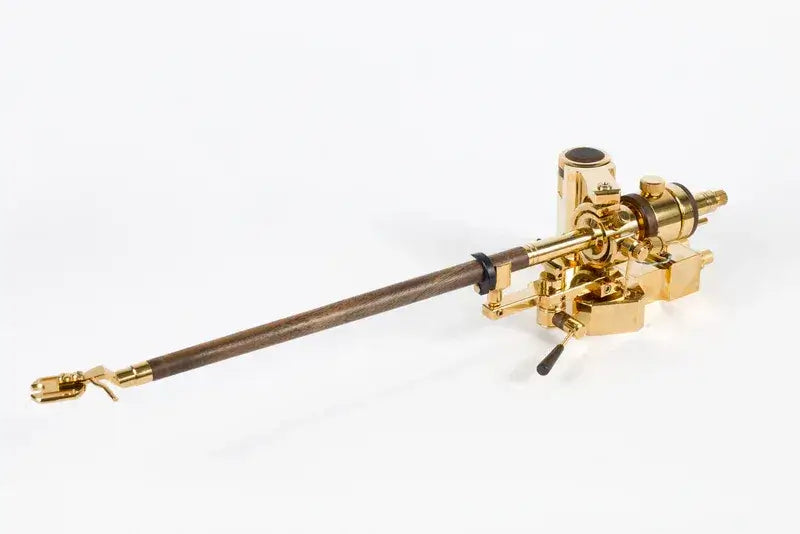
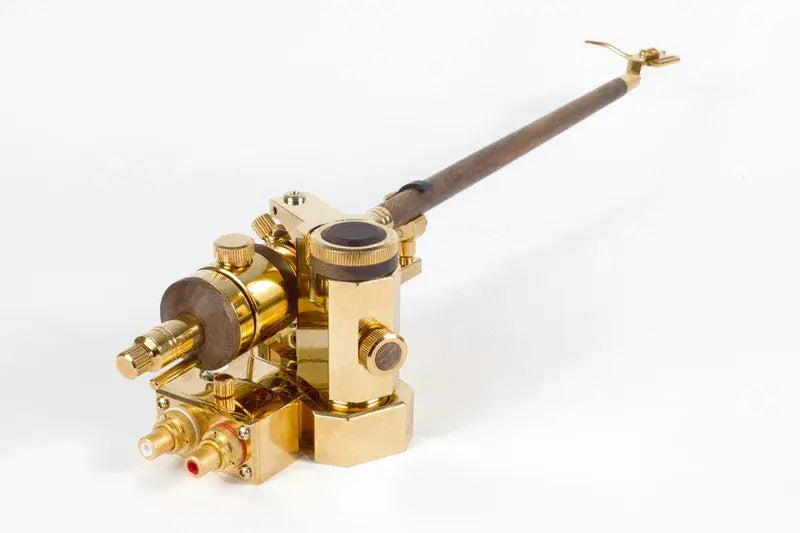
Bearing: Unipivot, 24k gold-plated/chrome. Length: Reference. Character: Statement finish, hand-assembled. Typical upgrade from: Standard Hawk. Best suited to: Statement systems built around a single reference cartridge.
Alphason HR-200S Reference Titanium
Bearing: Precision bearing, titanium armtube. Length: Reference. Character: Low-mass precision. Typical upgrade from: Reference-tier gimbal or unipivot. Best suited to: Low-mass titanium construction for detail-focused systems.
As a rule of thumb, the W-series scales with arm length. Each step up trades a little ease of setup for lower tracking-angle error. The Hawk and HR-200S take two different routes to reference-level performance: one through unipivot bearing design and higher effective mass, the other through low-mass titanium construction.
Why Upgrade Your Tonearm?
A tonearm upgrade is only worthwhile if it solves a specific problem with your current setup. Here's what each tier in our range addresses.
- Coming from a stock or entry-level arm? The Auris Audio W-9a and W-10a offer a meaningful step up in bearing precision and build rigidity, without requiring a full system rebuild. It's a common path for owners of factory-fitted arms on entry and mid-tier turntables.
- Hearing smearing or instability with a moving coil cartridge? The Auris Audio Hawk's unipivot design and higher effective mass are built to control exactly this kind of low-frequency resonance, particularly with lower-compliance moving coil cartridges.
- Chasing the last few percent of detail retrieval? The Alphason HR-200S uses a titanium armtube to minimise stored resonance in the arm itself. That's most audible once every other part of the chain is already resolving well.
- Building a statement system? The Auris Audio Hawk (HM, Custom) is a hand-finished reference piece for listeners who have already settled on a flagship cartridge and want the tonearm engineered to match it.
Which Tonearm Should Beginners Buy?
Start with the Auris Audio W-9a. It's a gimbal-bearing design, and gimbal bearings are more forgiving to set up correctly than a unipivot arm. Its 9" length suits the vast majority of turntable plinths without modification. It pairs comfortably with most moving magnet cartridges, which makes it a low-risk step before you consider a moving coil setup.
Why Do Reference Tonearms Cost More?
The cost difference between an entry-level tonearm and a reference-grade design, such as the Alphason HR-200S or Auris Audio Hawk, comes down to materials and bearing precision. Not branding.
Titanium offers a higher stiffness-to-weight ratio than aluminium. That lets the armtube resist flex while dissipating unwanted resonance more effectively, which is why the HR-200S uses titanium rather than a standard aluminium tube. Precision-machined bearing assemblies, whether gimbal or unipivot, reduce friction and mechanical play at the pivot. That improves tracking consistency and stereo stability. Hand-finished designs such as the Hawk (HM, Custom) add labour-intensive assembly and plating on top of this, which increases cost without changing the core engineering principle. Reducing unwanted resonance in the armtube, and friction within the bearing assembly, lets the stylus trace the groove with greater consistency.
These gains are most audible once the rest of the system, turntable, cartridge and phono stage, is already resolving at a high level.
Our Tonearms
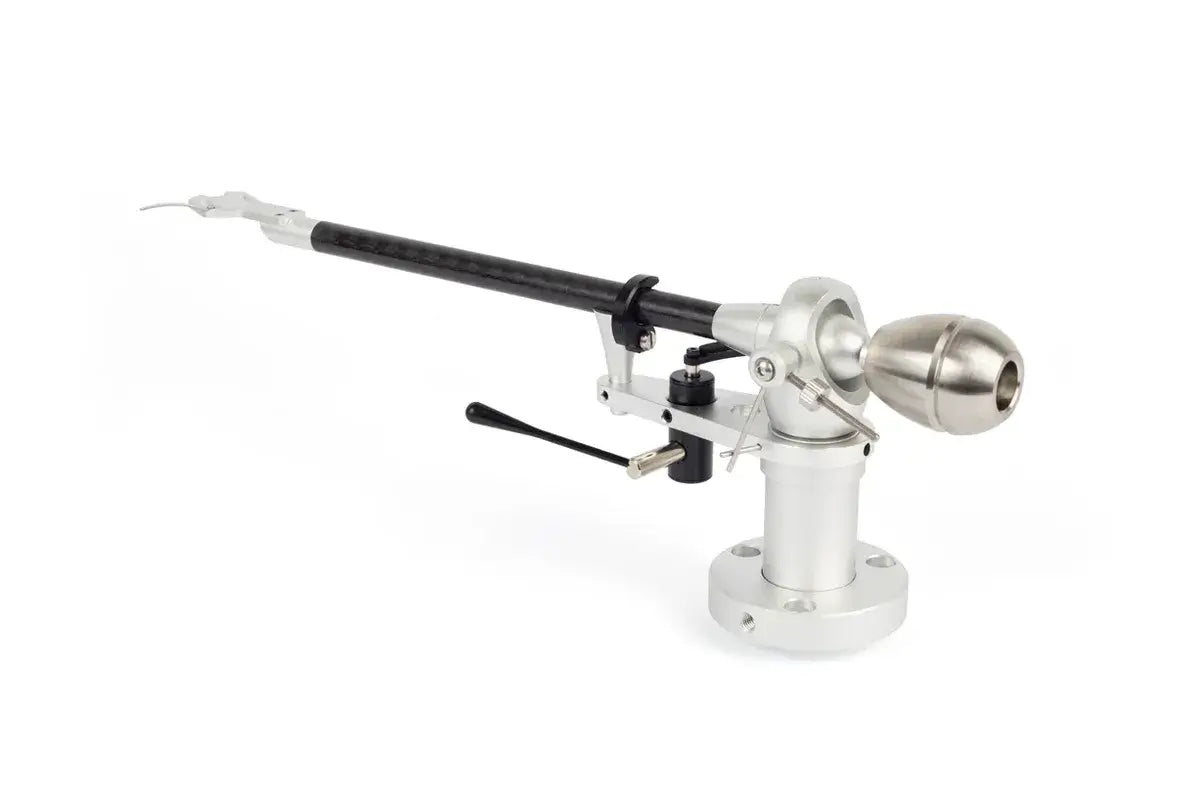
The Alphason HR-200S Reference Tonearm Titanium is our flagship low-mass tonearm, built with a titanium armtube to resist flex and dissipate resonance more effectively than a standard aluminium design.
Why we'd recommend it: This is the arm for listeners chasing the last increment of detail retrieval once the rest of their system, turntable, cartridge and phono stage, is already performing at a high level. Its titanium armtube offers a stiffer, lighter alternative to aluminium. It resists flex and dissipates resonance rather than transmitting it into the cartridge signal. Pair it with high-resolution moving coil cartridges, such as those from Van Den Hul or Ortofon's reference range, which are sensitive enough to reveal what the arm is doing. As a reference-tier arm it rewards careful setup. We'd recommend having it installed by, or checked against, an experienced dealer rather than approximated at home. The benefits are genuinely marginal on a system that isn't already resolving well, so pairing it with an entry-level cartridge or budget phono stage won't let it show what it can do. We'd only recommend this once the rest of your system is already capable of exposing the difference.
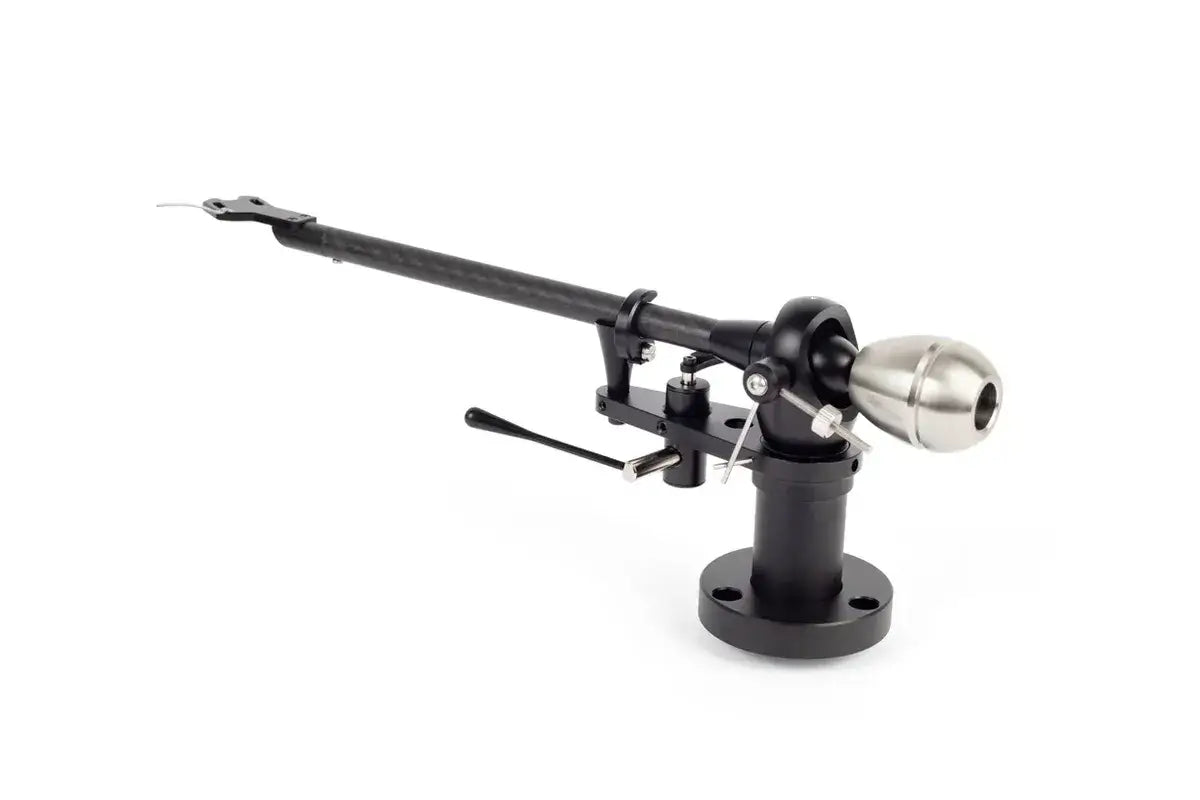
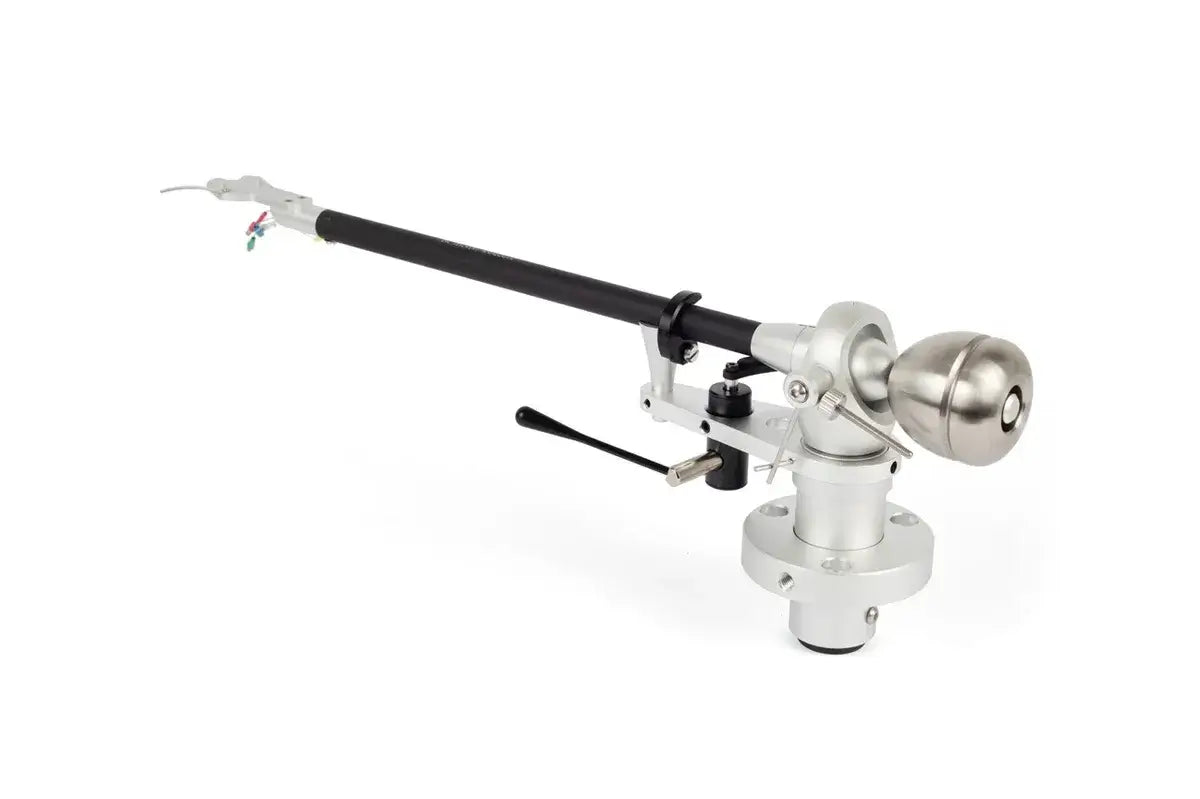
The Auris Audio W-9a Tonearm is a gimbal-bearing 9" tonearm and the natural starting point for a first tonearm upgrade.
Why we'd recommend it: This is the arm we most often recommend to customers moving beyond an entry-level or factory-fitted tonearm for the first time. Its gimbal bearing is simpler to align correctly than a unipivot design, which matters if you're setting overhang, azimuth and tracking force yourself rather than having a dealer do it. It works comfortably with moving magnet cartridges, including Ortofon's and Rega's own ranges, and holds up well with mid-compliance moving coil options too. It suits a turntable with a factory or aftermarket armboard already sized for a 9" pivot-to-spindle distance, which covers a common upgrade path for owners moving beyond the arm fitted to an entry-level deck. It doesn't have the ultra-low friction of a unipivot design, so if you're chasing maximum detail retrieval with a high-end moving coil cartridge, the Hawk is the better step. Not the best choice if you're already running a highly resolving moving coil cartridge and want maximum detail retrieval. For most people buying their first aftermarket tonearm, this is where we'd start.
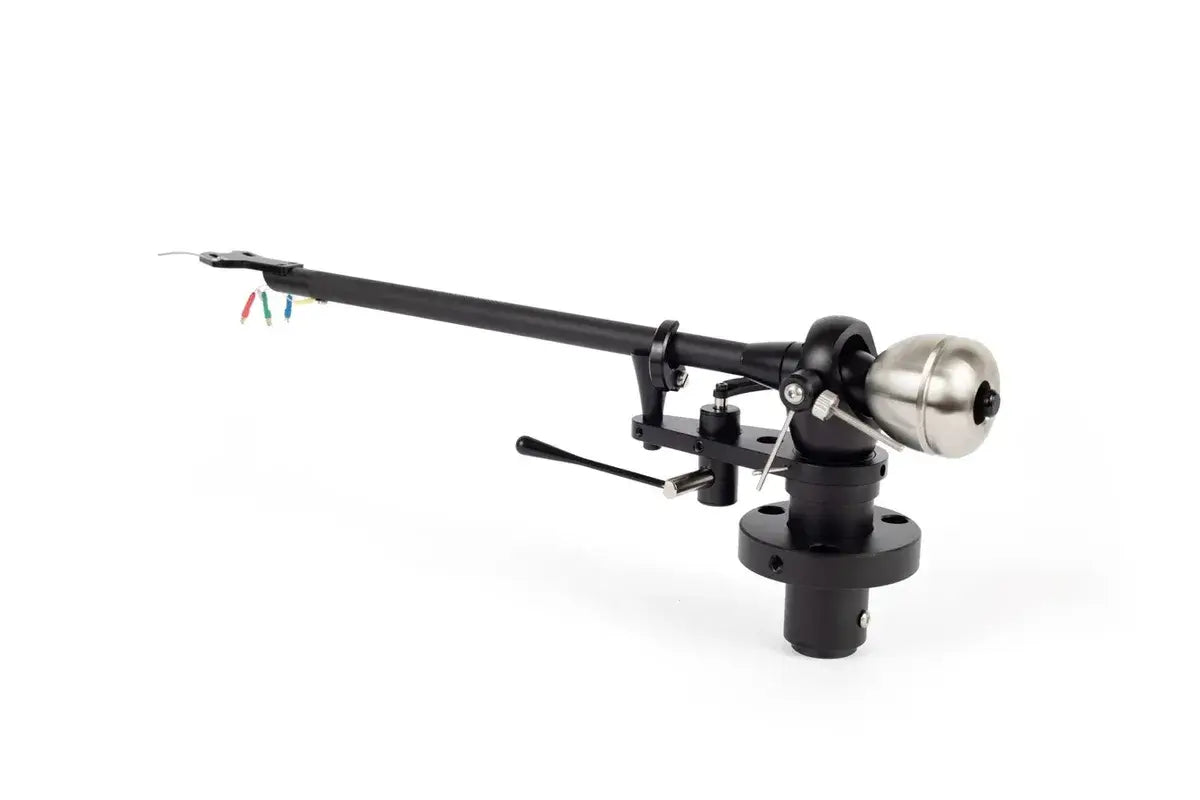
The Auris Audio W-10a Tonearm is our recommended 10" option for listeners who want lower tracking-angle error than a conventional 9" arm while retaining the stability of a gimbal-bearing design.
Why we'd recommend it: If you've already upgraded your cartridge but tracking consistency still feels like the weak point in your system, the W-10a is usually the next thing we'd check. Its 10" geometry reduces tracking-angle error compared with a 9" arm. That shows up as slightly more consistent stereo imaging across the record surface, particularly toward the inner grooves. It pairs well with mid-compliance moving coil cartridges, Soundsmith is a common match, as well as higher-output moving magnet designs. Worth checking before you order: it needs enough plinth depth to accommodate a 10" arm without repositioning the mounting hole if you're retrofitting rather than buying new. The improvement over the W-9a is real but incremental. If your current arm is already a 9" gimbal design in good condition, this upgrade is more about refinement than transformation. This is the model we usually recommend once a conventional 9" arm no longer feels like the limiting factor.
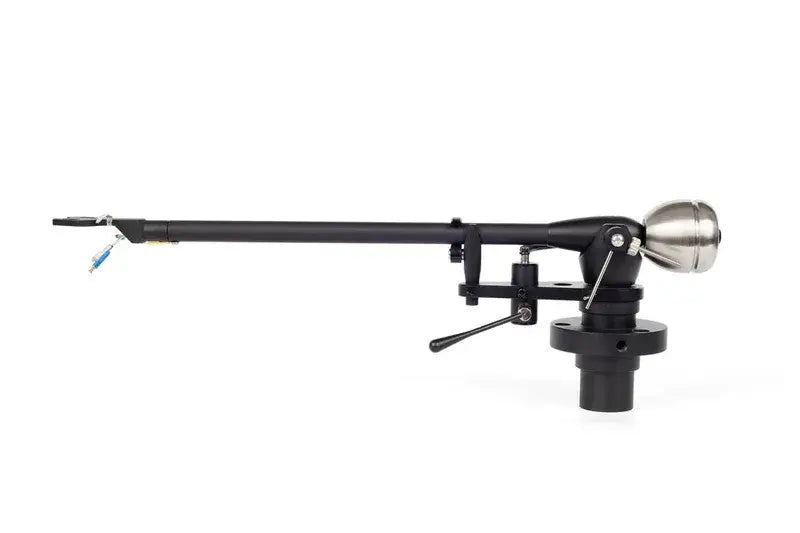
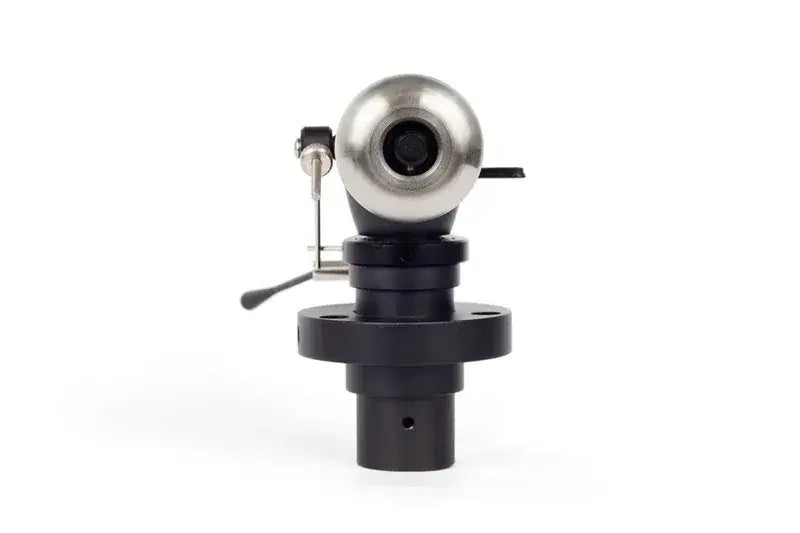
The Auris Audio W-12a Tonearm is the longest arm in the W-series, reducing angular tracking error by increasing the distance between pivot and stylus.
Why we'd recommend it: Many listeners assume a longer tonearm automatically sounds better. It's more accurate to say it reduces one specific source of distortion. Extending the arm length brings the stylus closer to the ideal cutting geometry across more of the record surface, which is most audible as reduced distortion toward the inner grooves of a side. It's a natural pairing for moving coil cartridges that reward a rigid, higher-mass arm, including options from Van Den Hul and Ortofon. A 12" arm needs a larger armboard footprint than a 9" or 10" design, so it's best suited to turntables with a separate or adjustable armboard rather than a fixed, pre-drilled mounting point sized for a shorter arm. The longer arm tube is also more demanding to set up accurately, and rewards a careful, patient install more than the W-9a does. This one is best reserved for a second or third tonearm, once you already know what you're listening for.
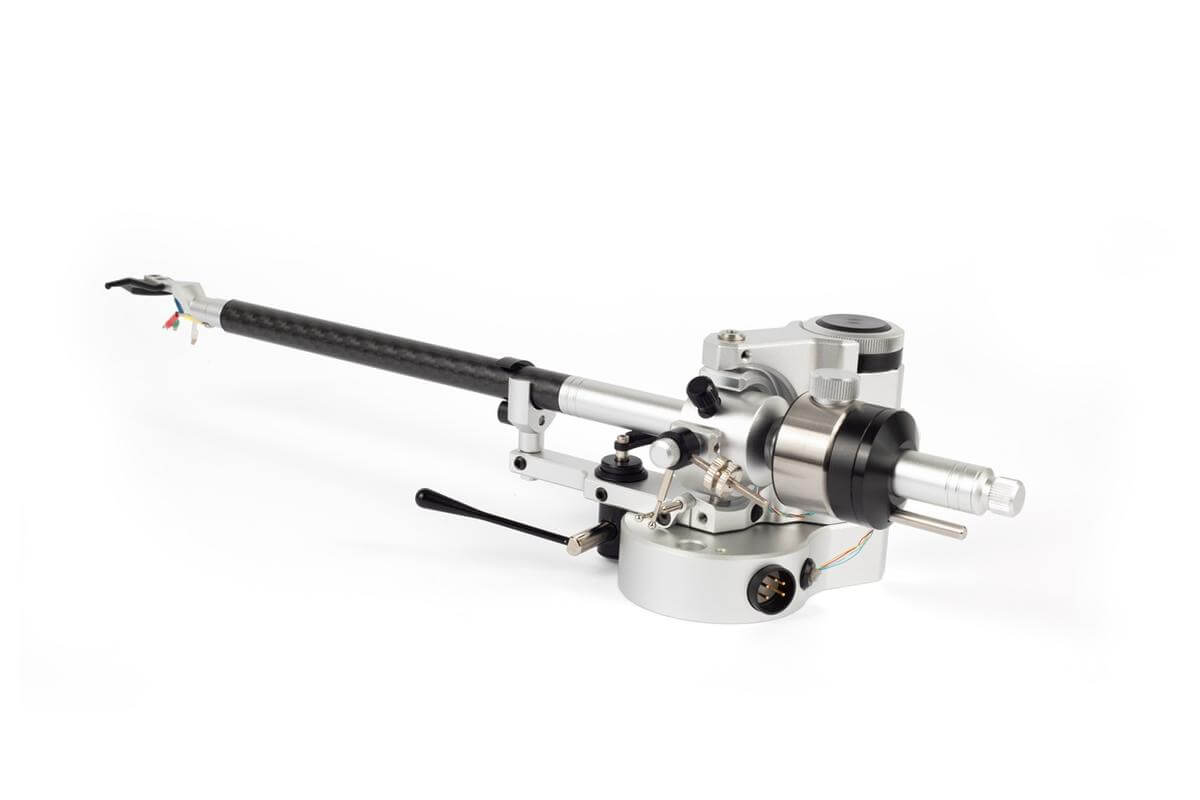
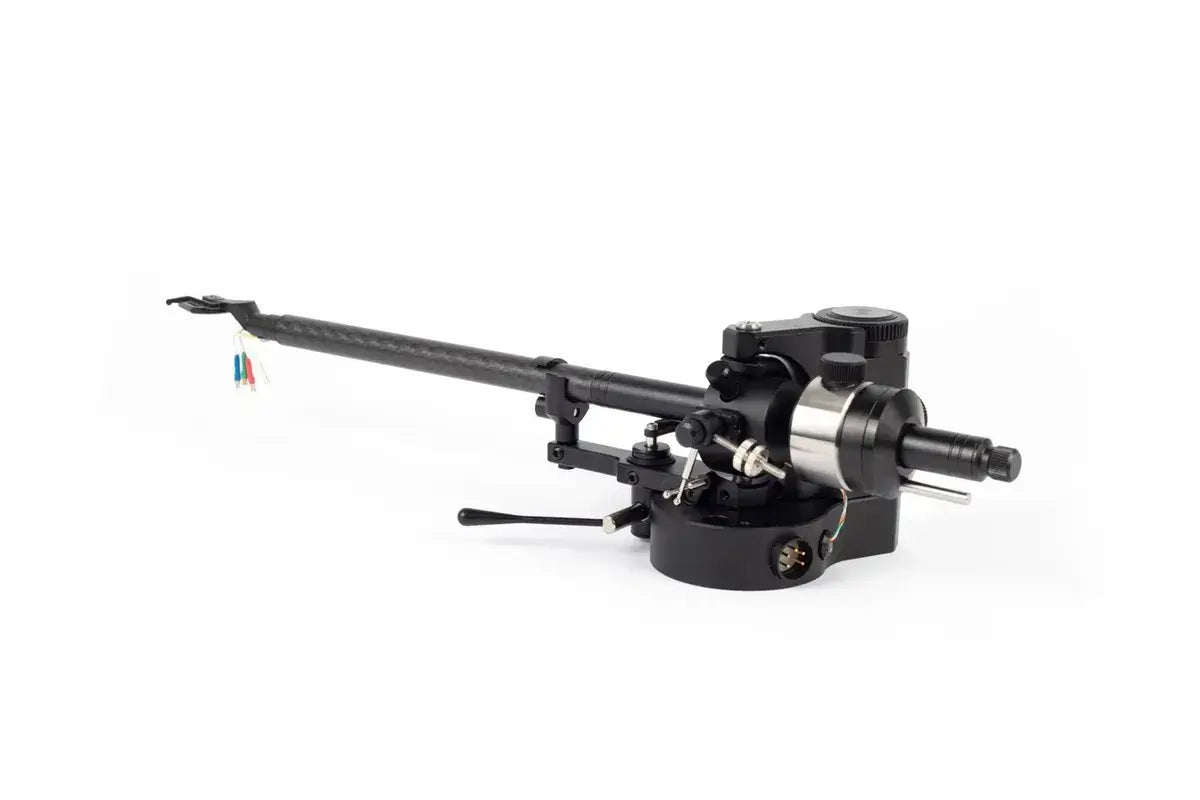
The Auris Audio Hawk Tonearm is a unipivot reference tonearm designed for higher-end, lower-compliance moving coil cartridges.
Why we'd recommend it: The first thing we'd check before recommending this arm is what's currently limiting your system. If it's friction and low-frequency resonance rather than tracking geometry, the Hawk is usually the right answer. Its unipivot bearing lets the arm move with very low mechanical resistance at the pivot, which particularly benefits lower-compliance moving coil cartridges. Ortofon's higher-mass MC range and Van Den Hul designs both suit it well. Pair it with a turntable and plinth stable enough to make the most of a unipivot arm's sensitivity. On a lightweight or resonance-prone deck, some of that advantage gets masked. Unipivot arms are also less forgiving to set up than gimbal designs, since small errors in azimuth are more audible, so it suits listeners comfortable with careful setup, or working with a dealer who can do it for them. Less suitable if you want the easiest possible setup. If you're prepared to spend time getting the setup right, this is where a unipivot starts to justify itself.
The Auris Audio Hawk (HM, Custom) Tonearm, 24k Gold Plated/Chrome is a hand-finished, custom version of the Hawk built for statement systems.
Why we'd recommend it: This one is for listeners who've already settled on a flagship cartridge and want the tonearm built and finished to match it. It shares the standard Hawk's unipivot bearing and higher-mass construction, with hand-finishing and 24k gold plating added on top. That's a genuine difference in build process, not a cosmetic-only upgrade. Pair it with a reference-level turntable and phono stage where the rest of the chain is already resolving well enough for the arm's low-friction bearing to be the audible difference, and with a higher-end moving coil cartridge. Van Den Hul's and Soundsmith's reference ranges are common pairings. An entry-level moving magnet cartridge wouldn't reveal what this arm is capable of. It's a considered, deliberate purchase rather than an incremental upgrade, and the setup demands are the same as the standard Hawk. This is a finishing purchase, not a starting one.
Not sure which tonearm suits your turntable and cartridge? Contact our team for a compatibility check before you order.
6 products

Alphason HR-200S Reference Tonearm Titanium
Auris Audio W-9a Tonearm
Auris Audio W-10a Tonearm
Auris Audio W-12a Tonearm
Auris Audio Hawk Tonearm