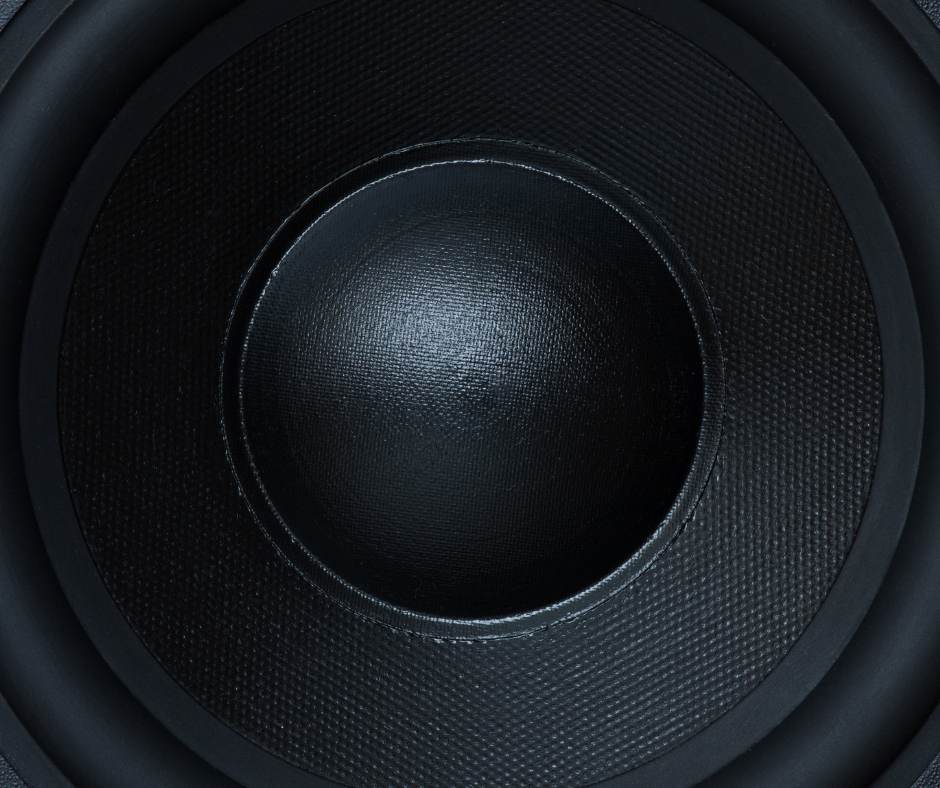
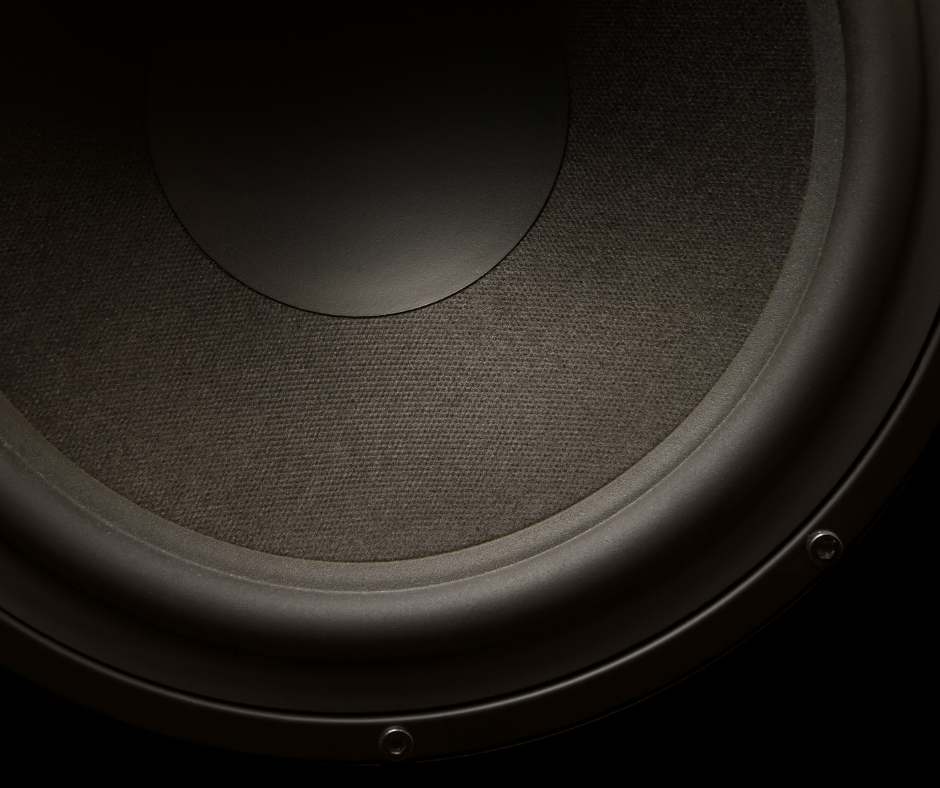
A subwoofer is a specialised loudspeaker designed to reproduce low-frequency sound—typically from 20 Hz to 120 Hz—with greater depth, power and control than full-range speakers can achieve on their own. Subwoofers use large drivers, high-excursion cones and acoustically tuned enclosures to deliver the low-end impact that defines music, film soundtracks and immersive listening experiences.
Why Subwoofers Exist
Standard loudspeakers, including bookshelf and floorstanding speakers, struggle to reproduce the deepest bass frequencies with accuracy and authority. Physical limitations—cabinet volume, driver size and excursion capability—restrict how low they can play without distortion.
A subwoofer fills this gap by handling the most demanding part of the frequency spectrum, allowing the main speakers to operate efficiently in their optimal range.
The Core Components of a Subwoofer
Every subwoofer includes three key elements that determine its performance: the driver, the amplifier and the enclosure.
1. The Driver
Subwoofer drivers are typically 8", 10", 12" or 15" in diameter and built to move significant volumes of air. They use reinforced cones, long-throw surrounds and powerful motor systems to maintain control during extreme excursion.
2. The Amplifier
Most modern subwoofers are powered, meaning they contain built-in amplification specifically optimised for the driver’s impedance, excursion limits and tuning. High-quality subs use robust Class D or Class AB amplifiers that can deliver large bursts of current when deep bass passages demand it.
3. The Enclosure
The enclosure—sealed or ported—shapes how the subwoofer behaves. Its internal volume, bracing, damping and airflow tuning directly influence transient response, output and extension.
What a Subwoofer Actually Does
Subwoofers reproduce the lowest octaves of sound, including:
- Deep bass (20–40 Hz)
- Upper bass (40–80 Hz)
- Low-mid reinforcement (80–120 Hz)
These frequencies are responsible for:
- The physical feeling of bass impact
- Atmospheric weight in music and movies
- Tonality and realism in drums, synths and cinematic effects
- The overall sense of spaciousness in recordings
Without a subwoofer, this foundational energy is either missing or significantly reduced.
Why Subwoofers Improve Any System
Subwoofers do more than increase bass—they improve the performance of the entire system.
1. Reduce Distortion in Main Speakers
When tower or bookshelf speakers try to reproduce deep bass, their drivers must move excessively, creating distortion and masking midrange detail. A subwoofer takes over this burden, allowing the main speakers to operate within their comfort zone.
2. Increase Dynamic Range
Deep bass demands significant energy. Subwoofers deliver this energy cleanly, freeing the amplifier and main speakers to handle mids and highs more effortlessly.
3. Improve Soundstage Depth
Low-frequency information carries spatial cues that help define a recording’s sense of depth and scale. A subwoofer restores these cues, creating a more immersive and realistic presentation.
4. Allow Precise Bass Control
Subwoofers include controls—phase, crossover, volume and sometimes room correction—that let listeners fine-tune bass behaviour to match their room acoustics.
Powered vs Passive Subwoofers
Powered Subwoofers
Powered (active) subs include their own amplifier and tuning circuitry. They are the standard choice for home audio and home cinema because they provide:
- Optimised amplification for the driver
- Higher output with lower distortion
- Independent crossover and level controls
Passive Subwoofers
Passive subs require an external amplifier. They are rare in home audio but common in professional installations and custom systems.
Common Subwoofer Myths
“A Subwoofer Is Only for Home Cinema”
In reality, music benefits equally—sometimes more—from accurate deep bass. Acoustic instruments, electronic tracks and live recordings all contain low-frequency information essential for realism.
“Floorstanding Speakers Eliminate the Need for a Sub”
Even the best towers rarely reach 20–25 Hz with authority. A subwoofer extends the system where towers naturally roll off.
“One Subwoofer Is Enough”
Many rooms produce uneven bass response. Dual subwoofers can dramatically improve smoothness and consistency across the listening space.
The Role of Room Acoustics
Low frequencies interact strongly with room dimensions, boundaries and furnishings. Subwoofers allow strategic placement—sometimes away from the main speakers—to achieve smoother bass throughout the room.
Correct positioning and calibration are essential for unlocking a subwoofer’s full performance potential.
Add controlled low-frequency depth to your system with a precision-tuned subwoofer.
Subwoofers are designed to work alongside main loudspeakers, extending low-frequency performance rather than replacing full-range designs. You can explore all speaker formats in our Loudspeakers collection.
Final Thoughts
A subwoofer is a purpose-built loudspeaker designed to deliver the deepest and most powerful frequencies in a sound system. By producing bass with clarity, authority and minimal distortion, a subwoofer enhances music, movies and gaming alike—while improving the performance of the main speakers. Whether integrated into a stereo system or a home cinema, a high-quality subwoofer provides foundation, impact and realism that no full-range speaker can replicate alone.