
Why choose the Ortofon MC Quintet Bronze
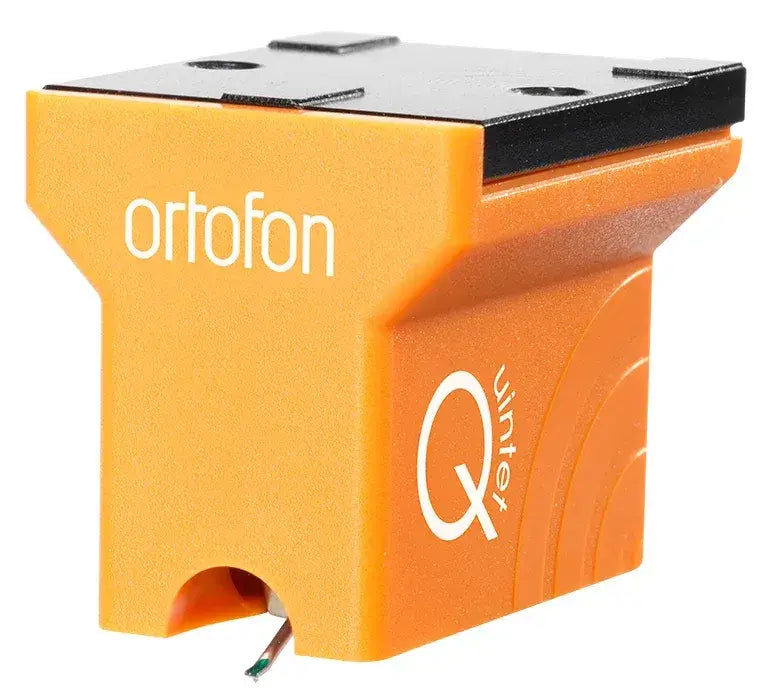
The Ortofon MC Quintet Bronze is the cartridge that moves a vinyl system into what Ortofon calls the higher league of the Quintet Series, sitting above the Quintet Red and Quintet Blue and just below the flagship Quintet Black S. The MC Quintet Bronze is built around a Nude Fine Line diamond stylus, a cut whose slim profile tracks the highest frequency information on a record groove. This cartridge suits listeners who already own a turntable capable of resolving detail and who want a moving coil upgrade that stays evenhanded across the whole frequency spectrum rather than favouring one part of the mix.
What sets the MC Quintet Bronze apart from the rest of the Quintet range?
The MC Quintet Bronze is distinguished within the Quintet Series by its Nude Fine Line diamond, the stylus Ortofon credits with tracking even the highest frequency information on a record. The MC Quintet Bronze also carries a larger stylus footprint than the Quintet Red or Blue, reflected in its 8/40µm tip radius against their 8/18µm figures; a larger contact area spreads tracing pressure across more of the groove wall, which Ortofon ties to reduced distortion and reduced record wear over repeated plays. Where the Quintet Blue aims for a homogeneous, smooth presentation and the Quintet Red is tuned as an easy all-rounder, the Quintet Bronze is voiced to treat every part of the signal with equal weight, which is why Ortofon positions it for classical material and other recordings where instrument separation and a stable soundstage matter.
Which phono stage and tonearm does it suit?
The Quintet Bronze is built with an internal impedance of 5 Ohm, a low figure that makes the cartridge less sensitive to the load placed on it by downstream electronics. That low sensitivity widens the range of phono preamps and step-up transformers the cartridge will perform well with, so buyers don't need to match a narrow impedance window; a recommended load impedance above 20 Ohm covers most moving coil phono inputs. Compliance sits at 15 µm/mN, a moderate figure rather than a very high or very low one, and moderate-compliance cartridges work best on tonearms of low to moderate effective mass. Getting that pairing right matters because the cartridge and tonearm together set a resonance frequency, calculated from the combined mass of cartridge, headshell and tonearm against the cartridge's compliance; a resonance that lands within roughly 7 to 12 Hz keeps the system stable, while a mismatched arm can push resonance outside that window and compromise tracking.
How do you mount and align it on a tonearm?
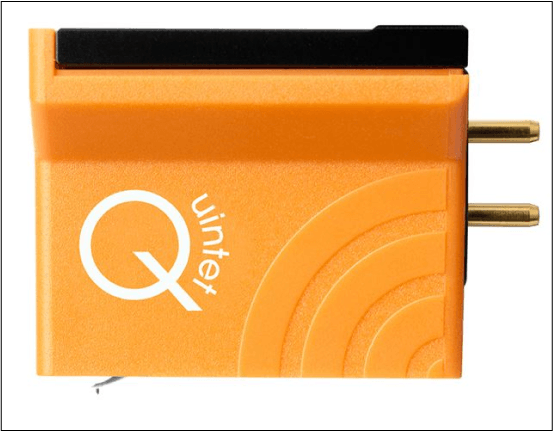
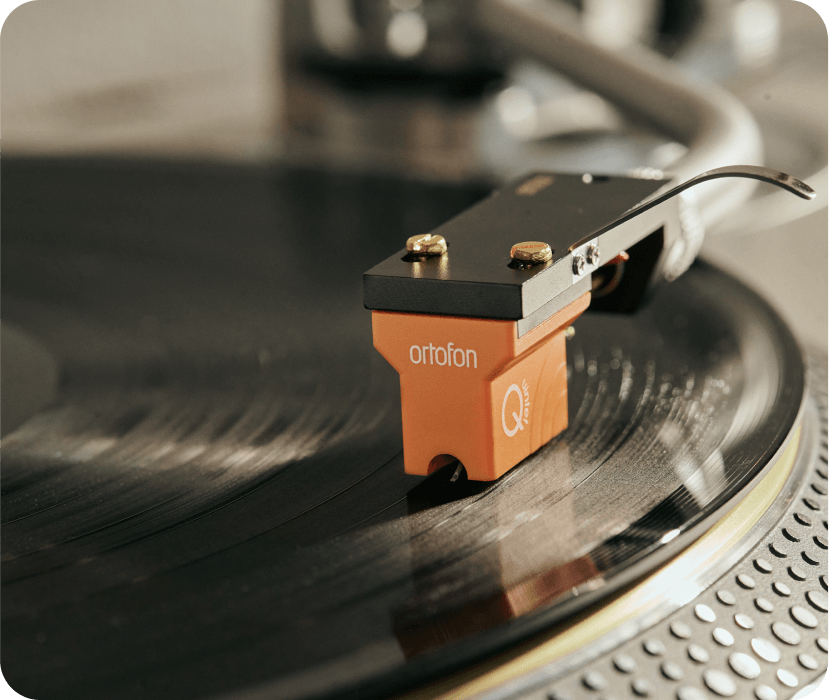
The Quintet Bronze is easy to top-mount because its aluminium frame carries threaded mounting holes rather than requiring separate nuts, and Ortofon supplies both 5mm and 7mm screws so the fit matches whatever headshell thickness the tonearm uses. The cartridge's right-angled body, straight reference lines and clear stylus visibility make it easier to set overhang and azimuth correctly during setup. A recommended tracking force of 2.3g, within a working range of 2.1 to 2.5g, gives the installer a defined starting point rather than a guess, and Ortofon states the series gives good results across most common tonearms once that force and the resonance pairing above are set correctly.
What kind of listening does it reward?
The Quintet Bronze is aimed at listeners who already notice the gap between an entry-level and a higher-resolution moving coil and want that gap closed without the cartridge leaning toward any one genre. Classical recordings, where instruments need clear space around them and dynamic swings need headroom, are the material Ortofon singles out as benefiting from the Bronze's evenhanded balance, though the cartridge is built to carry the same accuracy and precision across other material too. Buyers upgrading from a Quintet Red or Blue, or from another manufacturer's entry-level moving coil, are the most likely audience, since the step up in stylus resolution is where the Bronze earns its place over the lower two models in the series.
Why does the stylus and body construction matter for sound quality?
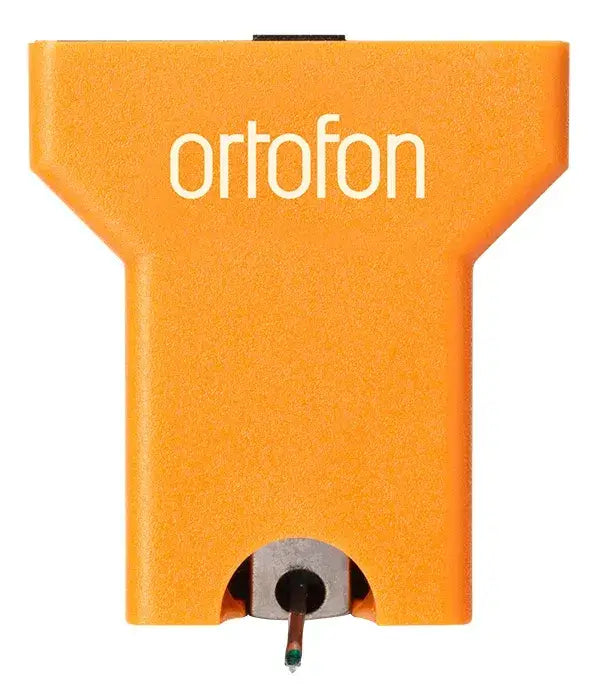
The MC Quintet Bronze is built around a nude-mounted diamond rather than a tipped or bonded one, and because a nude diamond isn't fixed to a separate metal shank it carries less moving mass at the point of contact with the groove. Less moving mass lets the stylus respond faster to small groove modulations, which Ortofon ties to greater detail retrieval and lower distortion compared with tipped diamonds. A finer, more advanced diamond cut also increases the contact area against the groove wall, letting the stylus trace a profile closer to the cutting stylus originally used to press the record, which is the general mechanism behind the Bronze's ability to recover high-frequency detail. The cartridge body is made from an impact-resistant thermoplastic, and the generator uses neodymium magnets, which Ortofon implements across the Quintet range to help achieve a stable output voltage, here measured at 0.3 mV at 1 kHz.
How does the MC Quintet Bronze compare with other cartridges in Ortofon's range?
The MC Quintet Bronze sits in a clear middle position once the rest of Ortofon's catalogue is taken into account. Within the Quintet Series itself, the Quintet Red is the newcomer's entry point, built around a standard elliptical diamond and priced for a high price-to-performance ratio, while the Quintet Blue adds a Nude Elliptical stylus and a smoother, more homogeneous sound without reaching the Bronze's stage in the lineup. Above the Bronze, the Quintet Black S steps up to a Shibata stylus mounted on a sapphire cantilever, a combination built for buyers chasing the closest approach to Ortofon's reference-level accuracy rather than the strong but more accessible resolution the Bronze offers. Buyers who instead want a cartridge with a user-replaceable stylus, so the generator doesn't need reinstalling and realigning every time the stylus wears, are better served by a moving magnet line such as Ortofon's 2M series; that upgrade path isn't available on a moving coil cartridge like the Quintet Bronze, where the stylus and generator form a single fixed assembly. For buyers who have already decided a moving coil generator is what they want, and who are weighing resolution against cost inside that decision, the Quintet Bronze is the point in Ortofon's range built specifically for that trade-off.