QUAD 3CDT
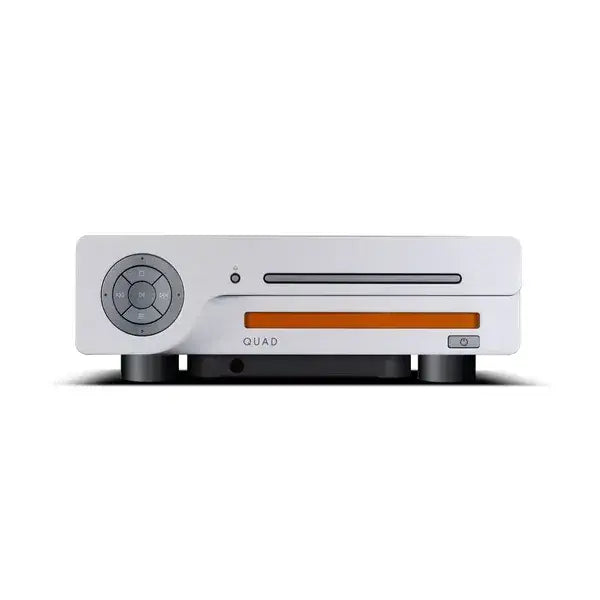
The QUAD 3CDT is a dedicated CD transport built for owners who want to draw music from disc without routing it through the digital-to-analogue conversion stage of a conventional CD player. Rather than combining disc reading and DAC circuitry in one chassis, the QUAD 3CDT handles only disc retrieval and data output, passing a clean digital signal to a separate DAC. It is designed as the natural companion to the QUAD 3, sharing its styling and following the same "closest approach to the original sound" design brief, though it will work with any digital system that accepts a standard coaxial or optical input.
What makes a CD transport different from a standard CD player?
A CD transport such as the QUAD 3CDT is built purely to read a disc and output a digital signal, with no on-board digital-to-analogue converter. Unlike a conventional CD player, which combines disc reading and DAC circuitry in the same chassis, the QUAD 3CDT strips away that conversion stage entirely, leaving disc retrieval and digital output as its only functions. This single-purpose design is the reason to choose a transport over an all-in-one player: it hands digital-to-analogue conversion to a separate, dedicated DAC, such as the one built into the QUAD 3, rather than combining both functions within one enclosure.
Who should choose the QUAD 3CDT over an all-in-one CD player?
The QUAD 3CDT is the right choice for buyers who already own, or plan to own, a separate DAC and want that DAC to remain the single point of digital-to-analogue conversion in their system. Choosing a transport instead of an integrated CD player means the DAC does all the conversion work, rather than sharing that role with a second converter inside a one-box player, and it also means transport and DAC can be replaced independently as a system develops. Buyers who want a single box that plays a disc and outputs an analogue signal on its own, with nothing else to connect, are better served by an integrated CD player rather than the 3CDT. For anyone assembling or already running a QUAD 3 system, the 3CDT is the transport QUAD designed specifically to sit alongside it.
Which systems will the QUAD 3CDT pair with?
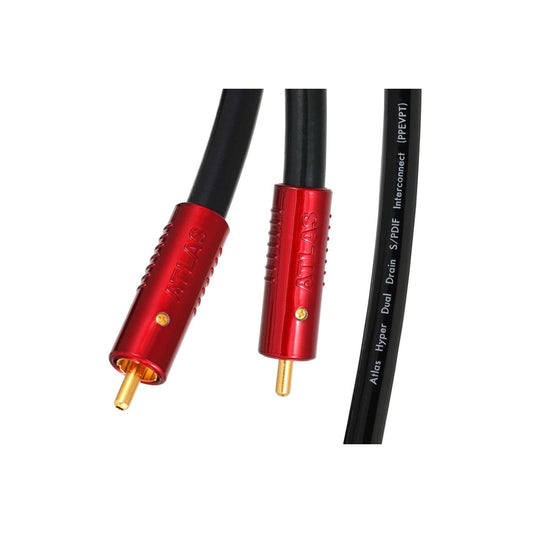
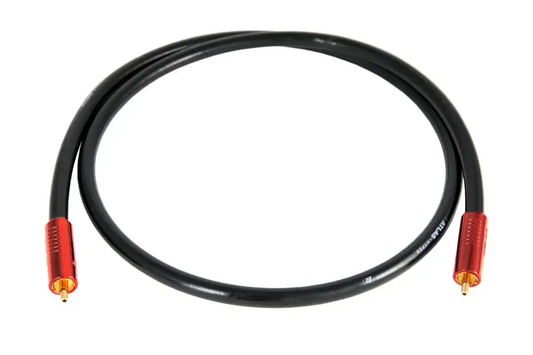
The QUAD 3CDT is fitted with one coaxial and one optical digital output, so it connects to any DAC or DAC-equipped amplifier that accepts a standard S/PDIF input. Its digital output amplitude of 500mVpp (±50mVpp) and 75-ohm output impedance match the S/PDIF standard used across the majority of separate DACs and digital inputs, so compatibility isn't limited to QUAD equipment. A frequency response of -0.01dB from 20Hz to 20kHz, referenced to 1kHz, shows the transport preserves the disc's original frequency content across the audible range before it reaches the DAC, whichever DAC that happens to be. Buyers building a system around the QUAD 3 gain the closest match, since the transport and DAC are engineered together, but the same outputs make the 3CDT a workable source for other digital front ends too.
How is the QUAD 3CDT operated day to day?
The QUAD 3CDT is fitted with an illuminated 10.9 x 159mm full-view LCD display and a remote control, so disc and track information can be read from a listening position without approaching the unit. Standby power consumption of under 0.5W means the transport can be left connected and ready rather than switched off between listening sessions, without a meaningful ongoing power draw. It runs from 220-240V or 100-120V supplies depending on region, so no separate voltage conversion is needed when setting it up within its intended market.
Who is this CD transport built for?
This CD transport is aimed at owners with an existing physical disc collection who still want that collection to remain central to their listening, rather than being replaced entirely by streaming or ripped libraries. Alongside standard audio CDs, it reads CD-R, CD-RW and data discs, and plays FLAC, WAV, WMA, MP3 and APE files burned to disc, so buyers who have archived ripped or downloaded music onto data CDs can play that material through the same transport as their original albums. This range of supported disc and file types means the 3CDT can serve as the one disc-based source for a mixed collection of pressed albums, home-burned CDs and compressed or lossless file archives, without needing a separate device for each.
How does the servo and clock design affect the digital output?
The QUAD 3CDT is built around a high-precision CD mechanism paired with a custom-designed servo control system, and every part of the laser assembly and servo has been optimised to reduce read errors, jitter and distortion at the point the disc is scanned. Servo control and disc access are handled by a dual-core arrangement of a 32-bit RISC CPU and a dedicated MCU, which splits the workload so that error correction can run reliably alongside the mechanical tasks of tracking and reading the disc. Internally, the power architecture keeps the motor and laser servo circuits electrically separate from the decoder stage that retrieves the digital audio signal, so switching noise generated by the motor and servo doesn't feed into the circuit responsible for extracting the data. A temperature-controlled, ultra-low-jitter crystal oscillator (TCXO) supplies the master clock for the servo and decoder section, running from its own independent low-noise supply and grounding scheme; because timing accuracy at this stage determines how stable the extracted S/PDIF signal is, an isolated, low-jitter clock keeps that output free of timing-related distortion before it reaches an external DAC. Three independent low-noise voltage regulators feed the CD servo, and the TCXO clock circuit has its own ultra-low-noise linear regulator, so each stage draws from a supply sized and isolated for its own noise sensitivity rather than sharing one regulator across the whole transport.
What is the cabinet built like?
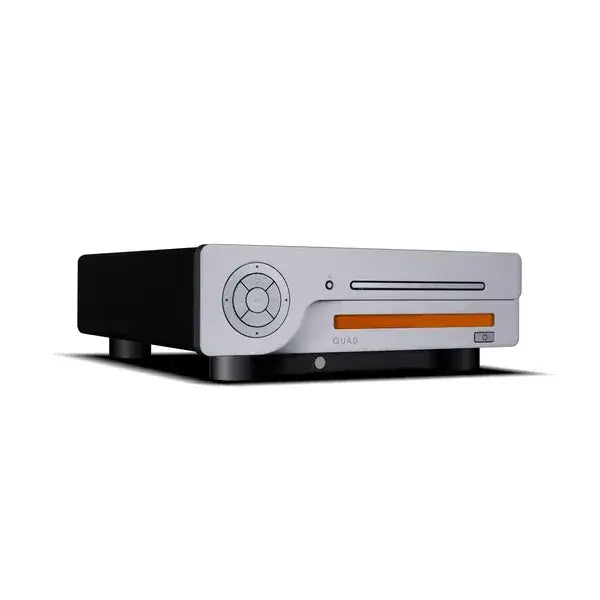
The cabinet of the QUAD 3CDT mirrors the QUAD 3 amplifier's proportions and fascia detailing, so the two units sit together as a matched pair rather than mismatched separates. Internally, the transport mechanism is shielded against vibration and electrical interference, which protects the laser and servo assembly from disturbances that could otherwise reintroduce the read errors and jitter the servo and power design work to eliminate. The unit measures 300 x 300 x 101mm and weighs 5.37kg net.