Wharfedale DIAMOND 12.0i Bookshelf Speakers: Who Should Buy Them?
The Wharfedale Diamond 12.0i is a two-way bookshelf speaker built for buyers who want a compact stereo or shelf-mounted speaker that pairs with modest amplification rather than a high-power system. It belongs to the Diamond 12i Series, the updated generation of a range that Wharfedale first launched in 2020 and refined through five years of production feedback. The Diamond 12.0i keeps the original series' 4-inch Klarity cone bass/mid driver and 1-inch textile dome tweeter, so buyers already familiar with the outgoing Diamond 12 range get the same acoustic platform in a cabinet with revised port tuning and new finish options. It suits listeners building a small stand-mounted or shelf-based stereo pair rather than buyers who need floor-standing bass extension or high-SPL output in a large room.
What Amplifier Does the DIAMOND 12.0i Need?
The Wharfedale Diamond 12.0i is rated for amplifiers delivering between 20W and 60W, which places it with entry to mid-level stereo amplifiers and AV receivers rather than high-power power amplifiers. Its sensitivity of 87dB (2.83V at 1m) means it needs a reasonable amount of amplifier power to reach room-filling volume, so buyers pairing it with very low-power valve amps or budget receivers under 20W should check their amplifier's output against this range before buying. The speaker presents a nominal impedance of 8 ohms, with a minimum impedance of 4.0 ohms, so it's compatible with amplifiers designed for standard 8-ohm loads, including most mainstream stereo amplifiers and AV receivers on the market.
How Loud Can the DIAMOND 12.0i Play?
The Wharfedale Diamond 12.0i is capable of a peak sound pressure level of 95dB, which indicates the maximum output it can produce in short bursts without breaking up. Its frequency response of 70Hz to 20kHz (+/- 3dB) and bass extension down to 65Hz (-6dB) point to a speaker suited to near-field or small-to-medium room listening rather than large open-plan spaces, where a floor-standing model or a subwoofer would better handle low-frequency demand.
What Does the Klarity Cone Bring to the Bass/Mid Driver?
The Diamond 12.0i's 4-inch (100mm) bass/mid driver uses a cone made from Klarity, a polypropylene and mica blend that Wharfedale carries over unchanged from the outgoing Diamond 12 range. The material combines stiffness with low mass, which lets the cone respond quickly to the amplifier signal without flexing in ways that would add distortion. A low-damping surround increases the driver's efficiency and dynamic range, while ribbed cone shaping, developed through profile simulation, keeps the frequency response linear across the driver's working range. This cone technology is the reason the driver can produce a controlled low-frequency output from a compact 4-inch diameter rather than relying on a larger cone or an additional bass driver.
How Does the Magnet System Affect Amplifier Matching?
Each mid/bass driver in the Diamond 12.0i is fitted with a magnet assembly that includes an aluminium compensation ring, which reduces changes in the driver's electrical inductance as the voice coil moves. This keeps the driver's electrical behaviour more consistent across its excursion, reducing intermodulation distortion and helping the driver track the amplifier signal accurately at higher output levels. The voice coil itself is wound on an epoxy/glass fibre bobbin, a material Wharfedale selected over standard bobbin materials at this price point for its higher power handling, thermal stability, and structural strength under sustained use. These choices support the driver's ability to handle sustained amplifier power without premature thermal or mechanical stress.
What Does the Tweeter Contribute to the Sound?
The Diamond 12.0i's tweeter is a 1-inch (25mm) textile dome made from woven polyester with a high-loss damping coating, which extends and smooths the treble response compared with an undamped dome. Wharfedale designed the front plate around the tweeter with a flat profile and a minimal waveguide, a configuration intended to widen dispersion so the treble output doesn't narrow sharply off-axis. This matters for buyers setting up a stereo pair, since wider dispersion gives more flexibility in seating position and toe-in angle without a noticeable drop in treble output away from the central listening position.
Why Does the Crossover Design Matter for This Speaker?
The Diamond 12.0i's crossover is built around a Linkwitz-Riley topology with air-core inductors, a component choice more commonly found in higher-priced speakers than at this level. Wharfedale tunes the crossover point at 2.7kHz and adjusts it for minimal phase shift, which keeps the handover between the bass/mid driver and tweeter smooth rather than creating an audible gap or overlap at the crossover point. Because air-core inductors add electrical resistance compared with iron-core alternatives, Wharfedale modifies the bass/mid driver's magnet structure to compensate for this resistance, which allows the driver to maintain fast, clean bass output despite the inductor choice.
How Does the Cabinet Reduce Unwanted Resonance?
The Diamond 12.0i's enclosure uses multi-layered sandwich construction, a build method that reduces panel resonance by combining layers with different damping characteristics rather than relying on a single panel thickness. Wharfedale states that the adhesive properties between these layers were acoustically tested, indicating the bonding itself was treated as part of the resonance-control design rather than a purely structural step. Inside the 4.4-litre cabinet, computer-modelled spot bracing connects opposite walls, which reduces vibration at the panel level without transmitting it between surfaces. A lower-resonance cabinet means less cabinet coloration reaching the listener, since the enclosure interferes less with the sound produced by the drivers.
How Has Wharfedale Changed the Bass Port for the 12i Series?
The Diamond 12.0i's bass reflex enclosure carries over the driver complement from the outgoing Diamond 12 range but incorporates a revised port and internal damping, developed by Wharfedale's Director of Acoustic Design, Peter Comeau, with engineers Dan Bailey Ornellas and Oliver Davies. The team used laser interferometry, anechoic and in-room measurement, and computational fluid dynamics to assess airflow and pressure through the port structure, then confirmed the results through extended critical listening. The outcome is a bass response with tighter control and a smoother transition into the midrange, which Wharfedale notes performs consistently across different room placements, an important consideration for buyers who don't have a dedicated, acoustically treated listening space and need the speaker to behave predictably against a wall or in a bookshelf position.
What Finish Options Does the DIAMOND 12.0i Come In?
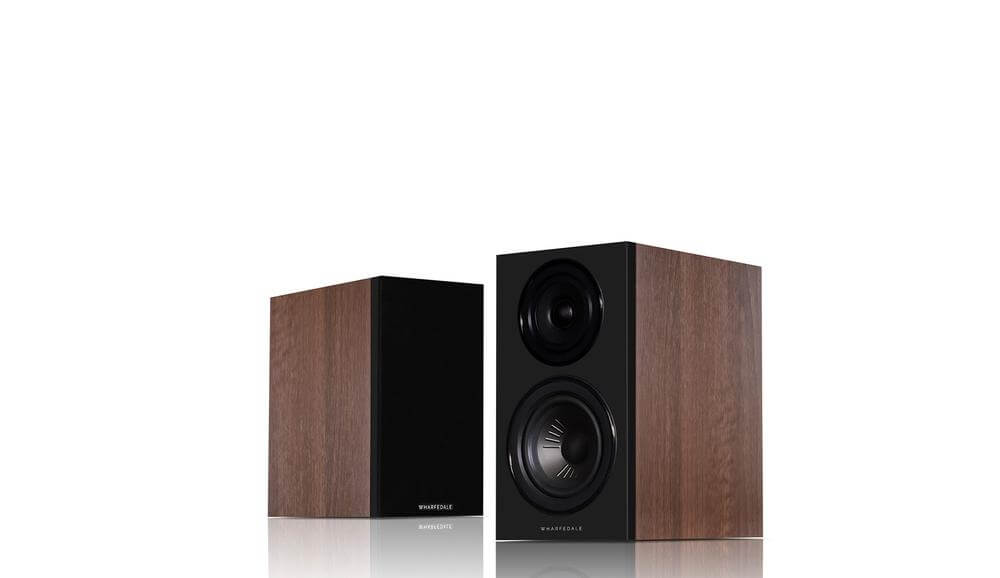
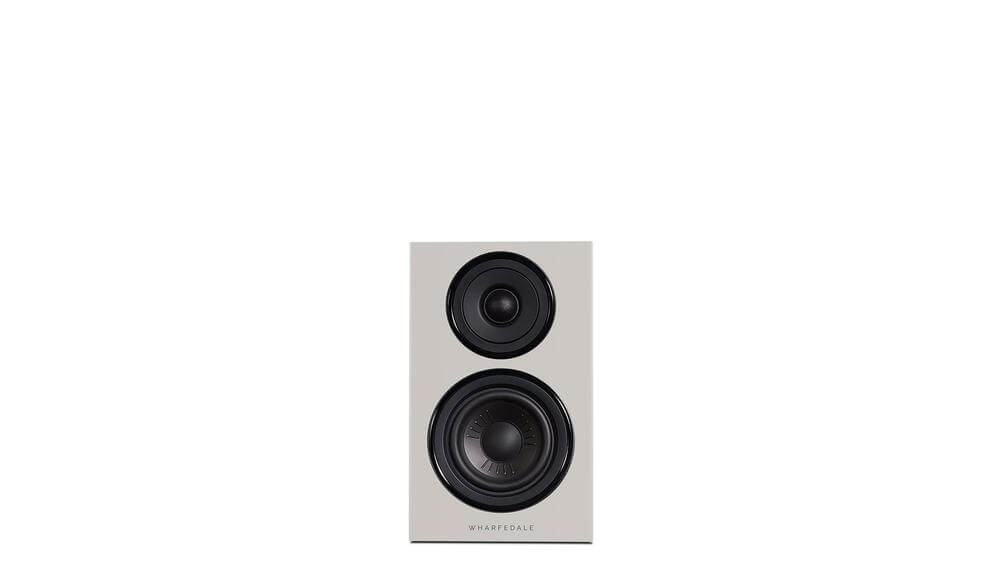
The Wharfedale Diamond 12.0i is available in three finishes: an all-black semi-matte finish, a Classic Walnut finish with a semi-matte black baffle, and a Stone Grey finish. These finishes are new to the Diamond 12i Series and sit alongside the acoustic changes rather than replacing any part of the driver or crossover specification, so the choice between them is a matter of matching the cabinet to a room's interior rather than a factor in the speaker's measured performance.
Where Does the DIAMOND 12.0i Sit Within Wharfedale's Range?
The Wharfedale Diamond 12.0i is part of the Diamond 12i Series, a bookshelf speaker range that also includes larger stand-mounted models built around the same Klarity cone and crossover engineering. Buyers who need deeper bass extension or higher maximum output for a larger room should compare the Diamond 12.0i against the larger models in the same series, which share its driver and crossover technology but add cabinet volume and driver size. Buyers moving from the original Diamond 12 Series gain the same driver and crossover platform in a cabinet with revised port tuning and the new finish options.