What makes the Wharfedale Diamond 12.1 different from other affordable bookshelf speakers?
The Wharfedale Diamond 12.1 is a two-way standmount speaker built around a new Klarity cone, a blend of polypropylene and mica that adds stiffness without adding weight. That combination matters for a compact 5-inch bass/mid driver, because a lighter, stiffer cone can accelerate and stop more quickly, which reduces the smearing and delayed decay that heavier cones introduce. The Klarity cone is fitted with a low-damping surround, which keeps the cone free to move quickly rather than absorbing energy the way a high-damping surround does. To flatten the response curve without relying on a high-damping surround, Wharfedale reshaped the cone profile and added stiffening ribs, which let the driver stay both fast and controlled. The result is a driver aimed at timing accuracy and low colouration, which is the core differentiator buyers should weigh against rival speakers at this size and price point.
The tweeter follows the same logic. Its 25mm dome is made from a woven polyester film with a high-loss coating, chosen to extend high-frequency response smoothly rather than let it peak and roll off unevenly. The front plate around the dome stays flat and largely unobstructed, with only a short duct to balance acoustic loading and support sound pressure level measurement, so the tweeter disperses sound widely instead of beaming it narrowly down a central axis. Buyers comparing tweeters across brands should note that dispersion behaviour like this affects how consistent the sound is off-axis, which matters more in real rooms than an on-axis frequency response graph alone can show.
Will it suit a 2-channel hi-fi system or a home cinema setup?
This speaker is engineered to work in both roles rather than being optimised for one. Its compact 312 x 180 x 278mm cabinet and 6.8kg weight make it easy to place on stands for stereo listening or to integrate as a front or supporting speaker in a home theatre layout without dominating the room. Wharfedale engineers the Diamond 12.1 to hold its performance steady whether it's used in a smaller room or a larger space, which is relevant for buyers who haven't finalised their room layout or who plan to expand a stereo pair into a multichannel system later. There's no AV shield fitted, so buyers placing it close to a CRT display or other magnetically sensitive equipment should factor that in, though this is largely a non-issue with modern flat-panel screens.
What amplifier does the Wharfedale Diamond 12.1 need?
The Wharfedale Diamond 12.1 is an 8-ohm nominal speaker, with a minimum impedance of 4 ohms, so it's compatible with the vast majority of stereo and AV amplifiers without requiring a specialist high-current design. Wharfedale specifies a recommended amplifier power range of 20 to 100 watts, and with a sensitivity of 88dB (2.83V @ 1m), the speaker doesn't demand a particularly powerful amplifier to reach reasonable listening levels in a domestic room. Buyers building a system around a modest integrated amplifier or an AV receiver's stereo channels should find it an easy load to drive, while the 100-watt upper limit still leaves headroom for buyers who prefer a more powerful amplifier for dynamic reserve.
What does the crossover design mean for sound quality?
The Wharfedale Diamond 12.1 is built with an acoustic LKR 24dB crossover topology using air-core inductors, a component type more commonly found in high-end speakers because it produces lower distortion than the inductor types used in most budget crossovers. The trade-off is that air-core inductors carry higher electrical resistance than a standard laminated-steel or ferrite-core inductor, so Wharfedale modified the magnetic structure of the mid/bass driver to compensate for that resistance. This pairing is what allows the speaker to combine a low-distortion crossover with a bass response that stays fast and clean rather than becoming loose or underdamped, and it's the kind of engineering trade-off buyers rarely see spelled out at this price level.
The bass driver's magnet system also includes an aluminium compensation ring, which reduces variation in inductance as the voice coil moves in and out. This limits distortion and intermodulation generated within the motor system itself, working alongside the crossover to keep the driver's output consistent across the frequency range rather than only at a single test point. The voice coil is wound on an epoxy/glass-fibre bobbin, a material choice that avoids the eddy currents an aluminium bobbin introduces and gives higher power handling than aluminium, while remaining stiffer than the Kapton bobbins typically found at this price level.
How is the cabinet built to control resonance?
The Wharfedale Diamond 12.1 is housed in a rear-ported, bass-reflex enclosure with an internal volume of 8.2 litres, sized specifically so the cabinet air volume works with the driver rather than fighting it, supporting the 60Hz bass extension and 65Hz-20kHz frequency response (+/-3dB) that Wharfedale specifies. The cabinet walls use a multi-layered sandwich construction intended to suppress the cabinet's own resonant signature, since an enclosure that resonates audibly can colour the sound regardless of how well the drivers themselves perform. Wharfedale states that even the resonant properties of the glue between the cabinet layers were measured to identify the optimum combination, which is a level of construction detail that matters to buyers concerned with cabinet colouration specifically, rather than driver performance alone.
Inside the cabinet, Intelligent Spot Bracing connects opposite walls using a wood brace shaped to target resonance reduction more effectively than a standard brace layout. Wharfedale notes these braces were modelled by computer simulation to improve on the commonplace figure-of-eight bracing pattern, which can simply transfer resonance from one wall to another rather than removing it. For buyers evaluating cabinet quality, bracing design like this is one of the more reliable indicators of how much of a speaker's budget went into structural engineering rather than cosmetic finish.
Which finishes are available?
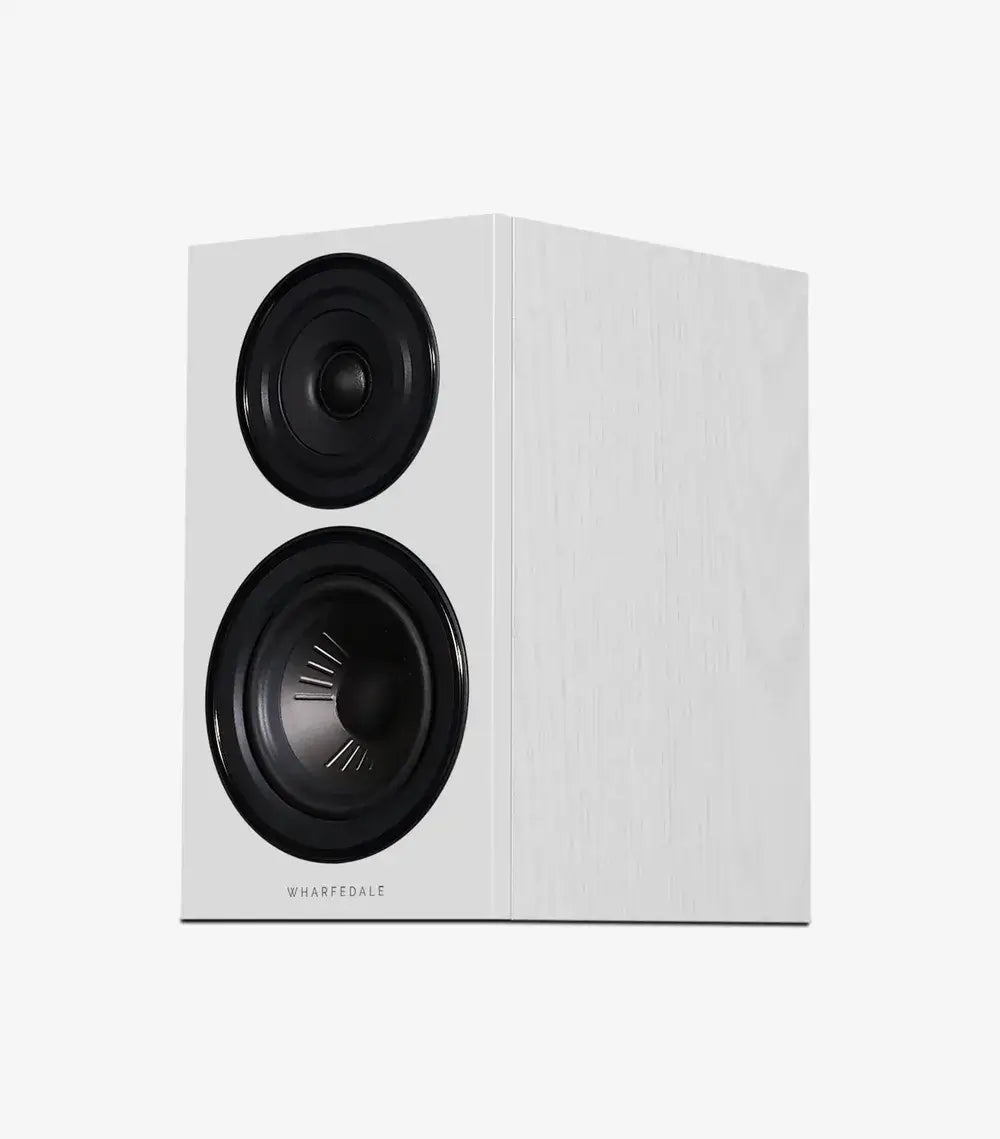
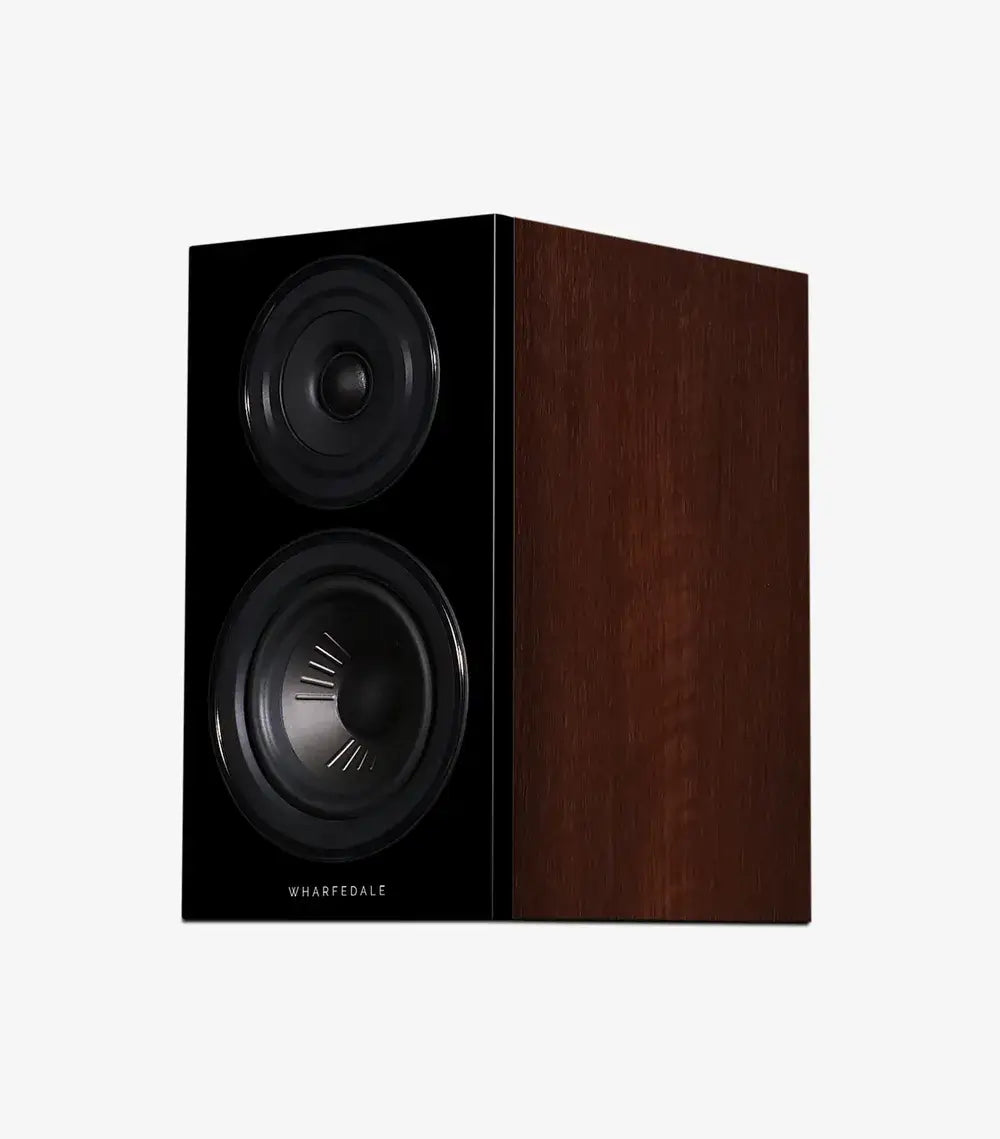
The Wharfedale Diamond 12.1 is available in Black Oak, Walnut Pearl, Light Oak, and White Oak finishes, giving buyers a choice that can match either a darker AV rack-style setup or a lighter, more traditional wood-veneer look. Since the cabinet finish doesn't affect the internal bracing, port tuning, or driver specification, buyers can choose based on room decor without any trade-off in the speaker's electrical or acoustic performance.
Where does the Wharfedale Diamond 12.1 sit against other speakers, and who should buy it?
The Wharfedale Diamond 12.1 is positioned within the wider Diamond 12 series as a standmount model built to affordable hi-fi pricing while carrying component choices more typical of higher-tier speakers. Its air-core crossover inductors are more commonly found in high-end speakers than in typical budget models, since they produce the lowest distortion of all inductor types, a distinction buyers can weigh against other speakers in this price bracket. Its 8-ohm nominal, 4-ohm minimum impedance and 88dB sensitivity also mean it doesn't require a specialist amplifier, which broadens the range of equipment it can pair with.
Buyers who already own or plan to build a 2-channel hi-fi system will find the low-colouration bass/mid driver and wide-dispersion tweeter well suited to stereo listening. Buyers assembling a home cinema system will find the same compact cabinet dimensions and all-application design make it viable as a front or supporting channel without needing a separate speaker range for that role. For buyers who may later expand from a stereo pair into a full surround system, staying within the Diamond 12 series keeps tonal characteristics consistent across additional speakers, which is a practical ownership consideration when building out a system over time rather than buying it all at once.