Why Choose the Wharfedale DIAMOND 12.3 Floorstanding Speakers?
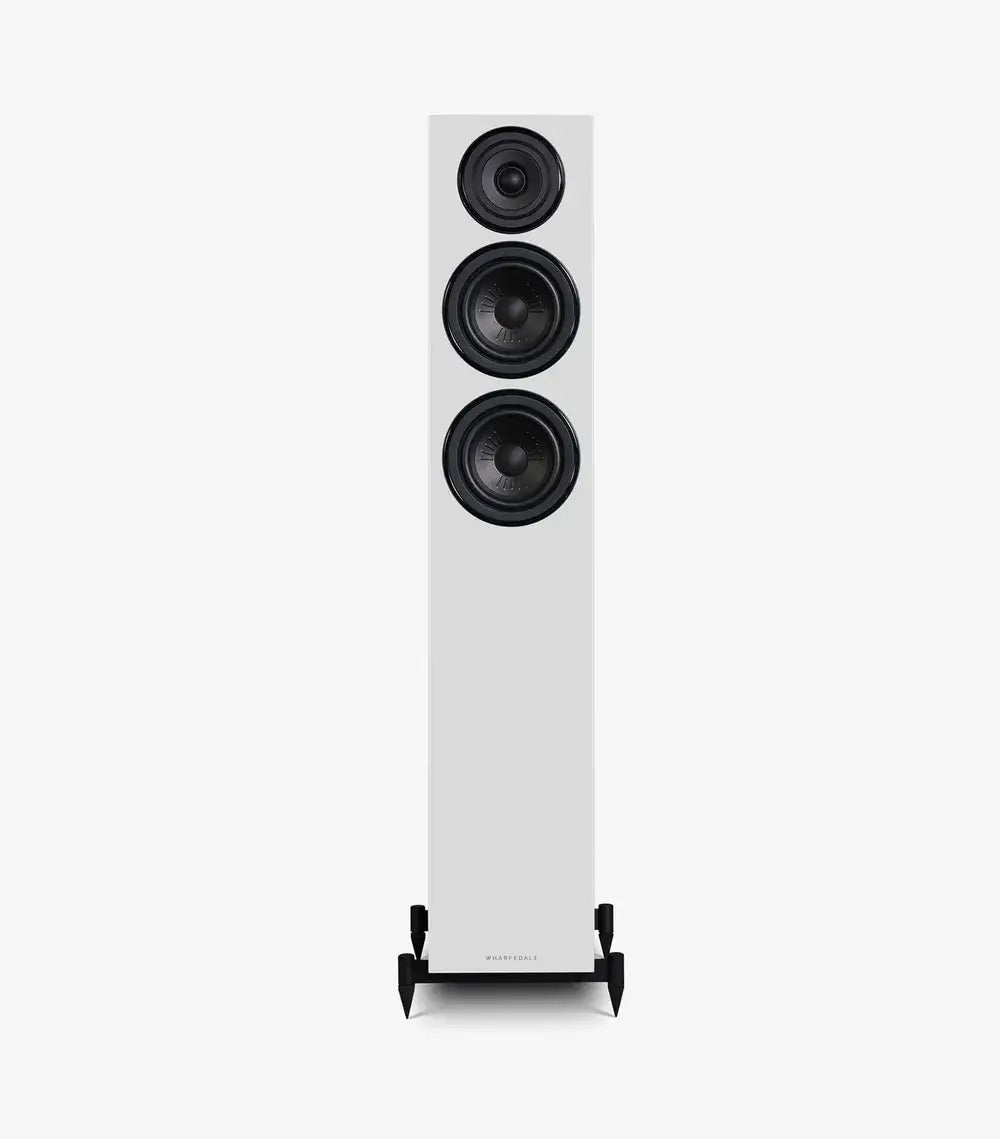
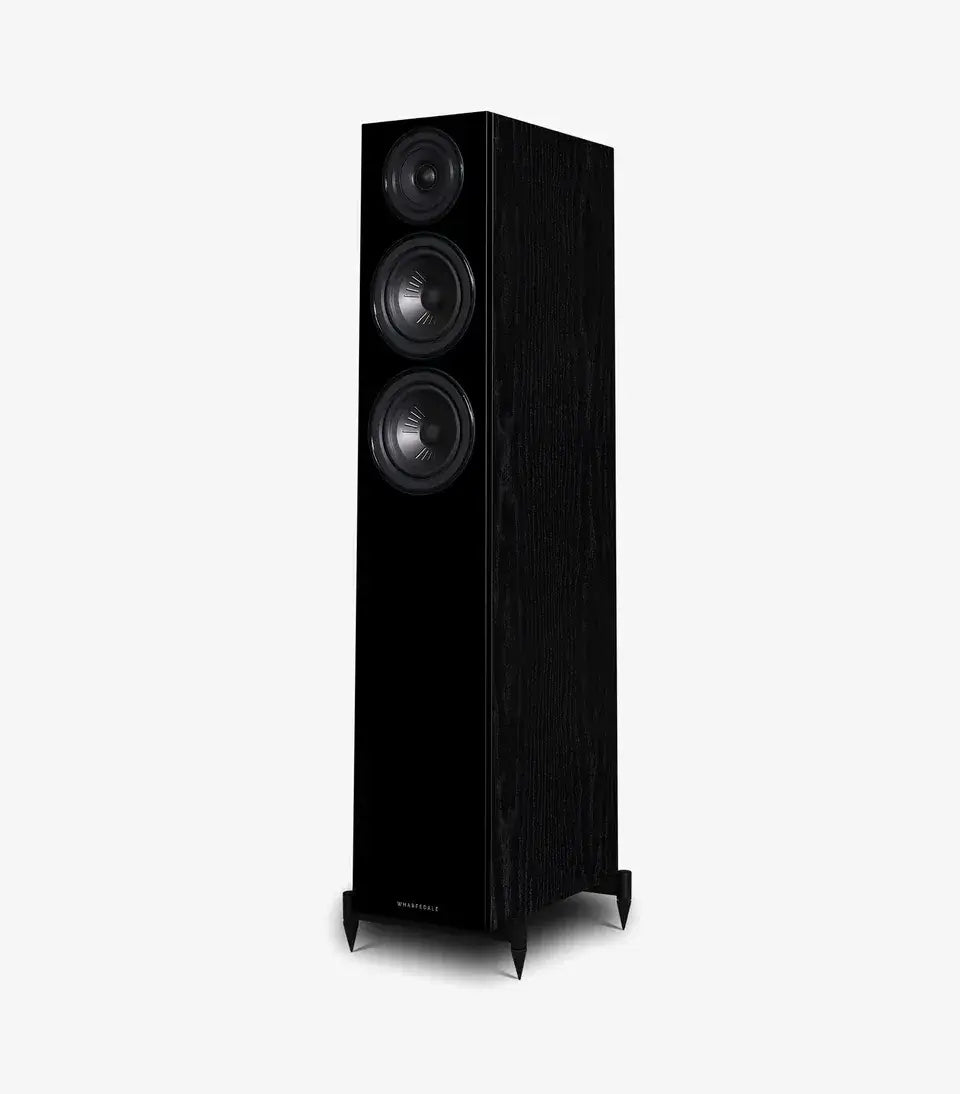
The Wharfedale DIAMOND 12.3 is the compact floorstanding model in the DIAMOND 12 series, built for buyers who want the accuracy and musicality of Wharfedale's standmount DIAMOND 12 speakers combined with the added presence and power that a floorstanding cabinet delivers. It's configured as a 2.5-way design, pairing dual 130mm (5") Klarity mid-bass drivers with a 25mm (1") dome tweeter, and it's aimed squarely at two-channel hi-fi listening as well as front-channel duty in a home theatre layout. The DIAMOND 12.3 has taken What Hi-Fi's award for best floorstanding speaker in its class for five consecutive years, a result that reflects the driver, crossover, and cabinet engineering carried through from Wharfedale's standmount range into a taller, more powerful enclosure.
What Makes the DIAMOND 12.3 Stand Out From Other Floorstanders in Its Class?
The DIAMOND 12.3 is differentiated by driver and crossover engineering that Wharfedale typically reserves for higher-priced designs. Its Klarity cone blends polypropylene with mica, adding stiffness that reduces flexing so the cone stays lightweight while resisting the distortion that comes from an overly flexible surface. Wharfedale paired this cone with a low-damping surround rather than the high-damping surrounds common at this level, simulating multiple cone shapes and adding stiffening ribs until the design reached a flat response curve without sacrificing the low colouration and quick dynamic response a low-damping surround provides. The voice coil is wound on a high-power epoxy/glass-fibre bobbin, a construction that's unusual in speakers at this price point: it avoids the eddy currents an aluminium bobbin can introduce, handles more power than aluminium, and holds its shape better than the Kapton bobbins more commonly found in this class. The magnet system adds an aluminium compensation ring to limit variation in inductance as the voice coil moves, which keeps distortion and intermodulation from the motor system in check. Together, these choices are what have kept the DIAMOND 12.3 winning class awards against newer competition year after year.
Which Amplifiers and Systems Will It Match?
The DIAMOND 12.3 is rated at 8 ohms nominal impedance with a minimum of 5.0 ohms, so it's compatible with the great majority of solid-state and valve amplifiers designed for 8-ohm loads. Wharfedale specifies a recommended amplifier power range of 30 to 150 watts, giving buyers headroom to run the speaker from a modest integrated amplifier or to drive it harder from a more powerful unit without exceeding its handling. A sensitivity of 89dB (2.83V @ 1m) means the DIAMOND 12.3 doesn't demand a high-current amplifier to reach realistic listening levels, which widens the pool of suitable partnering electronics for a two-channel system. Frequency response is quoted at 45Hz to 20kHz (+/-3dB), with bass extension reaching down to 40Hz at -6dB, so the speaker covers most musical content without a subwoofer in a typical listening room, while still leaving room to add one of Wharfedale's subwoofers for home theatre use. For anyone building a full DIAMOND 12 system, the range also includes the DIAMOND 12.C centre channel and the DIAMOND 12.0, 12.1, and 12.2 standmount models, so the 12.3 can serve as the front left and right pair in a matched multichannel setup that shares the same Klarity driver technology throughout.
How Should You Position and Set It Up at Home?
The DIAMOND 12.3 is a rear-ported, bass-reflex design, so it needs clearance behind the cabinet for the port to work as intended; placing it hard against a rear wall will alter the bass output the enclosure was tuned to deliver. Wharfedale sized the 26.6-litre internal cabinet volume specifically to work with the dual 130mm drivers, so the port and box volume are matched to the drive units rather than treated as separate, adjustable elements. At (925+50) x 180 x (320+28) mm and 19.5kg per speaker, the DIAMOND 12.3 is tall and narrow enough to sit as a floorstander in a domestic listening room without needing stands or additional support furniture, and its footprint is compact enough for placement either side of a television for home theatre use. Because the enclosure and porting were engineered together as a system, positioning it in open space with some distance from the rear wall lets the bass reflex design perform as intended rather than being constrained.
Who Should Buy the Wharfedale DIAMOND 12.3?
The Wharfedale DIAMOND 12.3 is suited to buyers assembling a two-channel hi-fi system who want more scale and low-frequency extension than a standmount speaker can offer without moving up to a larger, heavier floorstander. It also suits anyone building a home theatre front pair who wants speakers capable of handling both music and film duty, given its 30-150W amplifier range and its ability to integrate with the matching DIAMOND 12.C centre channel and Wharfedale subwoofers. The speaker is available in Black Oak, Light Oak, Walnut Pearl, and White Oak finishes, so it can be matched to different furniture and room finishes without changing the underlying driver or cabinet specification. Because the 12.3 shares its Klarity driver technology and crossover approach with the rest of the DIAMOND 12 range, it also suits buyers who want the option to expand into a full surround system later using speakers from the same series.
How Do the Drivers and Crossover Work Together?
The DIAMOND 12.3 is built around dual 130mm Klarity drivers for mid-range and bass duty, with a 25mm dome tweeter handling the treble. That tweeter dome is made from a woven polyester film with a high-loss coating, and its magnet system and front plate have been optimised for wide dispersion so the highs don't narrow or compress off-axis. The front plate itself is flat, exposing the dome as fully as practical, with only a short duct present to balance the acoustic load and improve sound pressure level measurement rather than to restrict output. Crossing the drivers over is a 24dB acoustic LKR network built with air-core inductors, chosen because they produce less distortion than the iron or ferrite-core inductors typically used in this class. Air-core inductors carry higher resistance than laminated steel or ferrite types, so Wharfedale modified the magnetic structure of the mid/bass driver to compensate, which is what keeps bass output fast and clean rather than smeared by inductor-related distortion. This combination of driver, tweeter, and crossover engineering is what produces the 2.2kHz crossover point and the 102dB peak SPL the speaker is rated to reach.
What's Built Into the Cabinet Construction?
The DIAMOND 12.3 cabinet is built as a multi-layered sandwich construction rather than a single panel thickness, a choice made to subdue the cabinet's own resonant signature so it colours the sound less. Wharfedale went as far as measuring the resonant properties of the glue used between the layers to find the combination that best damps unwanted vibration. Inside, Intelligent Spot Bracing connects opposite cabinet walls using a specific wood brace form modelled by computer simulation, improving on the common "figure of eight" brace pattern, which can simply transfer resonance from one wall to another rather than removing it. This bracing and panel construction work together with the sized internal volume to keep the enclosure itself acoustically neutral, letting the driver and crossover engineering do the work of shaping the sound rather than the cabinet's own vibration.
Where Does the DIAMOND 12.3 Sit Within Wharfedale's Floorstanding Range?
The DIAMOND 12.3 is positioned as the compact option among the DIAMOND 12 series floorstanders, sitting alongside the larger DIAMOND 12.4 within the same series. Buyers who want the DIAMOND 12 series sound but need a smaller footprint, or who don't need the extra output and bass extension a taller cabinet provides, are the natural fit for the 12.3, while those prioritising maximum scale and bass reach within the same series would look to the 12.4 instead. Because the 12.3 shares its Klarity cone, voice coil, and crossover technology with the DIAMOND 12.0, 12.1, and 12.2 standmount models and the 12.C centre channel, it's also the logical floorstanding front-pair choice for anyone building a matched DIAMOND 12 system around an existing or planned centre channel and surrounds, rather than mixing floorstanders and standmounts from different Wharfedale series.