Why Choose the Wharfedale
DIAMOND 12.3Di for a Dolby Atmos Layout?
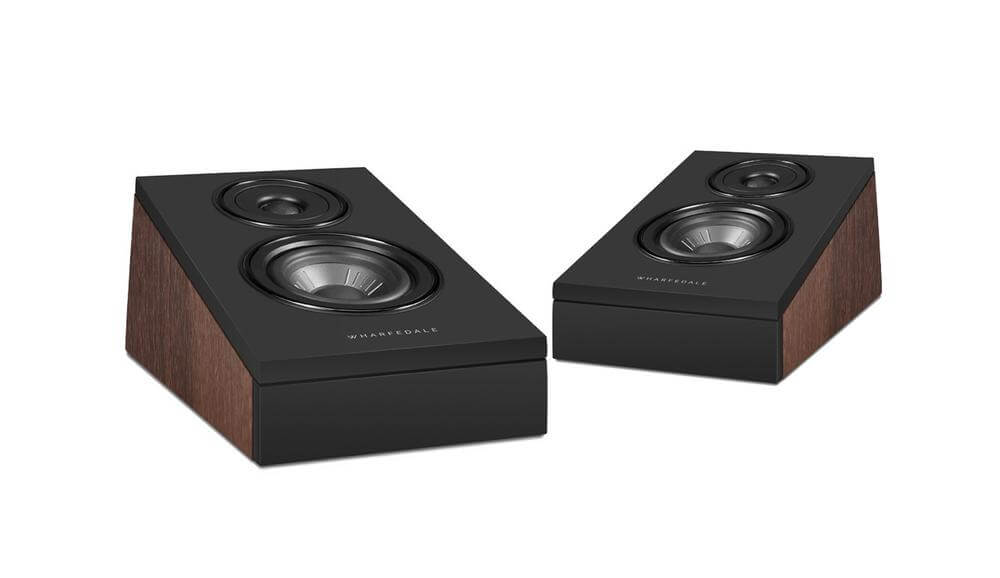
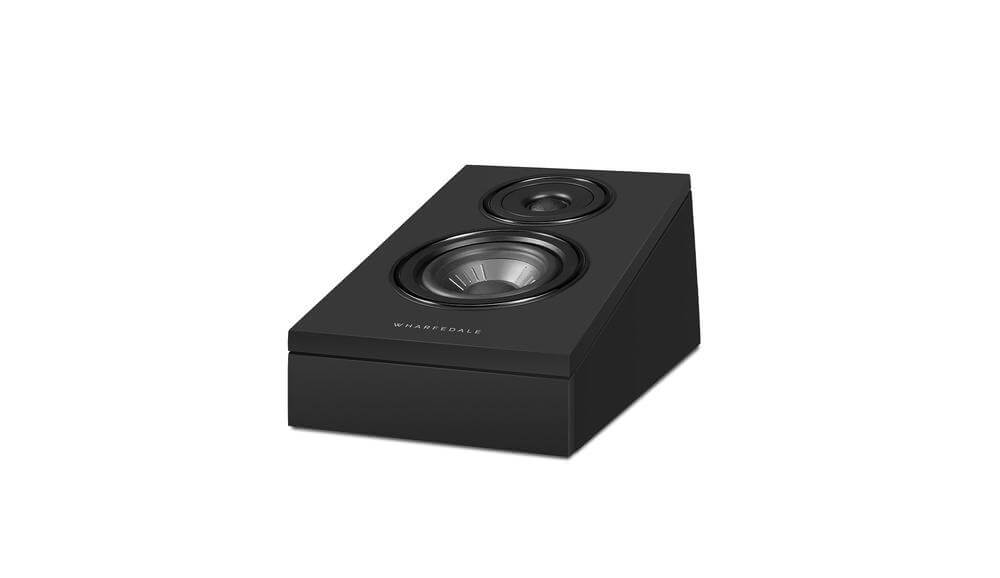
The Wharfedale DIAMOND 12.3Di is a 2-way Atmos speaker built as an add-on channel rather than a standalone stereo model, and that's the first thing a buyer needs to understand before comparing it to a regular bookshelf speaker. Its closed-box enclosure and compact 145 x 180 x 310mm footprint let it sit on top of an existing Diamond 12i bookshelf or floorstander, or mount close to a wall, without the placement sensitivity that a ported cabinet brings. At 3.2kg per unit, it's light enough for shelf or upward-firing positioning where a full-size speaker wouldn't work. Because it shares the wider DIAMOND 12i Series' driver technology and crossover approach, the 12.3Di is best understood as the dedicated height and surround partner for anyone already building, or planning to build, a system around the
DIAMOND 12i range rather than a general-purpose small speaker that happens to support Atmos.
What amplifier power does the Wharfedale DIAMOND 12.3Di need?
The Wharfedale DIAMOND 12.3Di is rated to run with amplifiers or AV receiver channels delivering between 20W and 100W, which covers the majority of height and surround channel outputs found on current AV receivers. Its sensitivity of 82dB (2.83V @ 1m) is lower than many bookshelf speakers, so buyers running it from a receiver's lower-powered height channels should check that channel's output sits comfortably within that 20-100W window rather than at the very bottom of it. The peak SPL rating of 95dB indicates the maximum output the driver and enclosure can handle before compression sets in, which matters for buyers who want their Atmos channels to keep pace with front and centre speakers during dynamic film or music passages.
How does its impedance affect receiver channel matching?
The DIAMOND 12.3Di is specified with a nominal impedance of 8Ω, described as 8Ω compatible, and a minimum impedance of 4.3Ω. This distinction matters at the point of purchase because many AV receivers specify a minimum safe load per channel; a speaker whose nominal rating is 8Ω but whose minimum dips to 4.3Ω is still compatible with receivers rated down to 4Ω, but buyers pairing it with an amplifier that's only stable at 8Ω and above should factor that minimum figure into their decision. Getting this right avoids the amplifier protection circuitry tripping under demanding passages once the system is installed.
How does this 2-way Atmos speaker integrate tonally with other
DIAMOND 12i models?
This 2-way Atmos speaker is built around a Linkwitz-Riley crossover design set at 3kHz, using air-core inductors rather than the cheaper alternatives typically found at this price point. This crossover topology is chosen for its smooth, phase-coherent handover between the bass driver and tweeter, which keeps the tonal signature consistent with the rest of the DIAMOND 12i Series that uses the same design philosophy. For a buyer assembling a full Atmos system, that consistency is the practical benefit: height and surround channels built around the 12.3Di won't stand out tonally against DIAMOND 12i front, centre, or floorstanding models used elsewhere in the same room.
Where can the Wharfedale DIAMOND
12.3Di 2-way Atmos speaker be positioned?
The Wharfedale DIAMOND 12.3Di is a closed-box design with a cabinet volume of 2.7 litres, which gives buyers more placement freedom than a ported design would allow, since sealed enclosures aren't affected by airflow noise or the tuning shifts that can occur when a port is placed near a wall or shelf edge. This makes it more forgiving for the tight, non-standard positions that height and surround channels often need, including angled shelf mounts or spots close to room boundaries. One compatibility point worth noting is that the driver assembly is not magnetically shielded (AV Shield: No), so buyers should factor that in when deciding where to position it relative to magnetically sensitive equipment.
Who is it designed for?
The DIAMOND 12.3Di is aimed at existing or prospective DIAMOND 12i Series owners who want to extend a stereo or front-channel setup into a full Dolby Atmos configuration rather than buyers starting a system from scratch with this model alone. Its role as an added height or surround unit, rather than a primary listening speaker, means it suits home cinema owners who already have front, centre, or floorstanding DIAMOND 12i speakers in place and are ready to complete the system with matching Atmos channels.
What does the Klarity cone contribute to the DIAMOND 12.3Di's bass output?
The DIAMOND 12.3Di is equipped with a mid/bass driver whose 4-inch (100mm) cone is made from Klarity, a blend of polypropylene and mica chosen for its stiffness and low distortion at small driver sizes. A low-damping surround around the cone supports efficiency and dynamic range, while ribbed shaping and profile simulation are used to keep the frequency response linear without adding audible distortion. The magnet assembly behind the cone includes an aluminium compensation ring, which reduces inductance-related distortion as the voice coil moves, and the voice coil itself is wound on an epoxy/glass fibre bobbin for greater power handling and thermal stability than standard bobbin materials offer at this size and price point. The magnet structure has also been adjusted to work with the air-core inductors used in the crossover, so bass output stays fast and controlled rather than being softened by the crossover's added resistance.
How does the tweeter affect off-axis sound coverage?
This 2-way Atmos speaker is fitted with a 25mm woven polyester textile dome tweeter finished with a high-loss damping coating, which extends and smooths the treble response. The front plate around the dome is designed with a flat profile and a minimal waveguide, a shape chosen specifically to widen dispersion and improve output away from the direct listening axis. For a height or surround speaker, which is rarely aimed straight at the listener the way a front left/right pair would be, this off-axis performance is a more relevant buying consideration than on-axis measurements alone.
How is the cabinet built to control resonance?
The DIAMOND 12.3Di is built with a multi-layered sandwich cabinet construction, a method chosen to reduce panel resonance and the distortion that resonant panels add to the sound. Inside the cabinet, spot bracing connects opposite walls using computer-modelled braces designed to absorb vibration at the point it occurs rather than letting it transfer from one panel to another. Even the adhesive used between the cabinet's layers has been tested for its damping properties, which is a level of cabinet engineering more commonly associated with larger, more expensive enclosures than with a compact Atmos add-on speaker.
How does the Wharfedale
DIAMOND 12.3Di compare to other options for Atmos duty?
The Wharfedale DIAMOND 12.3Di is positioned within the DIAMOND 12i Series as the dedicated surround and height-channel model, distinct from the series' bookshelf and floorstanding speakers such as the DIAMOND 12.0i, 12.1i, 12.Ci, and 12.2i, which are built for front, centre, and stereo duty rather than Atmos placement. Buyers weighing the 12.3Di against a generic small bookshelf speaker pressed into service as an Atmos channel should note that the 12.3Di's closed-box design and compact dimensions are purpose-built for that role, avoiding the port-tuning compromises a repurposed bookshelf model would carry in an unconventional mounting position. For anyone already committed to the DIAMOND 12i Series for their main speakers, the 12.3Di is the natural upgrade path to a matched Atmos system, since it shares the same Klarity cone technology and crossover design rather than introducing a different driver or tonal character into the room. Buyers not otherwise invested in the DIAMOND 12i range, or building a system around a different manufacturer's front and centre speakers, would need to weigh tonal matching against their existing equipment before choosing the 12.3Di over a same-brand alternative.