What sets the DIAMOND 12.4i apart from other speakers at this price point?
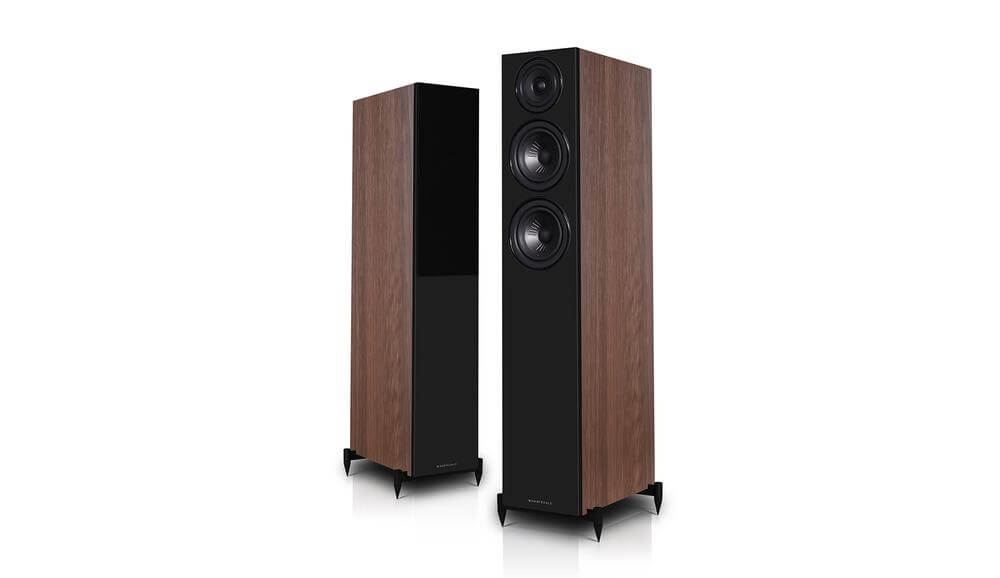
The Wharfedale Diamond 12.4i is a 2.5-way floorstanding loudspeaker built on a design lineage that has held its retail price since the original Diamond 12 Series launched in 2020, meaning buyers get the benefit of five years of refinement without an equivalent rise in cost. Two 6.5-inch (150mm) advanced PP cone drivers work in a 2.5-way configuration, with one handling bass and midrange duties and the second reinforcing bass output, giving the cabinet more low-frequency authority than a standard two-way design of similar size. This is paired with a 1-inch (25mm) textile dome tweeter for the high frequencies. A bass-reflex enclosure with a cabinet volume of 40.8 litres is tuned to a bass extension of 35Hz (-6dB), which is unusually deep for a speaker in this class and gives buyers genuine full-range sound without needing a subwoofer in most listening rooms. The port itself was re-engineered using computational fluid dynamics and laser interferometry to manage airflow and pressure through the duct, which reduces port turbulence and results in bass that stays controlled and articulate rather than boomy as volume increases.
Which amplifiers and electronics does the DIAMOND 12.4i work with?
The Diamond 12.4i is rated at 8Ω nominal impedance with a minimum of 5.0Ω, making it broadly compatible with the vast majority of stereo amplifiers and AV receivers on the market, though buyers should confirm their amplifier is comfortable driving a load that can dip to 5.0Ω under signal. Recommended amplifier power sits between 30W and 200W, which covers everything from modest integrated amplifiers to more powerful stereo or multichannel setups, and the sensitivity rating of 89dB (2.83V @ 1m) means the speaker doesn't demand a particularly high-powered amplifier to reach comfortable listening levels in typical rooms. A peak SPL of 102dB gives headroom for dynamic passages without strain, which matters for buyers planning to use the speakers for music with wide dynamic range or occasional film use. The crossover, built around a Linkwitz-Riley network operating at 2.1kHz, uses air-core inductors rather than the iron-core types more commonly found at this price point; air-core inductors introduce lower distortion, and because they carry more electrical resistance than iron-core alternatives, Wharfedale modified the mid/bass driver's magnet structure to compensate, so the crossover choice doesn't come at the cost of bass speed or clarity.
How should the DIAMOND 12.4i be positioned when setting up a room?
The Diamond 12.4i is a floorstanding cabinet measuring (1100+50) x 200 x (350+28)mm and weighing 22.4kg per speaker, dimensions that buyers need to factor into room planning, particularly given the rear-firing bass reflex port. Because the port design was specifically tuned to maintain consistent bass response and smooth transitions between low and mid frequencies regardless of where the speaker is placed, the Diamond 12.4i is more forgiving of positioning close to a rear wall than many bass-reflex designs, which typically become boomy in that arrangement. This makes it a practical option for buyers with fixed furniture layouts or rooms where speakers can't be pulled well away from a wall. The rear-ported enclosure still benefits from some spacing to let the port breathe, so buyers working in more flexible rooms can experiment with wall distance to fine-tune bass weight to taste.
Who is the DIAMOND 12.4i best suited to?
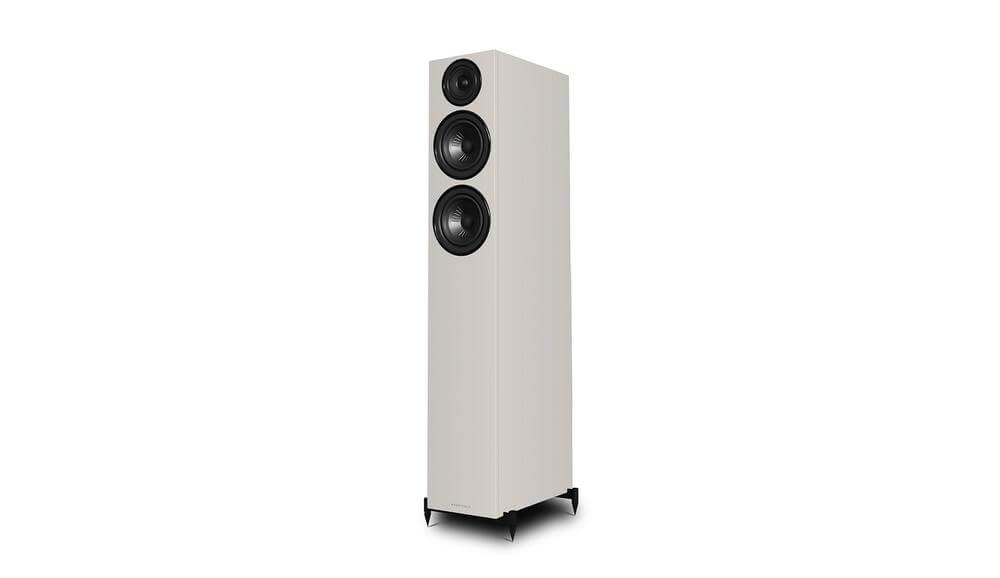
The Diamond 12.4i is aimed at buyers building or upgrading a two-channel or home cinema system who want floorstanding scale and genuine bass extension without moving into higher price brackets. Because the 2.5-way configuration adds bass reinforcement over a standard two-way design, the Diamond 12.4i suits larger rooms or listeners who want more low-frequency presence than a standmount or smaller floorstander in the same range can deliver, while still sharing the same tonal balance and crossover philosophy as the rest of the Diamond 12i Series. The speaker is finished in All-Black, one of three finishes in the range alongside Classic Walnut with a semi-matte black baffle and Stone Grey, so buyers choosing between finishes can match the cabinet to their interior without any difference in acoustic performance.
How does Klarity cone technology affect the sound the DIAMOND 12.4i produces?
The Diamond 12.4i is fitted with bass and midrange drivers built around a cone material Wharfedale calls Klarity, a composite of polypropylene and mica. Polypropylene alone offers low distortion and resistance to moisture, but on its own can sound a little flat; adding mica increases the cone's stiffness without adding significant weight, which reduces flexing and lets the cone respond faster to the signal. Ribbed shaping and profile simulation keep the frequency response smooth and linear despite this added rigidity, and because the surround uses low damping rather than the high-damping type often paired with polypropylene cones, the driver retains dynamic range and bass speed rather than the softer, more restrained bass character that heavier damping tends to produce. The magnet assembly driving these cones includes an aluminium compensation ring, which offsets changes in inductance as the voice coil moves and reduces intermodulation distortion. The voice coil itself is wound on a glass-fibre and epoxy bobbin rather than the more common materials found at this price point, giving the driver greater power handling and thermal stability, both of which support the peak SPL and amplifier power range the speaker is rated for.
What does the tweeter and crossover integration bring to the DIAMOND 12.4i's high-frequency performance?
The Diamond 12.4i is equipped with a 25mm woven polyester dome tweeter carrying a high-loss damping coating, which extends the treble response while keeping it smooth rather than peaky. Its front plate uses a flat profile with minimal waveguide, exposing the dome to widen dispersion, and a short duct balances the acoustic load to improve measured output. This tweeter integrates with the mid/bass drivers through the Linkwitz-Riley crossover referenced above, which is tuned for minimal phase shift so the handover between drivers at 2.1kHz stays seamless rather than producing an audible dip or peak at the crossover point.
What is the cabinet construction of the DIAMOND 12.4i, and why does it matter?
The Diamond 12.4i is housed in a cabinet built from wood fibre board sections of varying thickness in a layered construction designed to suppress the cabinet's own resonant signature, including testing of the adhesive properties between layers, so the enclosure colours the drivers' output as little as possible. Inside, Intelligent Spot Bracing connects opposing cabinet walls using computer-modelled braces rather than the more common figure-of-eight brace pattern; this reduces vibration at the source instead of transferring resonance from one panel to another, which supports the solid, well-controlled low end that the port retuning and driver design are built to deliver. This level of cabinet engineering is more typically associated with higher-priced designs, which is a meaningful differentiator for buyers comparing the Diamond 12.4i against other floorstanders at a similar cost.
Where does the DIAMOND 12.4i sit within the DIAMOND 12i Series, and how does it compare to other models in the range?
The Diamond 12.4i is one of the 2.5-way floorstanding models in the Diamond 12i Series, which also includes 2-way standmount speakers, smaller floorstanders and a centre channel. Every model in the range shares the same Klarity driver technology, crossover design and cabinet engineering, so the choice between models comes down to scale and bass extension rather than a difference in underlying quality, with sonic power and scale increasing as buyers move up through the range. Buyers who want floorstanding presence and the deepest bass extension the 2.5-way format allows are best served by the Diamond 12.4i, while those with smaller rooms or more flexible placement needs may prefer one of the range's standmount or smaller floorstanding models. Against non-Wharfedale alternatives at a similar price, the Diamond 12.4i's differentiators are its deeper bass extension for the cabinet size, the air-core crossover inductors, and the cabinet bracing, all of which are features more commonly reserved for costlier designs.