Wharfedale DIAMOND 12.Ci: A 2-Way Centre Speaker Built for Accurate Dialogue Reproduction
The Wharfedale DIAMOND 12.Ci is a 2-way centre channel speaker from the DIAMOND 12i Series, designed to sit at the heart of a home cinema or stereo-plus-centre system where dialogue clarity and driver integration matter most. It carries forward the driver and crossover engineering of the established DIAMOND 12 platform while adding refined cabinet finishes and internal damping revisions. Buyers considering the DIAMOND 12.Ci are typically assembling or extending a Wharfedale-based surround system and want a centre channel that timbre-matches their existing DIAMOND 12i floorstanders or bookshelf speakers rather than a generic third-party unit.
What Makes the DIAMOND 12.Ci Different From a Typical Centre Channel Speaker?
The DIAMOND 12.Ci is built around three linked differentiators: Klarity cone technology, a compensated magnet assembly, and a Linkwitz-Riley crossover using air-core inductors. Klarity is Wharfedale's polypropylene and mica blend used for the two 5-inch (130mm) mid/bass cones, chosen for stiffness and low distortion so the cone stays lightweight, well damped, and responsive under the transient demands of film dialogue and effects. The magnet assembly adds an aluminium compensation ring around each mid/bass driver's voice coil, which reduces inductance-related distortion as the coil moves, keeping output cleaner at higher levels. Air-core inductors in the crossover are a component more commonly found in higher-priced designs, and paired with the Linkwitz-Riley topology they support smooth phase alignment between the mid/bass drivers and the 25mm textile dome tweeter across the 2.2kHz crossover point.
Is the DIAMOND 12.Ci Compatible With Your Existing Amplifier and Speaker System?
The DIAMOND 12.Ci is rated at 8Ω nominal impedance, described by Wharfedale as 8Ω compatible, with a minimum impedance of 4.0Ω, so it works with the majority of AV receivers and integrated amplifiers used in home cinema systems. Sensitivity of 90dB (2.83V @ 1m) paired with a recommended amplifier power range of 20 to 120W means the speaker doesn't demand a high-current amplifier to reach usable listening levels, while its 96dB peak SPL gives it headroom for dynamic film soundtracks. The speaker carries no AV magnetic shielding, a point buyers pairing it with older shielding-sensitive display equipment should check against their own setup. Because it shares Klarity cone construction and crossover philosophy with the rest of the DIAMOND 12i Series, pairing the 12.Ci with matching DIAMOND 12i front and surround speakers is the main way to keep tonal balance consistent across channels in a multichannel system.
How Does the Cabinet Design Affect Placement Below a Screen or Inside a Cabinet?
This centre channel uses a closed-box enclosure with a cabinet volume of 8.7 litres and compact horizontal dimensions of 180 x 480 x 180(+28)mm, a footprint suited to sitting directly beneath a television or inside an AV cabinet shelf. A sealed enclosure avoids the placement sensitivity associated with ported designs, since there's no port output to keep clear of rear or side obstructions, which simplifies installation in the tight furniture spaces a centre channel commonly occupies. At 8.5kg per unit, the cabinet is light enough for shelf placement without requiring additional support hardware, though its width should still be checked against the available shelf space before purchase.
Who Should Choose This Centre Channel for Their System?
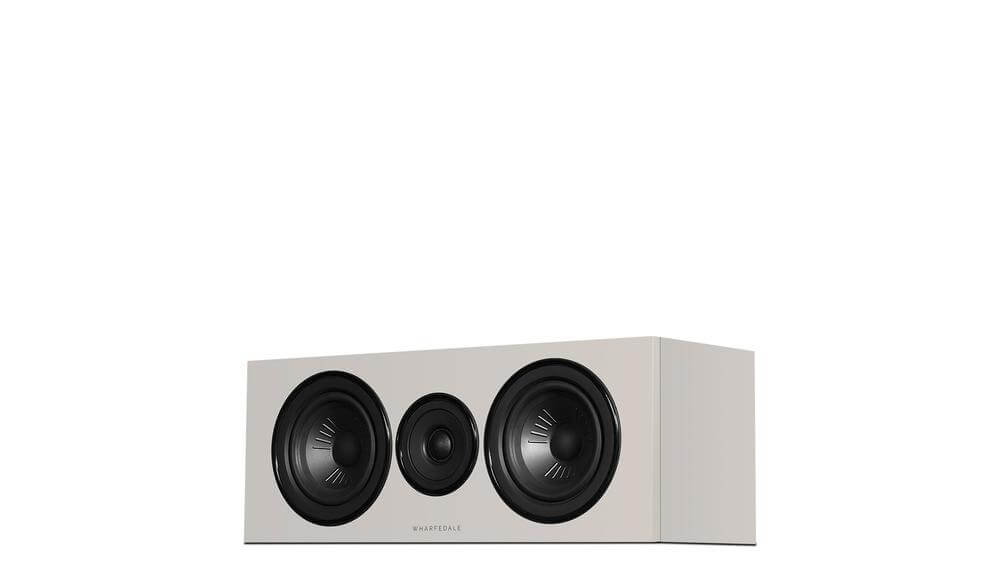
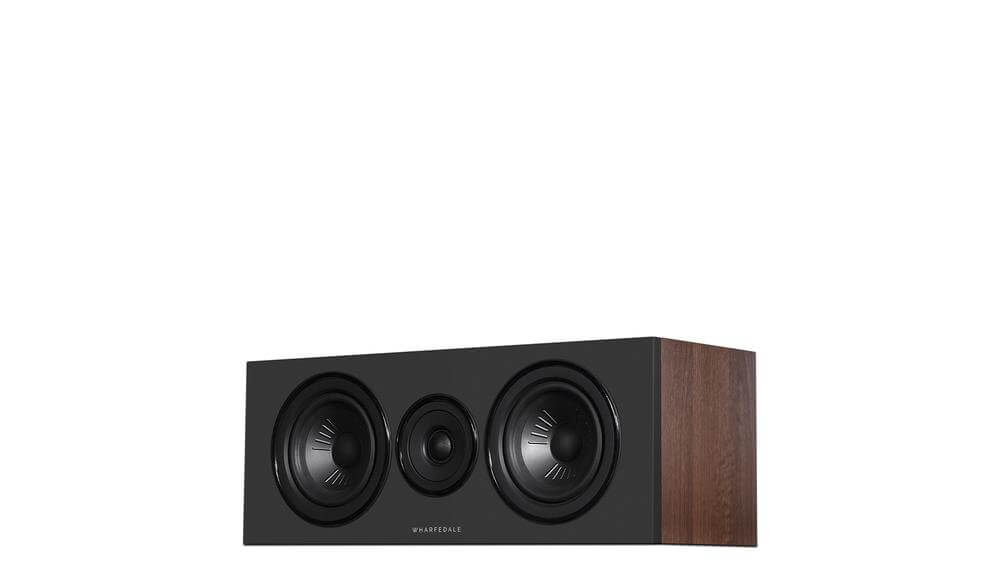
This centre channel is intended for buyers who already own, or plan to own, DIAMOND 12i Series speakers and need a matching centre rather than a standalone unit. It's available in three finishes, All-Black, Classic Walnut with a semi-matte black baffle, and Stone Grey, so the finish can be matched to existing DIAMOND 12i floorstanders or standmounts rather than treated as an isolated choice. Its 20-120W recommended power range and 8Ω rating also suit buyers building a modest AV receiver-based system rather than a high-power dedicated cinema setup, since the speaker is designed to perform within that range rather than requiring amplification beyond it.
Where Does the DIAMOND 12.Ci Sit Within Wharfedale's Range and the Wider Market?
The DIAMOND 12.Ci belongs to a DIAMOND 12i Series that continues a line first launched in 2020, one that built a track record of awards and positive reviews over more than five years and became established as one of Wharfedale's most enduring and best-selling ranges. The 12i update keeps that same driver, magnet, and crossover platform and adds the new finishes and cabinet damping revisions described above, rather than introducing a new design generation. For a buyer weighing this centre channel against a generic third-party alternative, the deciding factor is system matching: a centre built on the same Klarity cone and crossover platform as the rest of the DIAMOND 12i front and surround speakers will track their tonal balance more closely than a centre speaker sourced from a different range or brand, which matters most to buyers assembling a full DIAMOND 12i-based room rather than replacing a single channel in a mixed system.
How Do the Klarity Cone and Magnet Assembly Improve Driver Performance?
The DIAMOND 12.Ci's mid/bass drivers combine a Klarity cone with a low-damping surround and ribbed cone profile, a pairing intended to keep the cone efficient across its working range while the ribbing and profile simulation maintain a smooth, linear frequency response without added distortion. The voice coil is wound on a high-power epoxy/glass fibre bobbin rather than a standard bobbin material, which Wharfedale states improves power handling, thermal stability, and structural strength at this price point. Together with the aluminium compensation ring on the magnet, these choices are aimed at controlling distortion as the driver is pushed harder, which matters in a centre channel role given how much dialogue and effects output passes through it during film playback.
What Role Does the Crossover Network Play in Driver Integration?
The DIAMOND 12.Ci's crossover operates at 2.2kHz using a Linkwitz-Riley design, adjusted for minimal phase shift between the two 5-inch mid/bass drivers and the tweeter as they hand off through the crossover region. Wharfedale's engineers also modified the mid/bass driver's magnet structure to compensate for the electrical resistance introduced by the air-core inductors, a step taken so the added inductor quality doesn't come at the cost of bass speed or control. Frequency response is specified at 90Hz to 20kHz (+/-3dB), with bass extension to 80Hz at -6dB, figures consistent with a compact closed-box centre channel intended to work alongside a subwoofer rather than reproduce deep bass independently. High frequencies are handled by a 25mm woven polyester dome tweeter with a high-loss damping coating and a flat-profile, minimal-waveguide front plate, a combination aimed at extending treble smoothness and widening dispersion so listeners seated off to the side of the room still receive clear high-frequency output.
What Construction Methods Reduce Cabinet Resonance in the DIAMOND 12.Ci?
The DIAMOND 12.Ci's enclosure uses multi-layered sandwich panel construction to reduce the panel resonance that would otherwise colour dialogue and midrange output, with the adhesive bonding between layers acoustically tested for damping performance rather than chosen for assembly convenience alone. Internally, computer-modelled spot bracing connects opposite cabinet walls to control vibration without transferring it from one panel to another, a construction detail that supports the tighter, more controlled low-frequency behaviour buyers should expect from the closed-box design rather than a change to the stated frequency response figures.