Wharfedale EVO 5.3 Floorstanding Speakers
The Wharfedale EVO 5.3 is a three-way floorstanding loudspeaker built on the platform established by the award-winning EVO4 range, carrying that design forward with a revised driver line-up, a re-engineered crossover and a redeveloped cabinet. It's aimed at listeners who want to move beyond entry-level stereo separates without stepping into costlier high-end territory, and it suits both the detail-focused audiophile and the casual listener who simply wants a fuller, more room-filling sound from their system. The EVO 5.3 sits in the middle of the EVO 5 Series floorstanding line-up, positioned as a price-bracket-defying option built to compete with more expensive speaker designs.
What Sets the EVO 5.3 Apart From Other Floorstanding Speakers?
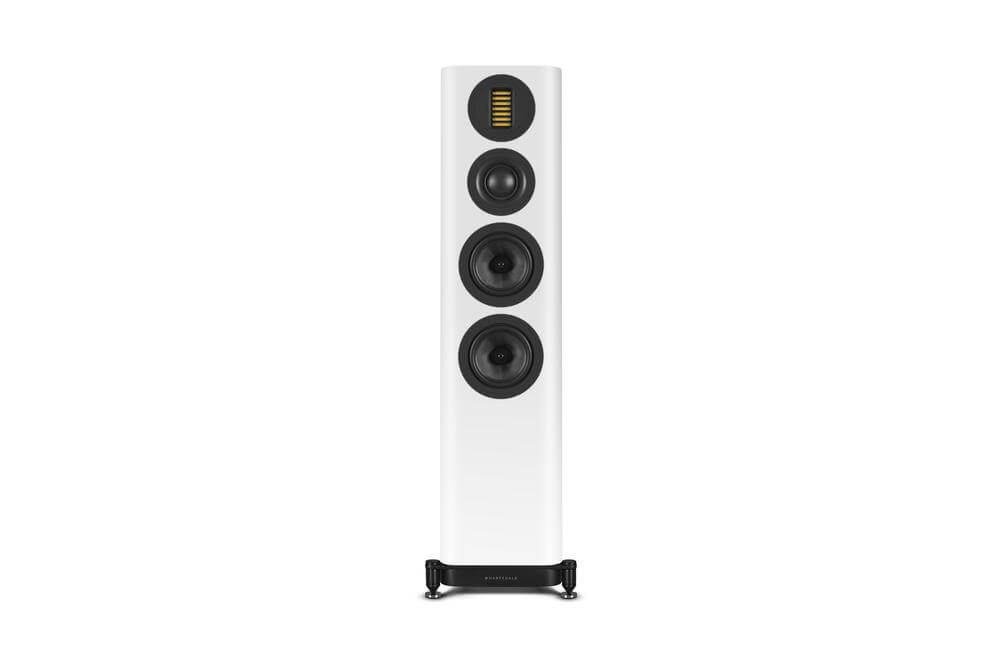
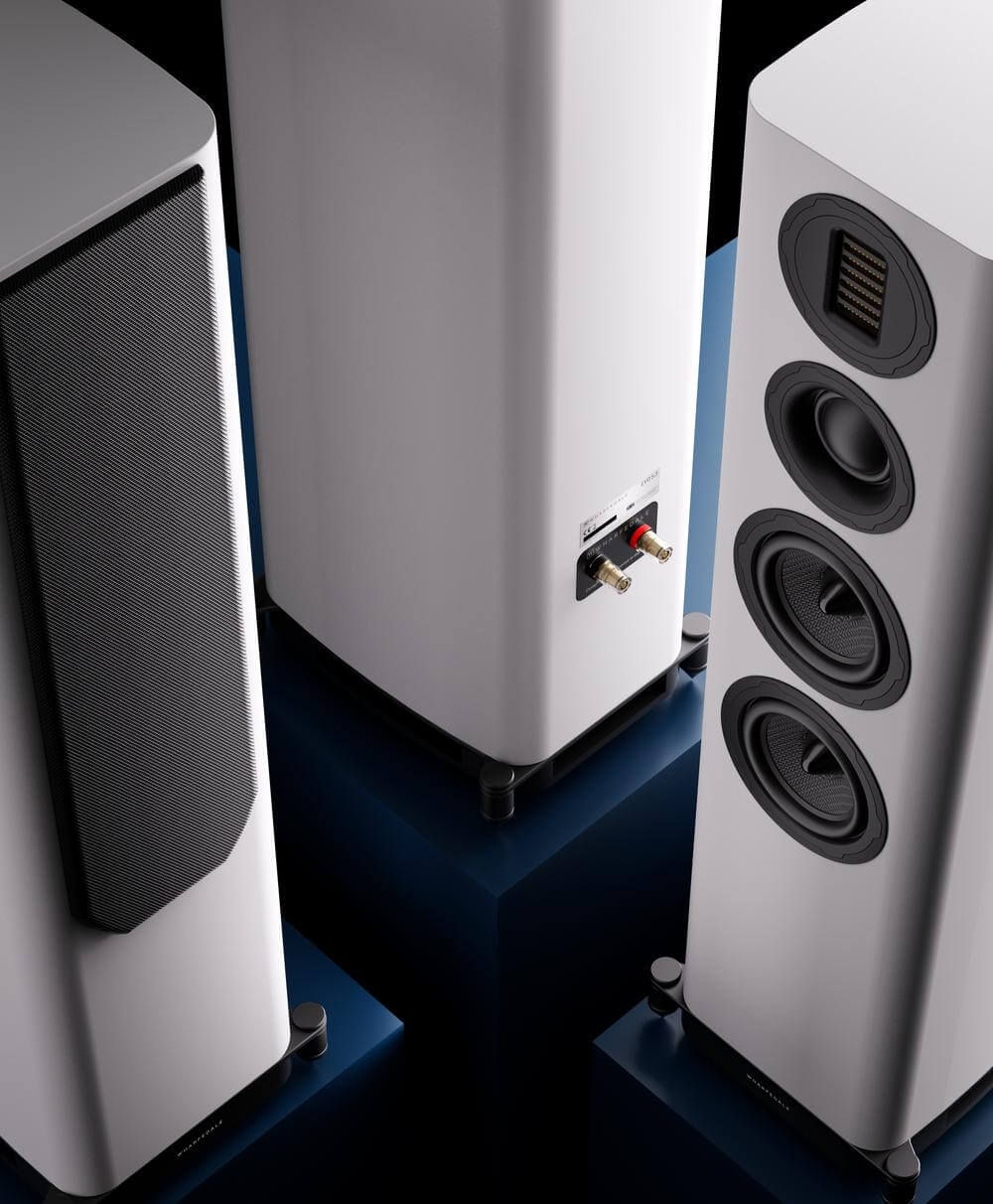
The Wharfedale EVO 5.3 is distinguished by the damping technologies developed across its driver line-up rather than by any single headline component. Its Air Motion Transformer (AMT) treble unit uses a pleated diaphragm design and, on the EVO 5 Series, gains a larger radiating area and a new frontplate that improves directivity, giving the tweeter more even dispersion off-axis as well as on-axis. Behind that diaphragm, the rear chamber is filled with SilentWeave, a cotton and felt fibre absorption material that damps reflections across the midrange and treble band; the same material has been added to the rear chamber of the 2-inch soft dome midrange driver. The bass and midrange drivers use a separate damping method, called ResoSeal: an elastomer ring fitted at the point where each cone meets its surround. This mass-damps the cone edge and absorbs unwanted reflections that would otherwise disturb the driver's natural roll-off beyond the crossover point, which in turn lets Wharfedale simplify the crossover network and achieve a more accurate phase blend between the bass/midrange and the upper midrange and treble units. A third damping element, ResoFrame, is an elastomer ring fitted to the front plate of every driver, including a gasket behind the AMT frontplate, which dissipates resonance in the front plates themselves and reduces distortion and colouration across the speaker's full output.
Which Amplifiers and Systems Does This Speaker Suit?
The EVO 5.3 is rated at 4Ω nominal impedance, with 8Ω compatibility, and a minimum impedance of 3.5Ω, so it will work with amplifiers designed for either impedance range provided they can sustain a lower minimum load. Wharfedale specifies a recommended amplifier power of 25 to 150W, giving buyers a wide window for matching integrated amplifiers or AV receivers of varying output, while a peak power handling supporting 106dB peak SPL indicates the speaker can take short dynamic peaks from higher-powered amplification without strain. Sensitivity is 88dB (2.83V at 1m), a mid-range figure that benefits from an amplifier with reasonable current delivery rather than very low-powered valve designs. The redesigned crossover network sits behind this compatibility: it uses audiophile-grade Superior Polypropylene capacitors in the critical signal path and air-cored coils for the midrange and treble filters, and on this 3-way design the crossover filters are split across two separate PCBs so that electromagnetic interference from the high-current bass section doesn't affect the lower-level midrange and treble signal. A new "straight-through" PCB layout carries the signal from the input terminals to the drive units with fewer routing detours, which supports cleaner signal transfer to each driver.
What Do You Need to Consider Before Installing It?
The EVO 5.3 is a tall floorstanding cabinet, standing 933mm high on its plinth and spikes, 266mm wide, and 285mm deep at the cabinet itself, rising to 325mm overall once the grille and rear terminals are included, so it needs a stable footprint clear of walls behind it to let the rear-venting port work properly. At 21.5kg per speaker, moving and positioning each cabinet is a two-person task in most cases. The speaker uses Wharfedale's SLPP (Slot Loaded Profile Port) bass reflex system, redesigned for the EVO 5 Series with triple venting to the sides and rear of the plinth rather than a single rear port. This port geometry improves the transfer of high-pressure air from the port tube into the lower-pressure room air, increasing bass power by up to 1.5dB and reducing distortion, but it also means the EVO 5.3 needs breathing space around the plinth rather than being pushed flush against a wall or into a corner. Internal cabinet volume of 35.4 litres has also been increased as part of this driver update, to match the enhanced output of the bass drivers, which is a further reason to give the cabinet clearance rather than restricting it in an enclosed space. A spike seat is supplied as standard, which lets the plinth spikes sit on hard flooring without marking it. Wharfedale's own positioning guidance for the EVO 5.3 calls for at least 200mm clearance from the rear wall and 700mm from the side walls, with the cabinets angled slightly inward toward the listening position, which is worth checking against the room before buying if wall space is tight. Each cabinet connects through a single pair of screw terminals rather than a bi-wire terminal panel, so the EVO 5.3 is set up for single-wire cable runs; buyers planning to bi-wire their system will need to check this against their amplifier and cable choice before purchase.
Who Should Choose the EVO 5.3?
The EVO 5.3 is built for buyers assembling or upgrading a two-channel stereo system, whether that's a first serious hi-fi setup or a replacement for an ageing pair of floorstanders. Its frequency response of 46Hz to 24kHz (+/-3dB), with bass extension down to 40Hz (-6dB), gives it enough low-frequency reach to anchor a system without a subwoofer in small to medium-sized rooms, while still leaving headroom for a subwoofer to be added later if a buyer wants deeper extension. Because the crossover and driver work were tuned around a wide range of music rather than one genre, the EVO 5.3 is suited to owners who listen across different types of recordings rather than a narrow style, and its 25-150W recommended power range keeps it compatible as an owner upgrades amplification over time.
How Does the Crossover and Driver Tuning Affect Room Sound?
The EVO 5.3 is the result of two years of research into loudspeaker Directivity Index (DI), which measures how a speaker's output changes as you move away from directly in front of it, applied to shape its off-axis performance. Wharfedale used this research to bring the EVO 5 Series' off-axis output closer to its on-axis output, so the sound reflecting off walls and other room surfaces is more consistent with the direct sound reaching the listener. This reduces colouration from room reflections and supports a wider, more stable soundstage regardless of exact seating position, which matters for buyers placing the speakers in rooms with hard reflective surfaces or irregular layouts rather than a dedicated, acoustically treated listening space.
What Finishes Are Available on the EVO 5.3?
The Wharfedale EVO 5.3 is offered in Black, Grey, Walnut and White finishes, giving buyers a choice between a neutral cabinet that recedes into most room settings and a Walnut veneer finish for a warmer, wood-grain appearance. Because the finish only affects the cabinet surface and not the internal driver or crossover specification, buyers can choose based on room decor without any change to how the speaker performs or what it's compatible with.
How Does It Compare to Other Speakers in Wharfedale's Range?
The EVO 5.3 is one model within the EVO 5 Series of floorstanding speakers, which succeeds the EVO4 range that Wharfedale describes as an award-winning, widely stocked series in its own right. Buyers already familiar with the EVO4 models, or comparing against similarly priced 3-way floorstanders from other brands, are the most likely audience weighing up the EVO 5.3. The technical changes carried into the EVO 5 Series, the AMT treble unit's larger radiating area, SilentWeave damping, ResoSeal and ResoFrame driver treatments, the DI-optimised crossover, and the redesigned SLPP port, are positioned by Wharfedale as bringing this model's performance closer to that of higher-priced, high-end speaker designs. Buyers who already own or have auditioned the EVO4 series and want the same core system compatibility (impedance, recommended power range and cabinet footprint) with the added driver and crossover refinements are the clearest fit for stepping up to the EVO 5.3, rather than buyers who need a materially different footprint, connection method or power requirement from what the EVO4 series offered.