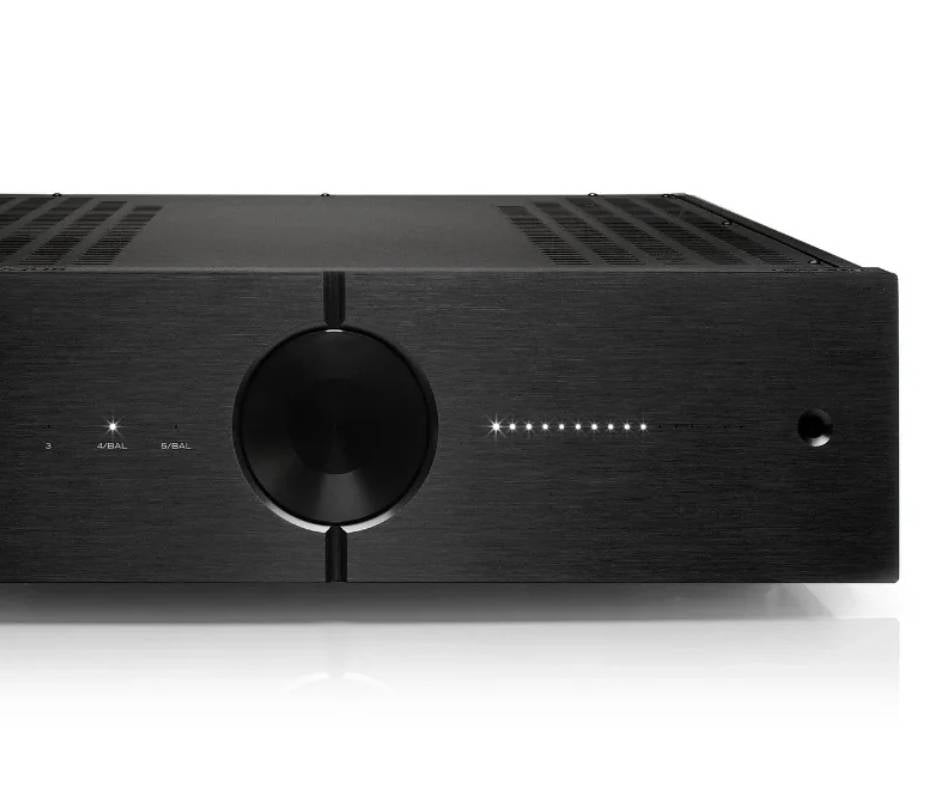
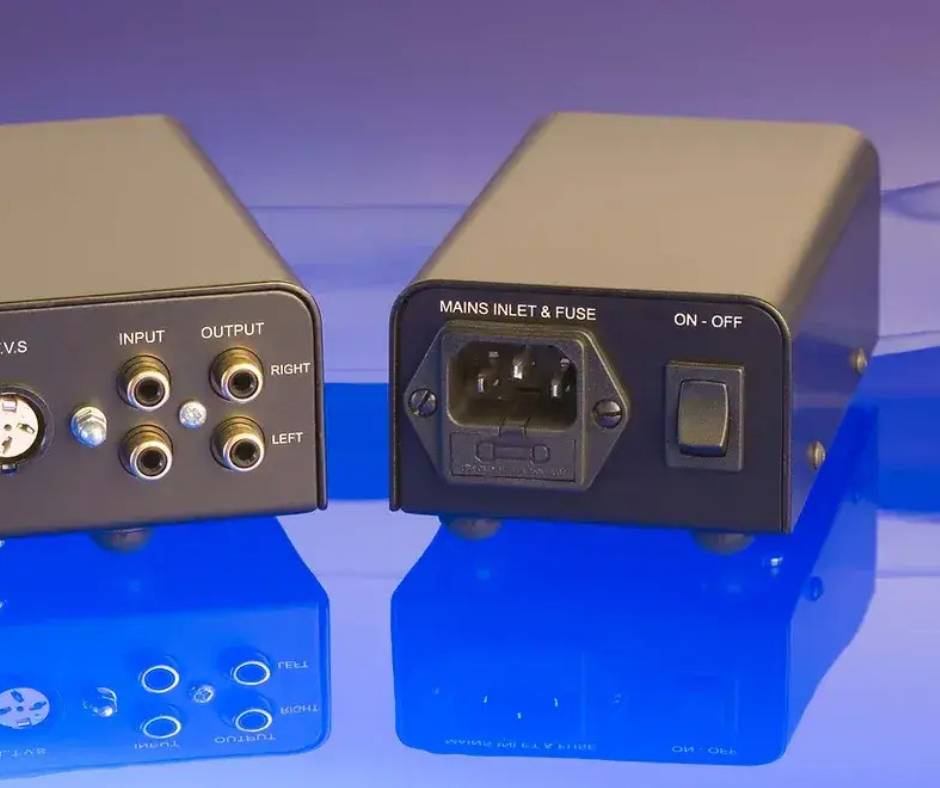
Gain, impedance and loading are key phono preamp parameters that determine how a cartridge’s low-level signal is amplified, controlled and tonally shaped before reaching your amplifier. These parameters are managed by a phono preamplifier, which is explained in detail in our guide to what a phono preamplifier is, and they directly influence noise levels, frequency balance, dynamics and overall clarity.
Why These Settings Matter
A phono cartridge outputs a delicate, low-voltage signal that must be amplified with precision. Incorrect gain or impedance loading results in distortion, tonal imbalance, hiss, weak bass or compressed dynamics. Understanding these parameters ensures your cartridge and phono stage operate in harmony.
1. Gain
Gain is the amount of amplification applied to the cartridge signal to raise it to line level. Because cartridges vary widely in output voltage, the phono stage must provide the right amount of gain to avoid under- or over-amplification.
Typical Gain Requirements
- MM cartridges: 35–45 dB of gain
- High-output MC: 45–55 dB of gain
- Low-output MC: 55–70 dB of gain
What Too Little Gain Sounds Like
- Quiet output requiring extreme volume on your amplifier
- Flat, weak dynamics
- Lack of bass authority
- Increased noise floor
What Too Much Gain Sounds Like
- Harsh or brittle treble
- Compressed peaks and clipped transients
- Distortion during dynamic passages
- Muddy, congested midrange
Synonyms & Related Terms
Amplification level, voltage gain, gain staging.
2. Impedance
Impedance refers to the electrical resistance that the phono stage presents to the cartridge. This determines how signal current flows between the two components and affects both tonal balance and detail retrieval.
MM Cartridge Impedance
Moving-magnet cartridges are designed to work with a standard input impedance:
- 47 kΩ (almost universal)
- 100–200 pF capacitance
The combination of resistance and capacitance shapes high-frequency extension and brightness.
MC Cartridge Impedance
Moving-coil cartridges have far more variation, so MC phono stages offer adjustable loading. Typical values:
- 5–20 Ω for ultra-low impedance coils
- 50–200 Ω for standard MC designs
- 500–1 kΩ for high-impedance MC models
Because moving-coil cartridges vary widely in output and internal impedance, many phono stages designed for MC use provide adjustable loading to optimise performance—an approach explained in more detail in our guide to MM vs MC phono stages, which outlines why MC stages require greater flexibility than MM designs.
What Incorrect Impedance Sounds Like
Too Low Impedance Load
- Dark, closed-in treble
- Reduced resolution
- Muted dynamics
Too High Impedance Load
- Exaggerated brightness
- Thinner midrange
- Sharper transients that feel unnatural
Synonyms & Related Terms
Input impedance, load resistance, electrical loading.
3. Loading
Loading refers to the combined electrical characteristics—mainly impedance and capacitance—that determine how the cartridge interacts with the phono stage. Proper loading ensures the stylus tracks cleanly and the generator behaves predictably.
Loading for MM Cartridges
MM cartridges are sensitive to capacitance. Too much capacitance can create a peak in the upper treble, making the sound bright or etched. Too little may result in subdued detail.
Loading for MC Cartridges
MC cartridges depend more heavily on resistive loading. Loading affects:
- Tonal balance
- Transient response
- Soundstage width
- Perceived speed and control
Adjustable loading allows the user to tune the sound precisely for their system.
How Gain, Impedance and Loading Work Together
These settings are interconnected—adjusting one often influences the others. A cartridge sounds its best only when:
- Gain matches cartridge output
- Impedance aligns with cartridge design
- Loading preserves tonal accuracy
Incorrect setup in any one parameter can compromise clarity and musicality.
Signs Your Settings Are Incorrect
- Noise or hum at normal listening levels
- Harsh, bright or thin sound
- Dark or muffled presentation
- Weak bass response
- Distorted peaks or clipped transients
Proper configuration unlocks the finer detail and dynamic expression your cartridge was engineered to produce.
If you’re building a system around analogue sources, explore our full range of Phono Preamps, designed to match a wide variety of cartridges, turntables and amplifier types.
Final Thoughts
Gain, impedance and loading define how effectively your phono stage interfaces with your cartridge. By optimising these electrical parameters, you ensure the fragile analogue signal is amplified with minimal distortion, accurate tonal balance and maximum musical expression. Whether using an MM or MC cartridge, correct phono stage configuration is one of the most impactful steps toward achieving true high-fidelity vinyl playback.