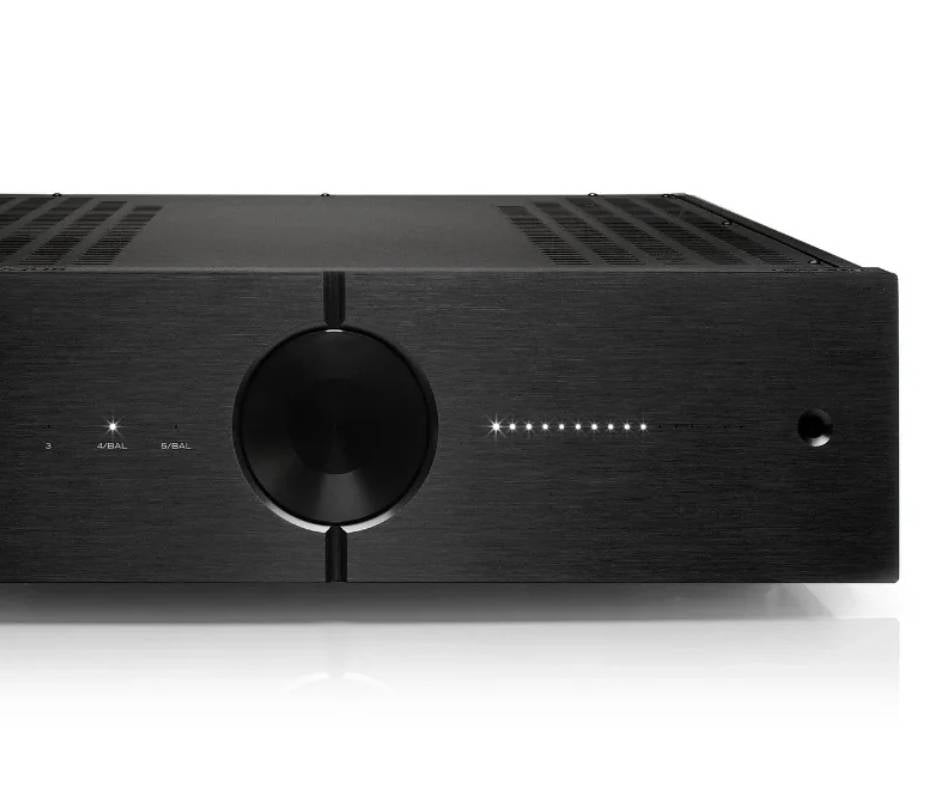
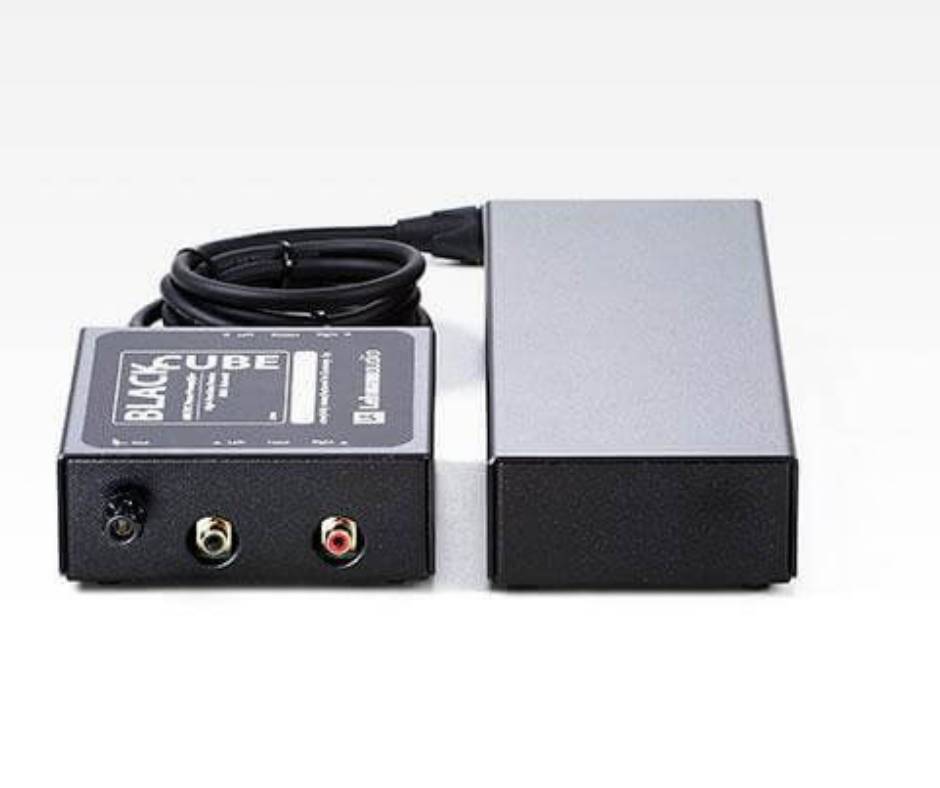
MM and MC phono stages are specialised preamplifiers designed to amplify and equalise the signal from moving-magnet (MM) and moving-coil (MC) cartridges, each requiring different gain levels, impedance loading and noise performance. These functions are performed by a phono preamplifier, explained in detail in our guide to what a phono preamplifier is, before the signal is passed on to a line-level input or integrated amplifier. As part of that job, a phono stage also applies RIAA equalisation, correcting for the curve used when the record was cut — see our guide to why your turntable needs proper RIAA equalisation for more on that. If you're shopping for one now, browse our full phono preamps collection.
Quick definition: MM stands for Moving Magnet and MC stands for Moving Coil — the two main cartridge designs, each requiring a differently specified phono stage to work correctly.
Which Phono Stage Do You Need?
If you just need the short answer, start here:
| MM Phono Stage | MC Phono Stage | |
|---|---|---|
| Use with | Moving-magnet cartridges | Moving-coil cartridges |
| Typical gain | 35–45 dB | 55–70 dB |
| Cartridge output | 4–6 mV | 0.2–0.8 mV |
| Impedance loading | Fixed, 47 kΩ | Adjustable, 10 Ω–1 kΩ |
| Noise performance | Less demanding | Requires very low-noise circuitry |
| Best for | Entry-level to mid-range systems, cartridge-swappers | High-end systems, low-output or premium cartridges |
Not sure which cartridge you have? That comparison — generator type, sound, stylus and buying advice — is covered in full in our MM vs MC Cartridges guide. This article focuses specifically on the phono stage: gain, loading, inputs, noise and how to match the two correctly.
How the Signal Gets From Cartridge to Amplifier

The MC signal is dramatically smaller, which is why it needs so much more gain — and why MC stages are held to a higher standard for noise control.
What Makes MM and MC Cartridges Different?
If you're new to cartridges in general, our guide to what a phono cartridge is is a good starting point. For MM and MC specifically, the primary distinction lies in how they generate voltage:
- MM (Moving-Magnet): magnet moves, coils are fixed → higher output, easier to drive
- MC (Moving-Coil): coils move, magnet is fixed → lower output, higher precision
These electrical differences fundamentally change the demands placed on the phono stage. For a full breakdown of how MM and MC cartridges differ in sound, stylus design and long-term ownership, see our MM vs MC Cartridges guide.
MM Phono Stages: Characteristics and Benefits
Output Level and Gain
MM cartridges typically output between 4–6 mV, meaning the phono stage requires moderate gain — usually around 35–45 dB.
The different gain and loading requirements of MM and MC cartridges stem from their fundamentally different electrical behaviour, which is explained in detail in our guide to gain, impedance and loading and how these parameters affect noise, dynamics and tonal balance.
Impedance and Loading
MM phono stages almost always use a standard input load of:
- 47 kΩ input impedance
- Typically 100–200 pF capacitance
This predictable loading makes MM cartridges easy to match and highly flexible.
Noise Performance
Because MM cartridges produce a stronger voltage, MM phono stages are less susceptible to noise and hum compared with MC stages.
Who They're Best For
- Entry-level to mid-range turntable setups
- Users wanting warm, forgiving sound
- Cartridge-swappers (stylus replaceability)
Common Synonyms
Moving-magnet stage, high-output phono preamp, MM input.
MC Phono Stages: Characteristics and Benefits
Output Level and Gain
MC cartridges output extremely small voltages — typically 0.2–0.8 mV. Because of this, MC stages require significantly higher gain, usually 55–70 dB.
Impedance Loading
MC phono stages offer adjustable loading to optimise cartridge performance. Typical values range from:
- 10 Ω for very low-impedance designs
- 50–200 Ω for most MC cartridges
- 500 Ω–1 kΩ for high-impedance MC models
Correct loading dramatically affects resolution, energy and tonal balance.
Noise Considerations
Because gain levels are much higher, MC stages require extremely quiet circuitry to avoid hiss or hum. High-grade components, shielding and premium power supplies are essential.
Who They're Best For
- High-end analogue systems
- Listeners seeking maximum detail, speed and transparency
- Low-output or premium moving-coil cartridges
Common Synonyms
Moving-coil stage, low-output phono preamp, MC input.
What Does the MM/MC Switch Do?
Most switchable phono stages have a single switch or menu setting labelled MM/MC. Moving between the two does three things at once:
- Changes the gain — stepping up from the 35–45 dB range needed for MM cartridges to the 55–70 dB range MC cartridges require
- Changes the loading — switching the input impedance from a fixed 47 kΩ down to the much lower values (typically 10 Ω–1 kΩ) that MC cartridges need
- Matches the stage to your cartridge type — so the signal is amplified and equalised correctly before it reaches your amplifier
Selecting the wrong setting doesn't damage your equipment, but it will produce either a very quiet, thin signal or an overloaded, noisy one — see the symptoms below.
Tip: If your amplifier or phono preamp has an MM/MC selector, always match it to the cartridge you're using — not the turntable itself.
Can I Use an MC Cartridge on an MM Input?
Not effectively. An MM input is fixed at 47 kΩ and only provides 35–45 dB of gain, while MC cartridges need 55–70 dB and a much lower impedance load. Plugging an MC cartridge into an MM-only input typically results in:
- A very quiet output, often too low to reach a usable listening volume
- A thin, lifeless tonal balance, since the signal is under-amplified relative to what the stage expects
- Increased susceptibility to hum, because the tiny MC signal is more exposed to noise before it's boosted
If your phono stage or amplifier only has an MM input and you're running an MC cartridge, you'll need either a switchable MM/MC phono stage or a step-up transformer (SUT) ahead of the MM input to bring the signal up to a compatible level.
Combined or Switchable MM/MC Phono Stages
Many modern phono preamps offer both MM and MC functionality, allowing users to upgrade cartridges without replacing the phono stage.
Key Features of Hybrid Stages
- Switchable gain levels
- Selectable impedance values
- Configurable capacitance for MM optimisation
- Flexible system matching
These versatile units are ideal for vinyl enthusiasts who expect to experiment with cartridges.
How MM and MC Phono Stages Affect Sound
MM Characteristics
- Warmer tonal balance
- Slightly softer transients
- More forgiving of imperfect pressings
- Reduced risk of noise or hum
MC Characteristics
- Greater resolution and micro-detail
- More dynamic, punchy presentation
- Superior speed and transient accuracy
- Wider soundstage and improved imaging
These are general tendencies rather than guarantees. Cartridge design has at least as much influence on sound as generator type, so a well-engineered MM cartridge can outperform a mediocre MC cartridge — and vice versa.
Ultimately, the sonic difference reflects the underlying cartridge technology and the precision of the phono stage's amplification and equalisation.
Matching Your Cartridge to the Right Phono Stage
The rule is simple:
- MM cartridge → MM phono stage
- MC cartridge → MC phono stage or switchable hybrid
Using the wrong phono stage leads to incorrect gain, tonal imbalance or excessive noise.
Signs You're Using the Wrong Type of Phono Stage
- Output is too quiet (MC cartridge into an MM stage)
- Sound is bright or thin (wrong impedance loading)
- Excessive hiss or hum at normal listening volume
- Distortion during peaks or bass-heavy passages
Matching cartridge and phono stage correctly restores clarity, energy and proper frequency response.
From Experience
In our experience, many people assume upgrading to an MC phono stage will automatically improve sound quality. In reality, the biggest improvement usually comes from correctly matching the phono stage to the cartridge you already own — before considering more expensive upgrades. Getting the gain and loading right on your current setup often reveals more detail and dynamics than a costly component swap.
If you're building a system around analogue sources, explore our full range of phono preamps, designed to match a wide variety of cartridges, turntables and amplifier types.
Final Thoughts
MM and MC phono stages serve the same fundamental purpose — amplifying and equalising a cartridge's delicate signal — but they operate with different gain, impedance and noise requirements. MM stages suit higher-output, user-friendly cartridges, while MC stages are engineered for low-output, high-precision designs that demand more refinement. Choosing the right phono stage, and setting the MM/MC switch correctly, ensures your cartridge performs at its full capability, delivering richer texture, deeper dynamics and a more immersive vinyl experience.