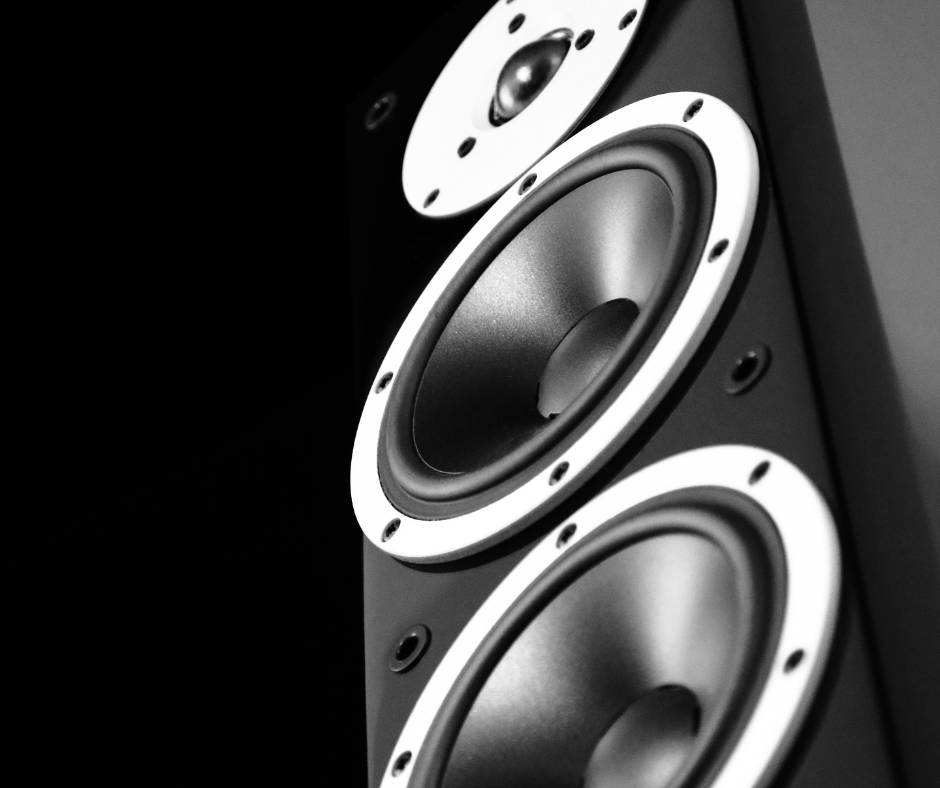
Cabinet size is the physical volume of a loudspeaker enclosure that directly determines how efficiently a speaker produces bass, how deeply it can extend into low frequencies and how strongly it interacts with room acoustics. In floorstanding speakers—also called tower speakers or full-range enclosures—the larger cabinet volume plays a decisive role in tuning, air loading, resonance behaviour and the overall sense of scale and authority in the listening space.
Why Cabinet Volume Matters
The internal air volume of a cabinet acts as part of the speaker’s acoustic system. Larger enclosures reduce back-pressure on woofers, increase efficiency and allow lower resonant frequencies, enabling deeper, more effortless bass reproduction. This is why floorstanding speakers consistently outperform smaller speakers in low-frequency performance.
How Bigger Cabinets Improve Bass Extension
Bass production is fundamentally governed by the relationship between driver size, cabinet volume and tuning frequency. In larger towers, woofers can move more air with less resistance, creating:
- Deeper bass due to lower system resonance
- Greater efficiency with reduced cone excursion
- Higher output before distortion sets in
- More convincing scale across the entire low-frequency band
This is why compact speakers struggle to generate impactful bass without assistance from a subwoofer—there simply isn’t enough internal volume to support long-wavelength energy.
Sealed vs Ported Towers: Volume Requirements
Sealed (Acoustic Suspension) Designs
Sealed cabinets rely on internal air pressure as a restoring force. Larger sealed cabinets result in:
- Smoother low-frequency roll-off
- Better transient behaviour
- More linear bass with minimal resonance
Ported (Bass-Reflex) Designs
Ported towers are tuned to reinforce frequencies around the port resonance. Bigger cabinets allow:
- Deeper tuning frequencies for extended bass
- Higher output near the tuning point
- Lower distortion due to reduced cone movement
In both cases, larger cabinet volume allows designers to optimise the system for stronger, richer bass performance.
Cabinet Size and Room Interaction
Bigger cabinets don’t just produce more bass—they energise rooms differently. Room acoustics play a major role in how tower speakers sound, particularly below 300 Hz.
How Larger Cabinets Affect Room Behaviour
- More room gain as low frequencies couple with boundaries
- Stronger modal interactions (standing waves)
- Greater pressure zones near walls and corners
- More challenging placement requirements
This is why large floorstanding speakers often sound their best in medium or large rooms where bass energy can dissipate more evenly.
Speaker Height and Soundstage
Cabinet size is not only about bass—it also influences vertical dispersion, soundstage height and image projection. Taller cabinets place the tweeter closer to ear level and allow greater driver separation, resulting in:
- Taller soundstage perception
- More immersive stereo imaging
- Improved depth cues and ambient retrieval
These characteristics contribute to the signature “full-room presence” associated with floorstanding speakers.
The Trade-Offs of Large Cabinets
Increased size brings certain challenges:
- More demanding placement to control bass buildup
- Greater room dependency for smooth response
- Possible resonance issues if poorly braced
High-quality towers counter these drawbacks with rigid construction, internal bracing and carefully tuned ports or radiators.
For big, room-filling sound, browse our curated Floorstanding Speakers collection.
Final Thoughts
Cabinet size is one of the most influential factors in how a floorstanding speaker performs. Larger enclosures enable deeper bass, greater efficiency and a more authoritative presentation—but also require careful placement and sufficient room volume to realise their potential. When matched to the right environment, cabinet size becomes a powerful tool for delivering immersive, full-range sound.