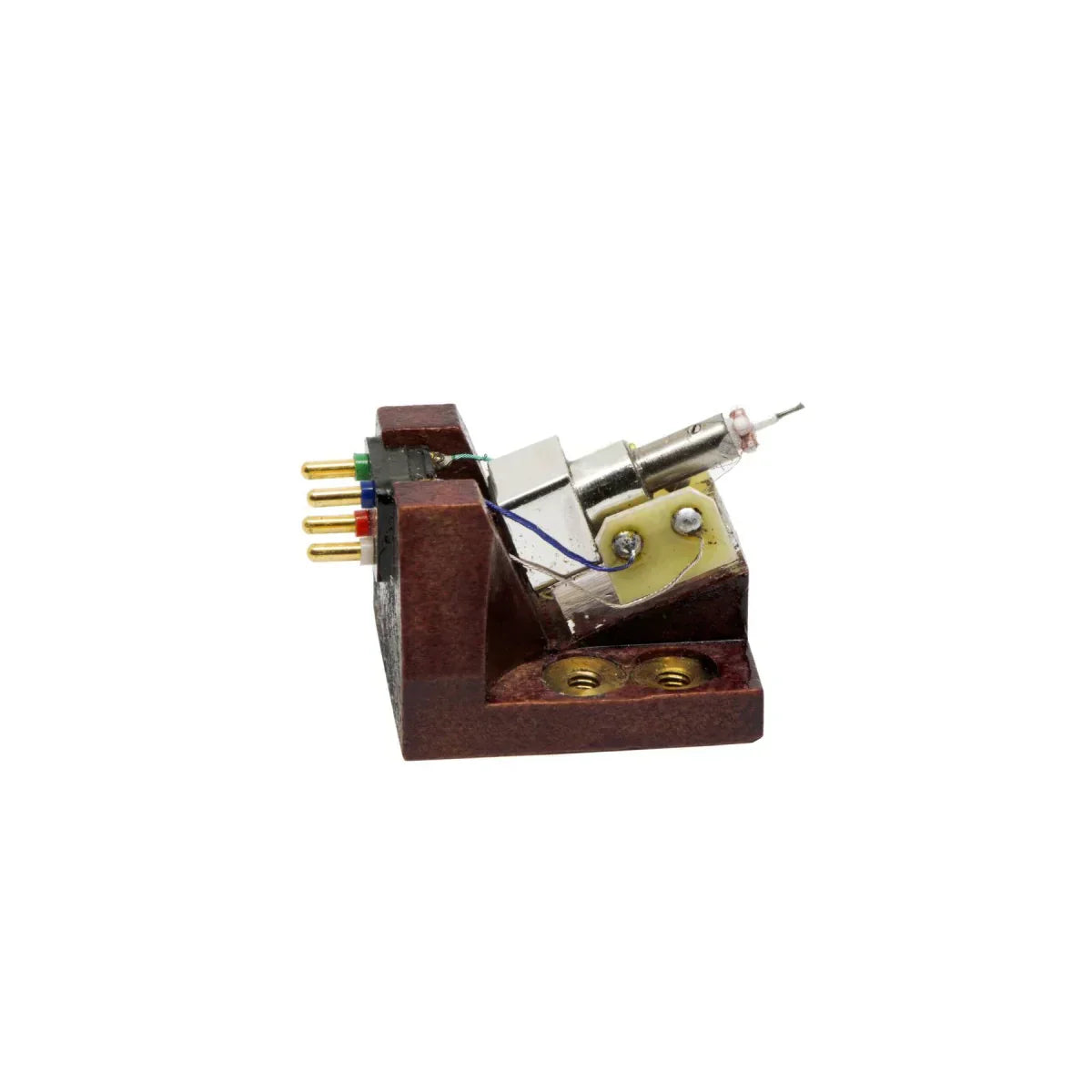
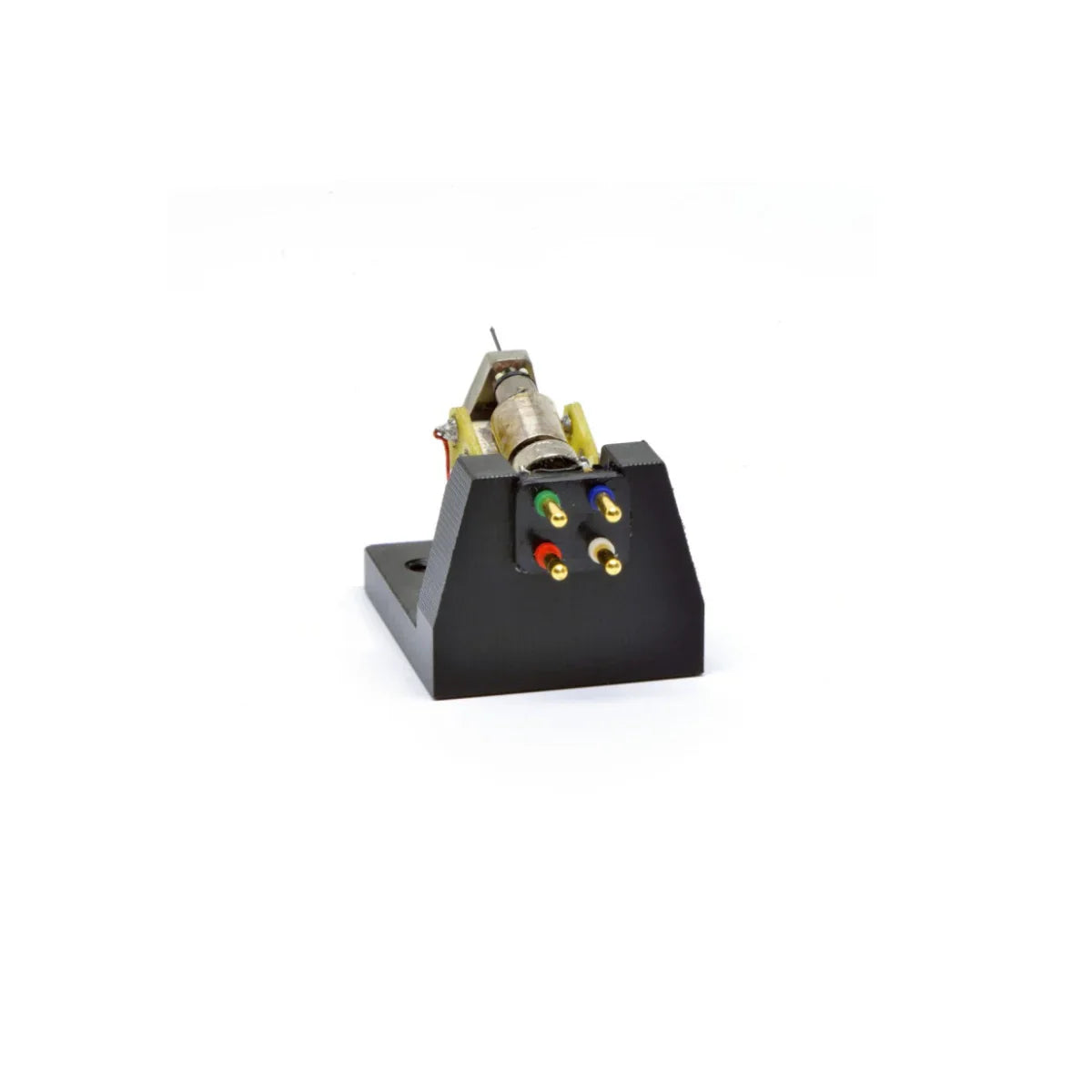
Cartridge compliance describes how easily a stylus suspension responds to groove movement and plays a central role in how the cartridge interacts with tonearm mass. Understanding what a phono cartridge is provides essential context for how compliance, tracking behaviour and resonance control influence overall playback stability and sound quality. Matching compliance to tonearm mass is essential for accurate tracking, stable bass performance and the prevention of resonance-related distortion.
What Is Cartridge Compliance?
Compliance expresses the flexibility of the stylus suspension—the rubber or elastomer component that allows the cantilever to move. It is measured in micrometres per millinewton (µm/mN).
Two compliance categories exist:
- High-compliance cartridges: very flexible suspensions
- Low-compliance cartridges: stiffer suspensions
These characteristics influence how the cartridge responds to tonearm mass and groove modulation.
What Is Tonearm Effective Mass?
Effective mass represents how much inertia the tonearm has when moving at the stylus end. It is influenced by the arm tube, headshell, bearings and counterweight distribution.
Typical categories:
- Low-mass tonearms: 5–10 g
- Medium-mass tonearms: 10–20 g
- High-mass tonearms: 20–30 g+
The goal is to pair cartridge compliance with the appropriate tonearm mass to achieve the ideal resonance frequency.
The Tonearm–Cartridge Resonance Frequency
When the stylus tracks a record, the tonearm and cartridge act as a spring–mass system. This system resonates at a particular frequency—known as the arm–cartridge resonance frequency—which must fall within a safe operating window.
The Ideal Resonance Range
The accepted target range is:
- 8–12 Hz — optimal resonance frequency
Below this range, the system becomes sensitive to footfalls and low-frequency rumble. Above this range, the resonance interferes with musical information in the bass region.
How Compliance and Tonearm Mass Work Together
Compliance and effective mass form an inverse relationship:
- High-compliance cartridges require low-mass tonearms
- Low-compliance cartridges require medium- to high-mass tonearms
When mismatched, the stylus cannot track cleanly, leading to distortion, mistracking and resonance issues.
Matching Examples
1. High-Compliance Cartridge + Low-Mass Tonearm
This combination allows the stylus to follow groove modulations smoothly, ideal for light-tracking MM cartridges and vintage designs.
2. Low-Compliance Cartridge + Medium-/High-Mass Tonearm
Common in modern MC cartridges, this pairing ensures the stylus is properly controlled during complex musical passages and high-velocity groove sections.
3. Mismatched Pairing
- High compliance + high mass: resonance drops too low → sensitivity to footfalls and rumble
- Low compliance + low mass: resonance rises too high → poor bass response and mistracking
How to Calculate Resonance Frequency
The basic formula uses cartridge compliance and tonearm effective mass:
Resonance (Hz) ≈ 159 / √(M × C)
Where:
M = tonearm effective mass + cartridge mass (g)
C = cartridge compliance (µm/mN)
The result should fall between 8–12 Hz for optimal performance.
How Compliance Affects Real-World Sound
When Compliance Is Correctly Matched
- cleaner bass response
- stable stereo imaging
- improved tracking of difficult passages
- reduced distortion
- lower surface noise
When Compliance Is Mismatched
- mistracking and sibilance
- resonant bass peaks
- tonearm wobbling or chattering
- greater susceptibility to footfalls and rumble
- image instability
Compliance and Stylus Shape Interaction
Advanced stylus shapes (microline, Shibata, line-contact) benefit from correct compliance matching more than basic elliptical or conical designs.
- High-compliance + advanced stylus → maximum detail retrieval
- Low-compliance + advanced stylus → superior groove control for demanding pressings
These combinations maintain stable groove contact and reduce distortion.
Choosing the Right Compliance for Your Tonearm
If you are unsure about compliance matching, follow these general recommendations:
- Low-mass tonearms: choose high-compliance MM or MI cartridges
- Medium-mass tonearms: compatible with most MM and many MC cartridges
- High-mass tonearms: choose low-compliance MC cartridges designed for rigid control
Most contemporary tonearms are medium mass, providing broad compatibility with modern cartridge designs.
Explore our range of cartridges designed for accurate tracking, tonal balance and long-term record care.
Final Thoughts
Cartridge compliance determines how effectively a stylus tracks the groove, and tonearm mass determines how that movement is controlled. When these two factors are correctly matched, the system resonates in the ideal range, producing cleaner bass, smoother tracking and a more stable, refined musical presentation. Mastering compliance matching ensures your cartridge and tonearm work together to extract the maximum musical information from every record you play.