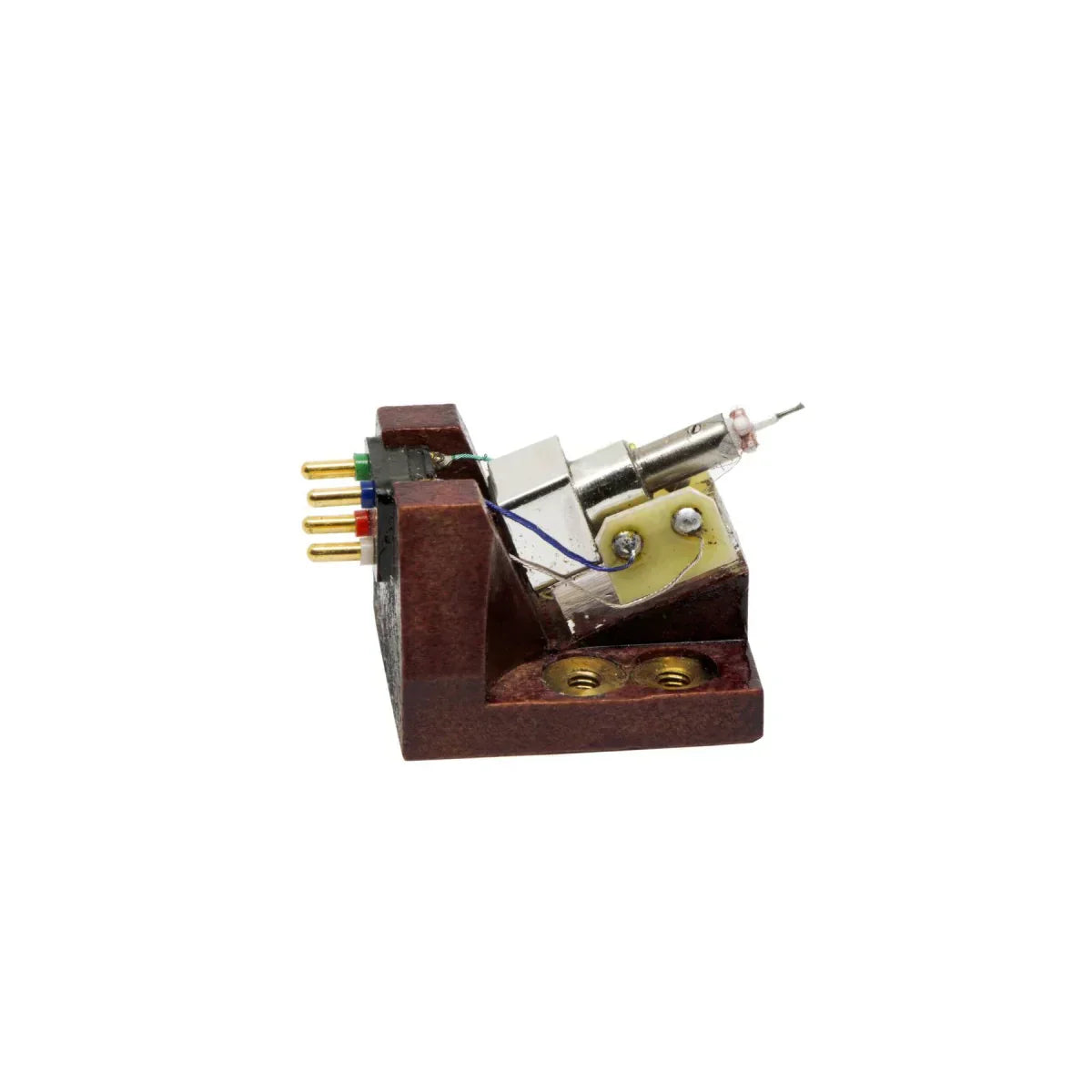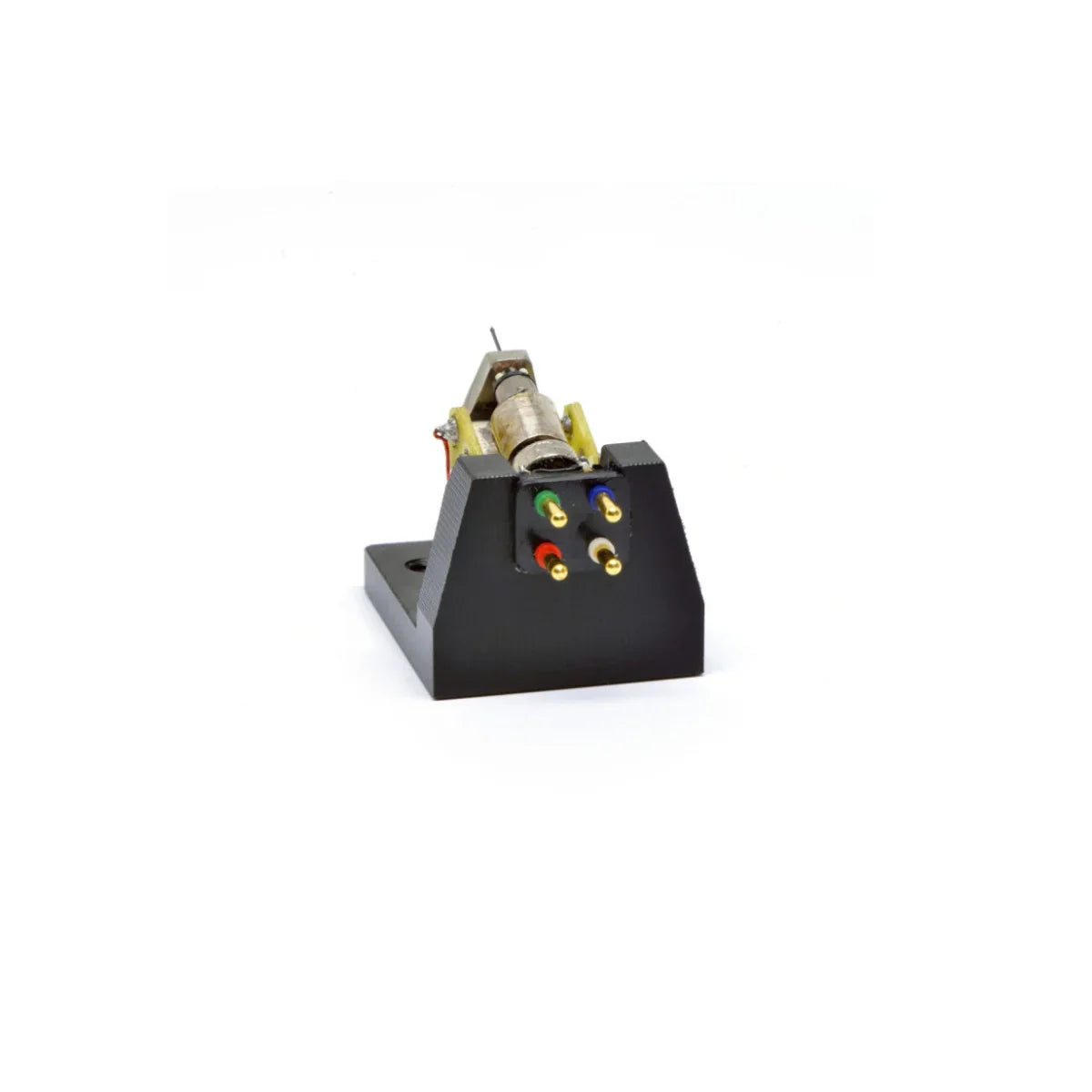
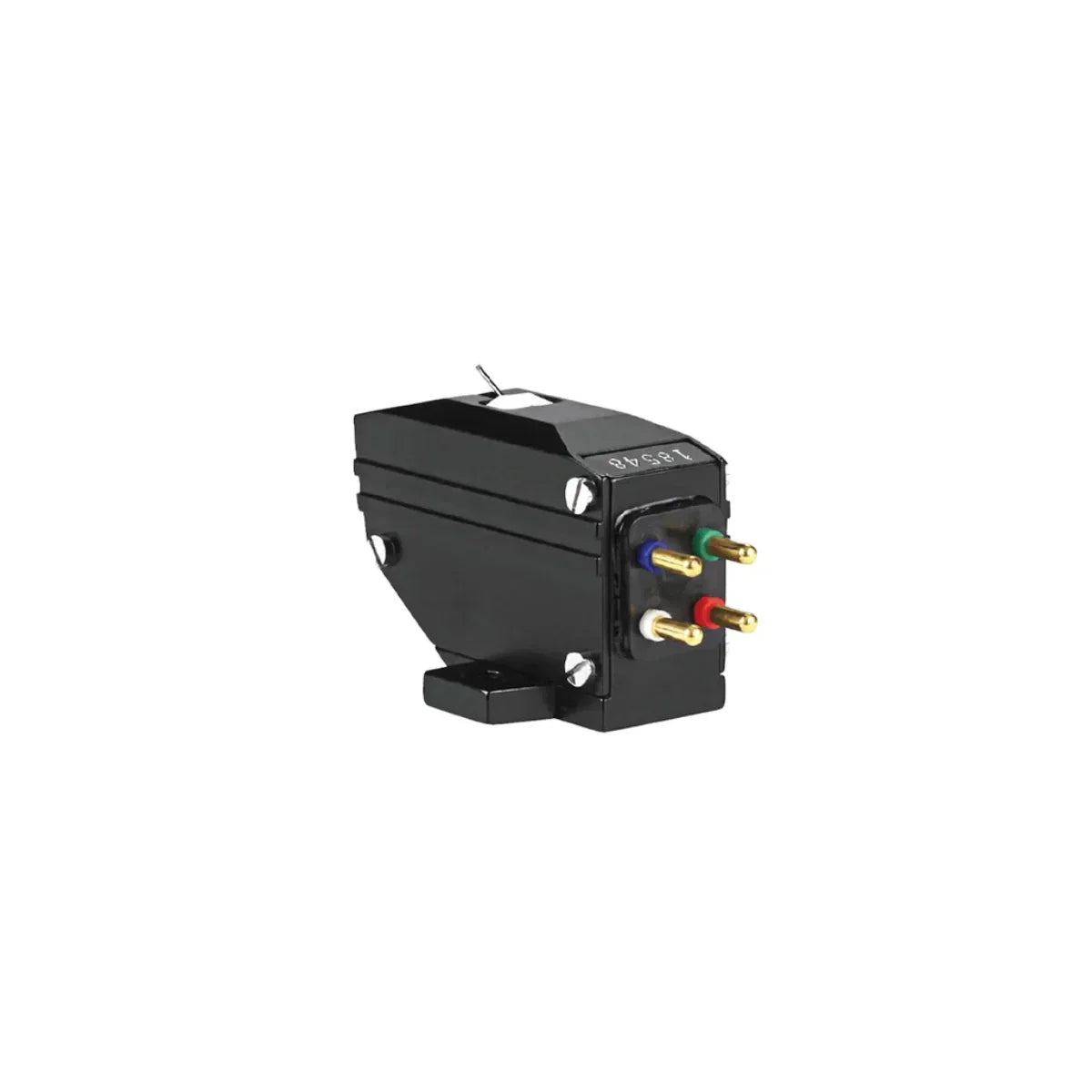
A phono cartridge is a mechanical-to-electrical transducer that converts the stylus’s movement in a record groove into an electrical signal that can be amplified and played through speakers. As the heart of the analogue playback chain, the cartridge determines detail retrieval, tonal balance, tracking accuracy and the fundamental character of a vinyl system.
How a Phono Cartridge Works
A cartridge generates an audio signal by transferring the stylus’s motion into a miniature generator. When the stylus traces the groove, it vibrates in response to the record’s modulated waveform. The cartridge’s internal assembly converts this motion into voltage using magnetic, coil-based or ceramic mechanisms.
The Signal Path
- The stylus sits in the groove and vibrates according to recorded information.
- The cantilever transfers that movement into the generator assembly.
- The generator produces a tiny electrical signal—typically 2–6 mV for MM and 0.2–0.6 mV for MC cartridges.
- This signal is amplified by a phono stage and equalised using the RIAA curve.
Every link in this chain influences clarity, noise floor and musical realism.
The Key Components of a Cartridge
1. Stylus
The stylus, or needle, is the diamond tip that physically tracks the record. Its shape (elliptical, microline, Shibata, conical) determines how well it fits into the groove and how much musical detail it retrieves.
2. Cantilever
The cantilever is the small rod—often aluminium, boron or sapphire—that transmits stylus movement to the generator. A stiffer, lighter cantilever improves transient response and reduces distortion.
3. Suspension
The suspension is a small elastic damper that controls stylus movement. Its compliance influences tonearm compatibility and tracking behaviour.
4. Generator Assembly
The generator converts mechanical vibration into electrical output. This can take the form of:
- Moving Magnet (MM) — magnet moves, coils fixed
- Moving Coil (MC) — coils move, magnet fixed
- Moving Iron (MI) — hybrid design with moving soft-iron armature
Each design offers different sensitivity, output levels and tonal character.
Why Cartridges Have Such a Big Impact on Sound
Unlike digital sources, analogue playback physically traces a groove. A cartridge therefore determines:
- resolution and detail retrieval
- tracking accuracy
- surface noise performance
- frequency extension
- channel separation
- overall tonal balance
Upgrading a cartridge often provides one of the largest audible improvements in a vinyl system.
Types of Phono Cartridges
Moving Magnet (MM)
MM cartridges are robust, high-output and affordable. They work with standard phono stages and offer replaceable styli, making them a practical choice for many systems.
Moving Coil (MC)
MC cartridges use tiny coils suspended on the cantilever. They retrieve more micro-detail, provide better transient response and offer superior tracking at the cost of lower output and non-replaceable styli.
Moving Iron (MI)
MI cartridges combine MM convenience with MC-like refinement, often producing excellent dynamics with easily replaceable styli.
How Cartridge Mass and Compliance Affect Tonearm Matching
A cartridge must match a tonearm’s effective mass to maintain ideal resonance behaviour. This interaction influences tracking, low-frequency stability and overall sonic character.
- High-compliance cartridges pair best with low-mass tonearms.
- Low-compliance cartridges pair best with medium or high-mass tonearms.
Matching these elements reduces distortion and improves groove contact.
What Defines a High-Quality Cartridge?
Several factors elevate cartridge performance:
- precisely cut stylus profiles
- rigid, lightweight cantilevers
- high-quality suspension components
- strong channel balance and separation
- low internal resonance
- tight manufacturing tolerances
Together, these qualities create a cleaner, richer and more stable analogue signal.
When to Replace a Cartridge or Stylus
Cartridges and styli wear over time. A worn stylus distorts high frequencies, mistracks and damages records.
- Replace bonded elliptical styli every 300–500 hours
- Replace nude elliptical or microline styli every 500–1,000 hours
- Monitor MC cartridges more frequently due to non-replaceable styli
Consistent performance depends on keeping both stylus and generator in top condition.
Explore our range of cartridges designed for accurate tracking, tonal balance and long-term record care.
Complete your vinyl system with a precision-engineered turntable, built to support accurate tracking, stable rotation and optimal cartridge performance.
Final Thoughts
A phono cartridge is the core transducer in a vinyl playback system, transforming mechanical movement into the rich analogue signal that defines vinyl’s character. Its stylus, cantilever, suspension and generator all influence resolution, tracking behaviour and tonal signature. Choosing a well-matched cartridge ensures cleaner detail, lower distortion and a more involving listening experience from your record collection.