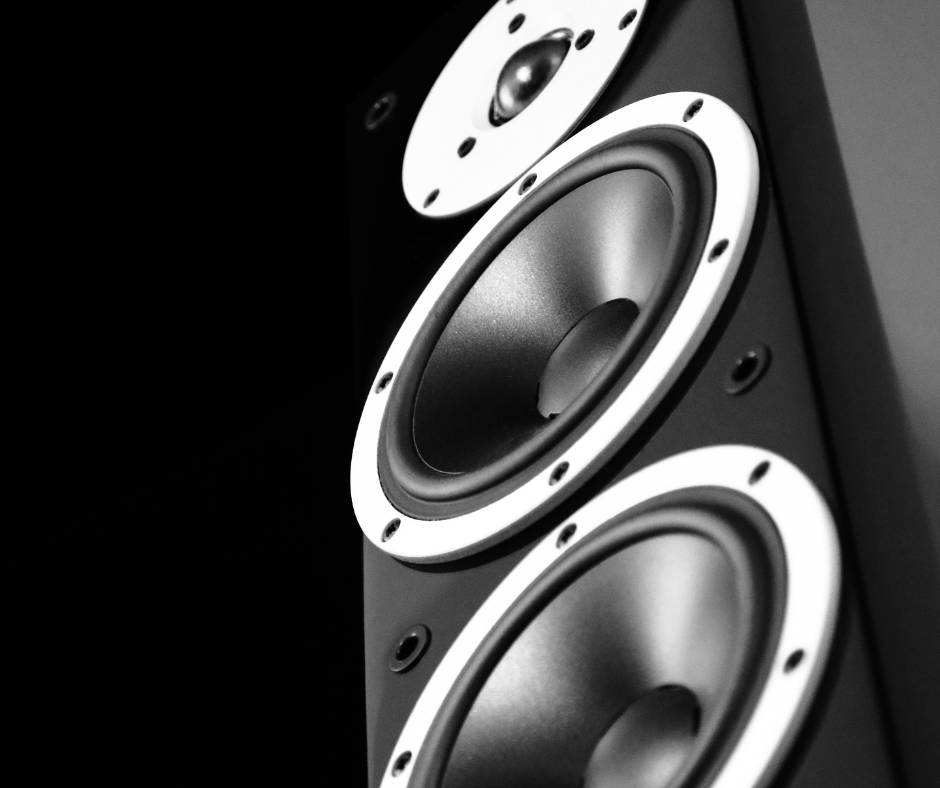
Room acoustics are the acoustic properties of a listening space that shape how floorstanding speakers project sound, influencing bass behaviour, imaging, clarity, reflections and overall frequency balance. These acoustic interactions—also described as room response, in-room behaviour, modal activity and boundary effects—play a larger role in final sound quality than even the speaker design itself.
Why Room Acoustics Matter More Than Most People Realise
Floorstanding speakers generate strong low-frequency energy and wide sound dispersion. Because of this, the room becomes a critical part of the playback system. Hard surfaces, absorption levels, room geometry and speaker placement all affect how a tower speaker performs.
Even the best-engineered floorstanding speakers can sound boomy, thin, harsh or muffled when placed in an acoustically challenging environment.
The Fundamentals of Room–Speaker Interaction
When sound waves leave a floorstanding speaker, they interact with boundaries, furnishings and surfaces. The result is a combination of:
- Direct sound — the signal coming straight from the drivers
- Early reflections — side walls, floor and ceiling reflections within the first 20 ms
- Late reflections — diffuse energy arriving later in time
- Modal behaviour — low-frequency standing waves
The balance of these elements defines tonal accuracy, imaging and bass response. For the basics check out the What Are Floorstanding Speakers guide.
How Room Modes Affect Bass from Floorstanding Speakers
Because tower speakers produce significant bass energy, they strongly excite room modes—resonant frequencies created by room dimensions.
What Room Modes Cause
- Bass peaks — overly loud notes at modal frequencies
- Bass nulls — weak or missing bass at cancellation points
- Uneven low-frequency response
- Smearing of bass transients
Larger floorstanding speakers with deeper extension will excite more modes, making placement and room treatment even more important.
Boundary Interactions: Walls, Corners and Floors
Tower speakers interact strongly with room boundaries. Distances from walls, corners and floors can dramatically change tonal balance.
Rear Wall Interaction
Placing floorstanding speakers too close to the rear wall increases:
- Bass reinforcement
- Upper-bass bloom
- Loss of clarity in the midrange
Side Wall Interaction
Side-wall reflections influence:
- Imaging precision
- Soundstage width
- Tonal balance in upper mids and treble
Corner Placement
Corners dramatically increase low-frequency energy due to boundary gain. This often leads to:
- Boomy bass
- Over-powerful mid-bass
- Loss of articulation
Early Reflections and Their Impact on Clarity
Early reflections from side walls, floors and ceilings arrive shortly after the direct sound. These reflections:
- Reduce imaging accuracy
- Mask micro-detail in the midrange and treble
- Widen the perceived stereo image in a way that may sound unnatural
Treatments such as rugs, acoustic panels or curtains can significantly improve clarity.
How Speaker Height and Driver Position Affect Acoustics
Floorstanding speakers naturally place the tweeter close to ear height, which improves:
- Vertical dispersion
- Image stability
- Overall soundstage height
Cabinet height can also influence floor-bounce effects—the reflection that occurs between the woofer and the floor, causing dips in the mid-bass region.
Room Size and Speaker Performance
Tower speakers generate substantial bass energy. The size of the room determines how smoothly this energy will develop.
Small Rooms (Below ~12 m²)
- Strong modal activity
- Risk of overwhelming bass
- Short listening distances limit soundstage
Medium Rooms (12–25 m²)
- Ideal for most floorstanding speakers
- Balanced modal behaviour
- Enough space for proper placement
Large Rooms (25 m²+)
- Allow tower speakers to reach full potential
- Reduced boundary gain
- Stronger sense of scale and openness
How to Optimise Room Acoustics for Tower Speakers
1. Adjust Speaker Placement
- Start with the speakers at least 60–90 cm from the rear wall
- Maintain equal distance from the listening position
- Experiment with toe-in for imaging focus
2. Manage Reflections
- Use rugs to damp floor reflections
- Add absorptive panels at first reflection points
- Use diffusers to improve ambient spaciousness
3. Control Bass Behaviour
- Avoid placing speakers close to corners
- Add bass traps in corners or behind speakers
- Measure in-room response using a calibrated microphone
4. Match Listening Position to Room Modes
- Avoid sitting at the room’s exact centre
- Position the listening seat between 0.55–0.62 of room length
- Keep your ears above the mid-height reflection plane
For big, room-filling sound, browse our curated Floorstanding Speakers collection.
Final Thoughts
Room acoustics profoundly shape how floorstanding speakers perform. Even the most advanced tower speaker cannot overcome a room with severe reflections, boundary issues or modal imbalances. By understanding how the room interacts with bass behaviour, imaging and dispersion, listeners can unlock the full potential of their floorstanding speakers—achieving clarity, scale and accuracy that reflect the speaker’s true engineering.