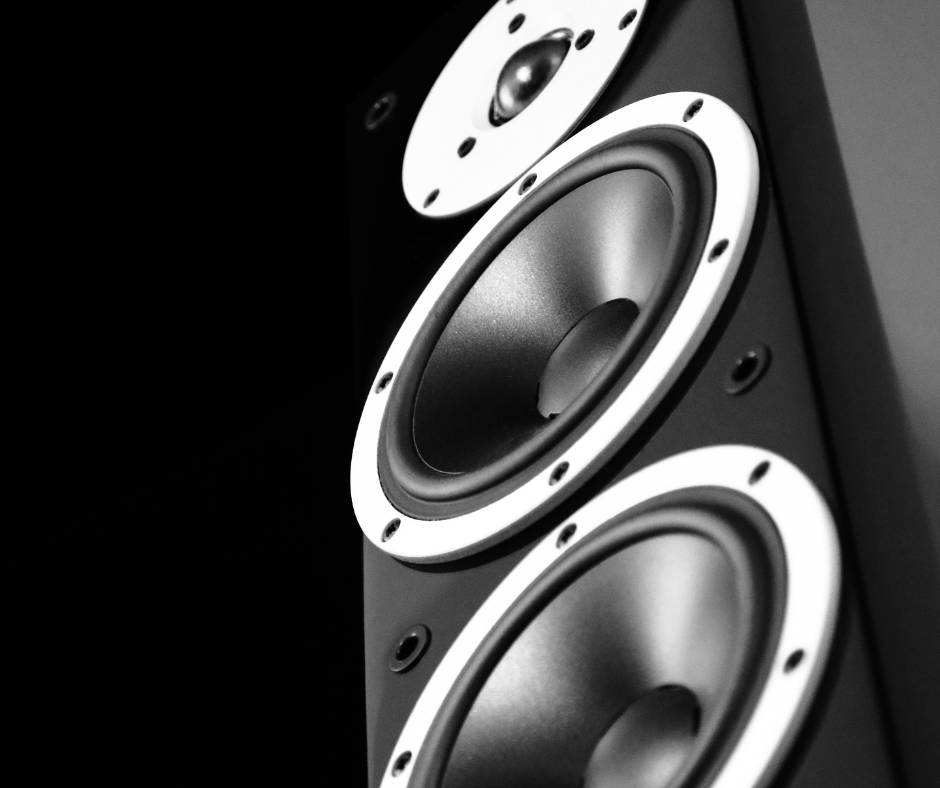

Speaker impedance is the electrical resistance a loudspeaker presents to an amplifier, measured in ohms, and it determines how easily the amplifier can deliver current to the speaker. Floorstanding speakers—often rated at 4, 6 or 8 ohms—place different loads on an amplifier, influencing power delivery, stability, heat generation and overall sound quality. Matching amplifier capability to speaker impedance is essential for achieving clean, dynamic and distortion-free playback.
What Impedance Really Means
Impedance is not a fixed value. Although a tower speaker may be labelled “8 ohms,” its impedance curve varies across the frequency spectrum. This curve shows how the load changes as the amplifier drives bass, midrange and treble frequencies.
Floorstanding speakers often present more demanding electrical loads due to their larger cabinets and multiple woofers. Understanding what floorstanding speakers are helps explain why impedance matching and amplifier stability are critical for achieving controlled, distortion-free performance.
Nominal Impedance vs Actual Impedance
The published rating (4, 6 or 8 ohms) is the nominal impedance. The minimum impedance—often hidden in the fine print—is more important because it describes the lowest electrical load the amplifier will encounter.
Typical Minimum Impedance Values
- 8-ohm nominal tower → may dip to 5–6 ohms
- 6-ohm nominal tower → may dip to 3–4 ohms
- 4-ohm nominal tower → may dip to 2–3 ohms
The lower the dip, the more demanding the loudspeaker becomes—especially during deep bass passages where tower speakers draw heavy current.
Why Floorstanding Speakers Typically Need Strong Amplifiers
Tower speakers often include multiple woofers, large cabinet volumes and wider frequency extension. These characteristics require amplifiers capable of:
- High current delivery for bass control
- Stable output into 4-ohm loads or lower
- Strong damping factor to manage driver movement
- Sufficient headroom for dynamic peaks
Underpowered amplifiers can struggle with demanding loads, leading to distortion, heat build-up or even amplifier shutdown.
Amplifier Types and Their Behaviour With Different Loads
Class AB Amplifiers
A common choice for hi-fi systems, Class AB amplifiers deliver good current capability and stable performance across varied impedances. High-quality Class AB designs often excel with 4-ohm tower speakers.
Class A Amplifiers
Known for exceptional purity and linearity, Class A amplifiers deliver constant current. They typically handle 8-ohm loads best but can struggle with highly reactive 4-ohm speakers unless engineered for high-current output.
Class D Amplifiers
Modern Class D designs offer high efficiency and impressive power-to-weight ratios. Some excel into low impedances, but performance varies widely. Always check manufacturer stability ratings when pairing Class D amplification with 4-ohm tower speakers.
Understanding Amplifier Stability at Low Impedance
An amplifier must remain stable when driving impedance dips. Signs of poor stability include:
- Harsh treble at moderate levels
- Loose, boomy or uncontrolled bass
- Amplifier shutdown or thermal protection activation
- Compression during loud passages
A stable amplifier effortlessly delivers clean current even when the speaker load becomes demanding.
How Much Power Do Floorstanding Speakers Really Need?
Although wattage figures attract attention, power is only meaningful when paired with speaker sensitivity and impedance.
General Guidelines
- High-sensitivity towers (90 dB and above): 40–100 W per channel is often enough
- Medium-sensitivity towers (87–89 dB): 70–150 W per channel recommended
- Low-sensitivity towers (below 87 dB): 100–300 W per channel often necessary
Sensitivity dictates how loudly a speaker plays for a given amount of power; impedance dictates how difficult it is to provide that power.
The Role of Damping Factor
Damping factor refers to the amplifier’s ability to control speaker movement, especially in the bass. Floorstanding speakers with large woofers benefit from higher damping factors, which result in:
- Tighter, more articulate bass
- Improved transient control
- Better integration across frequency bands
A low damping factor often produces soft, bloated or slow bass response.
Matching Amplifier and Speaker Impedance
Most amplifiers list recommended load ratings, such as:
- 8–16 ohms only
- 4–8 ohms stable
- 2-ohm capable high-current designs
The safest and most effective pairings are:
8-Ohm Tower Speakers
- Compatible with almost all amplifiers
- Best match: Class AB or Class A amplifiers
6-Ohm Tower Speakers
- Require moderate current capability
- Most modern integrated amplifiers handle them well
- Best match: Class AB or well-engineered Class D
4-Ohm Tower Speakers
- Demand high-current capability
- Amplifier must be rated for 4-ohm stability
- Best match: robust Class AB, powerful Class D, or high-current Class A designs
When Mismatching Causes Problems
Pairing a demanding speaker with an underpowered or unstable amplifier may result in:
- Clipping (damaging to tweeters)
- Distortion during dynamic peaks
- Poor bass control due to insufficient damping
- Thermal shutdown from overloading
Proper matching prevents all of these issues and ensures dynamic, effortless playback.
Do More Watts Always Mean Better Sound?
Not necessarily. Quality of power delivery matters more than quantity. Many premium amplifiers with modest wattage outperform budget units with much higher power ratings because they offer:
- Higher current availability
- Better transformer design
- Superior thermal management
- Cleaner circuitry with lower noise floors
Floorstanding speakers reveal amplifier quality immediately—they thrive when fed clean, stable power.
For big, room-filling sound, browse our curated Floorstanding Speakers collection.
Final Thoughts
Matching speaker impedance with the right amplifier is essential for floorstanding speakers to perform at their peak. Impedance dictates the electrical load, sensitivity dictates the required power and amplifier stability ensures clarity and dynamic control. When these elements align, tower speakers deliver the authority, detail and scale they were engineered for—unlocking their full musical potential.