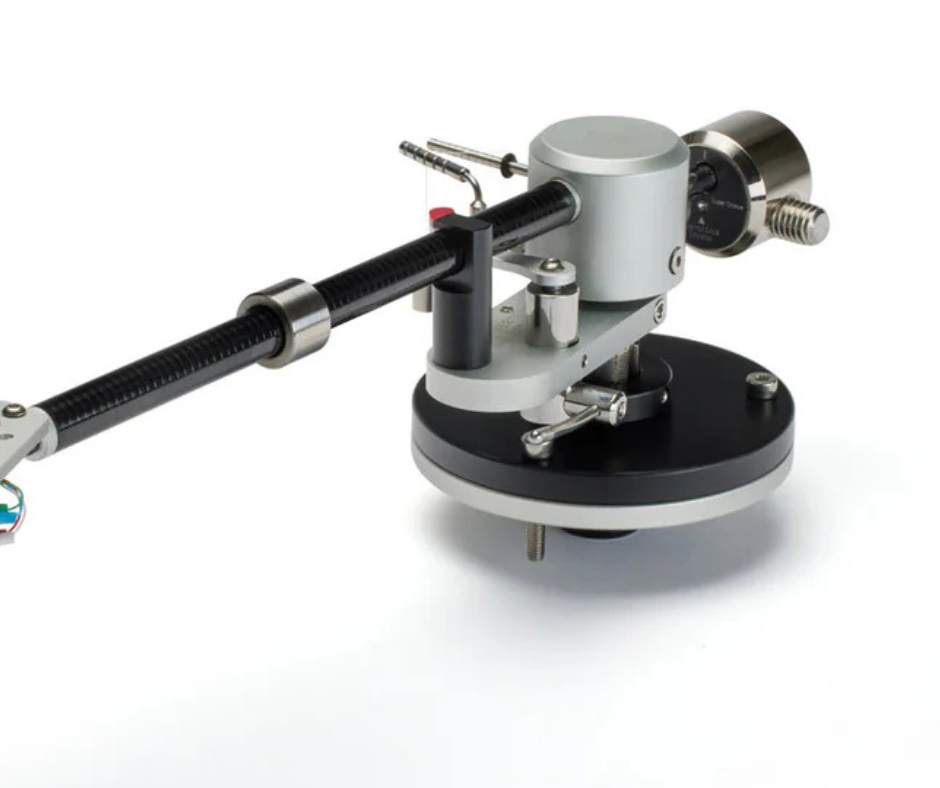
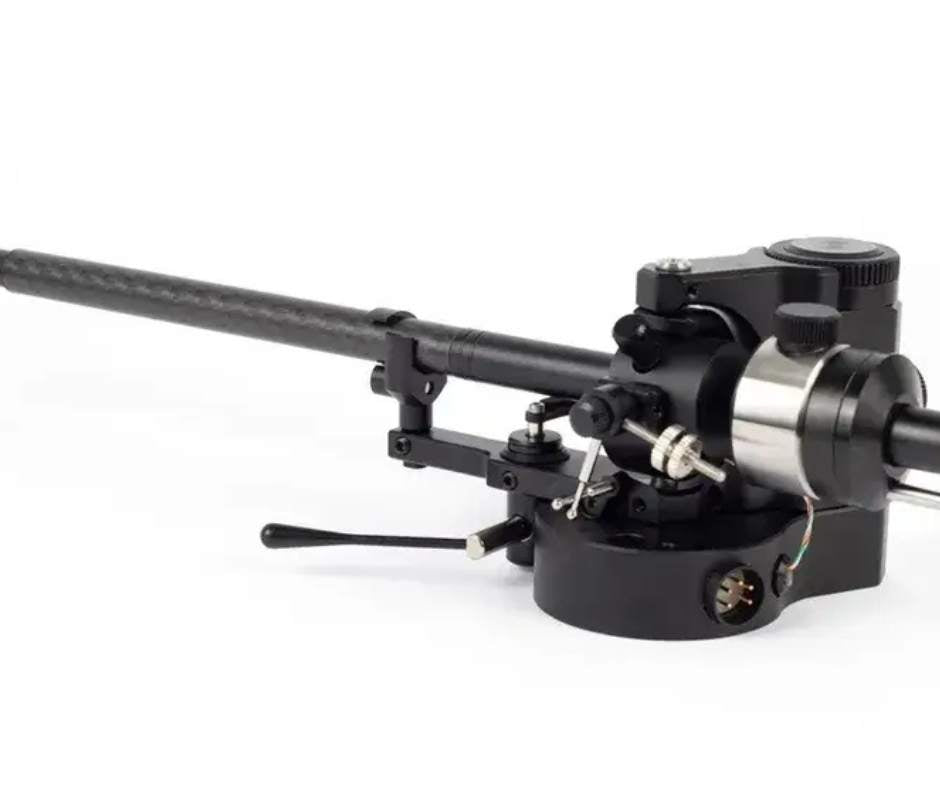
VTA, azimuth and anti-skate are fine adjustment parameters used to optimise stylus alignment and tracking behaviour. Understanding what a tonearm is helps explain how these adjustments influence groove contact, balance and distortion. When correctly set, these parameters ensure the stylus sits in the groove with the proper geometry, maintaining balanced channel output, extended frequency response and clean, distortion-free tracking.
Why These Adjustments Matter
Vinyl playback relies on precise mechanical contact between the stylus and groove. Small angular errors—fractions of a degree—can introduce audible distortion, tonal imbalance, channel misalignment or mistracking. Proper setup of VTA, azimuth and anti-skate allows the stylus to retrieve information with stability, detail and finesse.
1. Vertical Tracking Angle (VTA)
VTA (Vertical Tracking Angle) describes the angle between the cantilever and the record surface as the stylus sits in the groove. It is closely related to Stylus Rake Angle (SRA), which refers to the contact edge of the stylus tip.
How VTA Affects Sound
VTA determines how the stylus interacts with the groove walls. When set correctly, it delivers:
- Clear high-frequency detail
- Stable imaging with precise channel separation
- Natural midrange tone without glare
- Balanced harmonic structure
Symptoms of Incorrect VTA
- Too low VTA (tonearm tail down) → warm, muffled highs; thick bass
- Too high VTA (tonearm tail up) → bright, sharp highs; thin midrange
2. Azimuth
Azimuth refers to the left-right rotational angle of the cartridge relative to the record surface. The stylus must sit perfectly vertical so both groove walls are traced evenly.
Why Azimuth Is Critical
Misaligned azimuth causes the stylus to press harder on one groove wall, resulting in:
- Channel imbalance
- Reduced stereo imaging
- Higher distortion in the misaligned channel
- Accelerated stylus and record wear
How to Identify Incorrect Azimuth
Signs include:
- Vocals pulling to one side
- Uneven treble response
- Phase anomalies or smeared imaging
3. Anti-Skate
Anti-skate is a small outward force applied to counteract the inward pull created as the stylus tracks the rotating record. Without anti-skate, the stylus is drawn too strongly toward the centre, causing uneven pressure on the inner groove wall.
Why Anti-Skate Is Necessary
- Prevents left-channel distortion caused by excessive inward force
- Maintains balanced wear on both groove walls
- Improves tracking stability during dynamic passages
- Reduces sibilance and inner-groove stress
Symptoms of Incorrect Anti-Skate
- Too little anti-skate: left-channel distortion, stylus leaning inward
- Too much anti-skate: right-channel distortion, stylus leaning outward
How These Adjustments Work Together
VTA, azimuth and anti-skate form an interconnected system that determines how the stylus interacts with the groove. Improvements in one parameter often reveal issues in another, so fine adjustment requires a holistic approach.
Combined Benefits of Proper Setup
- Lower distortion across the frequency range
- More accurate soundstage with solid imaging
- Extended stylus and record life
- Improved treble precision and vocal clarity
- Better tracking during complex, high-energy passages
Tools and Methods for Precise Adjustment
- Protractors for alignment and geometry setup
- Digital tracking force gauges for VTF stability
- Mirrored azimuth tools for visual alignment
- Test records for fine calibration of tracking and anti-skate
- Microscopes or loupes for SRA inspection
High-performance analogue systems often reveal dramatic improvements with even small refinements to these settings.
Explore our range of tonearms designed for stable tracking and precise cartridge control.
Final Thoughts
VTA, azimuth and anti-skate are essential tonearm adjustments that define how accurately the stylus sits in the groove. Properly dialling in these parameters ensures balanced channel output, improved tracking, cleaner transients and a more spacious, natural soundstage. Mastering these adjustments is one of the most effective ways to elevate analogue playback and unlock the full capability of your cartridge and tonearm.