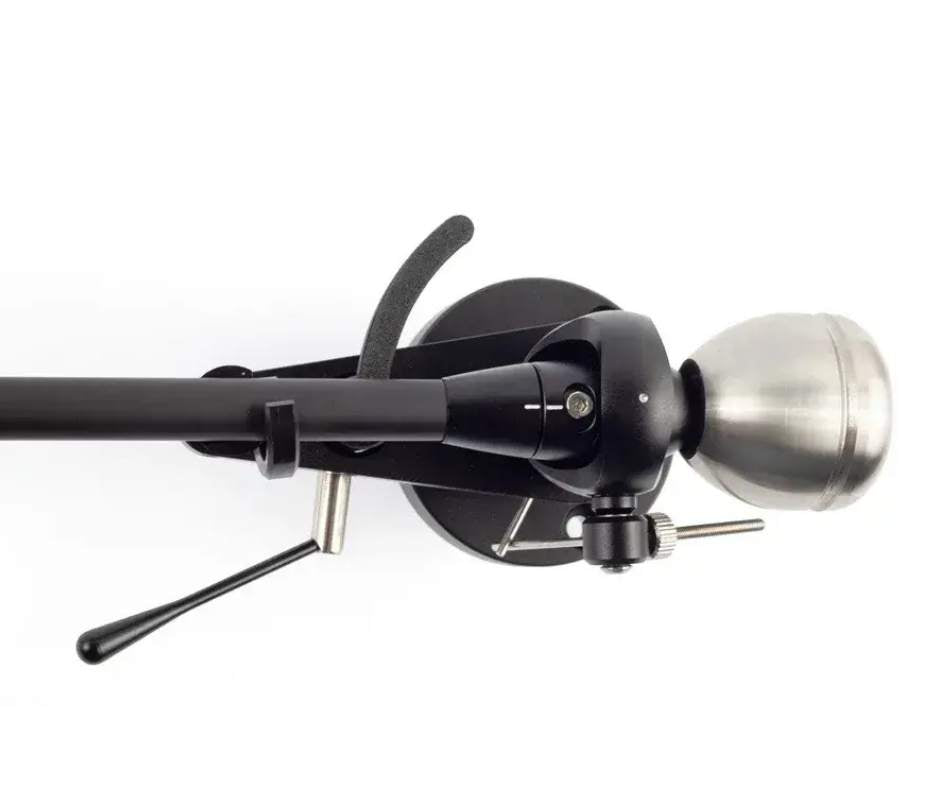
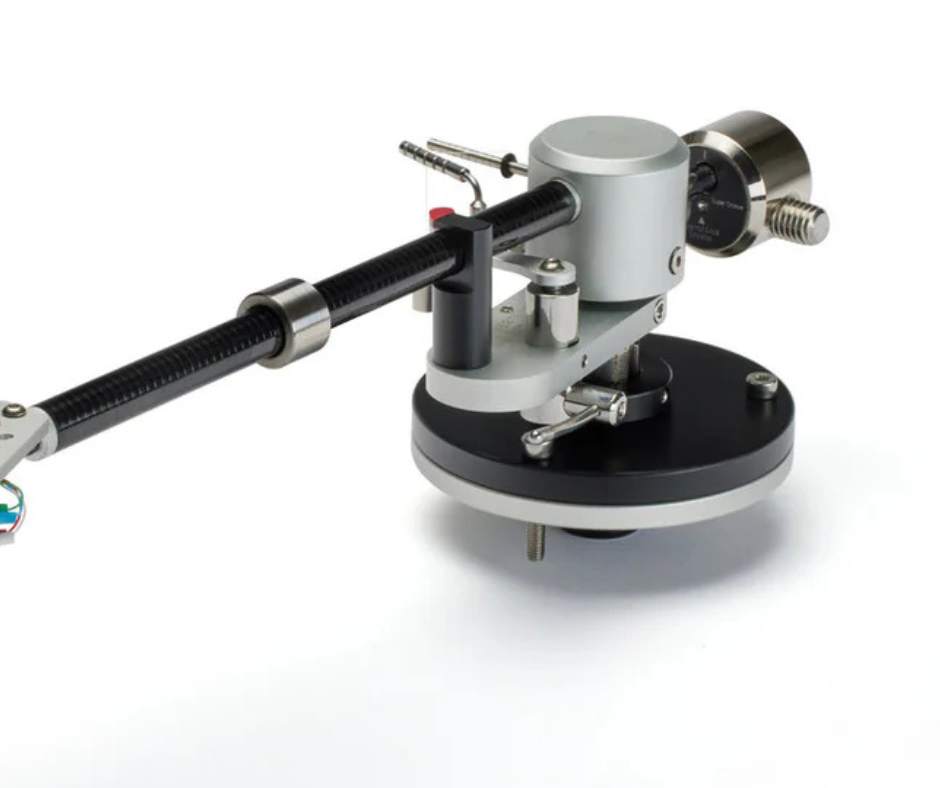
Bearings and materials influence tonearm performance because they determine how freely, accurately and quietly the arm can move while controlling resonance and vibration. Understanding what a tonearm is helps explain why mechanical precision plays such a central role in analogue playback quality. The combination of bearing precision and material selection shapes tracking accuracy, tonal clarity, transient speed and overall musical realism, making these factors central to analogue playback quality.
The Role of Bearings in Tonearm Performance
Bearings are the pivoting mechanism that allow the tonearm to move horizontally and vertically across the record. Their job is to provide low friction, high stability and smooth motion without introducing noise, play or mechanical resistance. Even microscopic irregularities can introduce distortion, mistracking or channel imbalance.
What Makes a Bearing High-Performance?
- Low friction for effortless stylus movement
- Precise tolerances to prevent chatter or wobble
- Stable pivot geometry with minimal backlash
- Quiet operation without vibration transfer
- Durability to maintain performance over time
Types of Tonearm Bearings
1. Gimbal Bearings
Gimbal systems use a pair of bearings on each axis, creating a rigid, controlled structure. This design delivers excellent stability, tracking accuracy and consistency, making it popular in high-end and professional tonearms.
2. Unipivot Bearings
A unipivot tonearm rests on a single pointed pivot. This creates a delicate, fluid motion with impressive freedom and natural resonance behaviour, though setup requires precision.
3. Magnetic Bearings
Magnetic bearings support the tonearm using opposing magnetic fields, reducing mechanical contact to effectively zero friction. This yields exceptionally smooth movement and very low noise, ideal for resolving cartridges.
4. Knife-Edge Bearings
These use a small, sharp edge that rests in a cradle. They offer fast transient response and a lively sonic character but require careful level management.
How Bearing Quality Affects Sound
1. Tracking Accuracy
High-precision bearings let the stylus trace complex groove modulations without resistance. The result is cleaner detail, reduced distortion and better micro-dynamics.
2. Bass Control
Stable bearings prevent unwanted lateral rocking, which can blur low-frequency energy. Good bearings deliver tighter, more articulate bass.
3. Imaging and Soundstage
Smooth pivot motion maintains consistent groove contact between channels, improving:
- stereo separation
- focus
- spatial accuracy
4. Tracking Force Consistency
Poor bearings can cause micro-oscillations in tracking force, leading to audible sibilance or instability. High-grade bearings maintain stable VTF, especially on warped records.
The Influence of Tonearm Materials
The material of the arm tube, headshell and bearing housing determines how the tonearm handles resonance, vibration and energy transmission. Each material has its own combination of stiffness, mass and damping characteristics.
1. Aluminium
Lightweight and affordable with moderate stiffness. Aluminium arms offer a balanced, neutral sound but can require internal damping to control ringing.
2. Carbon Fibre
Very stiff and highly resistant to resonance, carbon fibre provides excellent detail retrieval and fast transient response. It is prized for its low mass, controlled damping and smooth sonic character.
3. Magnesium
Magnesium combines extreme lightness with rapid energy dissipation. Tonearms made from magnesium exhibit speed, clarity and openness while avoiding harsh resonance.
4. Wood
Natural materials like ebony or bamboo offer organic damping characteristics. Wooden arms often deliver a warm, natural and refined tonal character.
5. Composite and Hybrid Materials
Many modern arms combine materials—such as aluminium cores with carbon sleeves—to fine-tune stiffness, mass and resonance behaviour.
How Materials Affect Sound
1. Resonance Control
Materials with strong internal damping prevent unwanted vibrations from colouring the sound. Better damping = cleaner mids, tighter bass and lower noise.
2. Tonal Balance
Each material has a sonic fingerprint:
- Carbon fibre → precise, controlled, modern
- Magnesium → airy, dynamic, fast
- Wood → smooth, warm, textured
- Aluminium → neutral, versatile
3. Dynamic Expression
A well-engineered tonearm material preserves energy transfer from stylus to cartridge body without adding smear or bloom.
4. Compatibility with Cartridges
Mass, stiffness and damping must be matched to cartridge compliance to avoid resonance peaks that affect sound quality.
Bearings + Materials: A Combined System
Bearings and materials do not act independently—tonearm performance depends on their interaction. For example:
- A low-friction bearing paired with a resonant arm tube will still underperform.
- A rigid carbon arm with poor bearings will mis-track and distort.
- A damped wooden arm with magnetic bearings may offer superb natural tone and fluidity.
The ideal tonearm balances friction control, structural rigidity and resonance management as a unified mechanical system.
Explore our range of tonearms designed for stable tracking and precise cartridge control.
Final Thoughts
Bearings and materials define how a tonearm behaves, feels and sounds. Precision bearings ensure smooth, silent and accurate movement, while carefully chosen materials determine resonance control, tonal neutrality and dynamic expression. When these elements are engineered together, the tonearm becomes a highly precise instrument that allows the stylus to follow the groove with maximal fidelity, revealing greater detail, texture and musical depth.