A turntable is an analogue playback system that rotates a vinyl record at a constant speed while a tonearm and cartridge convert the record’s physical grooves into electrical audio signals. Unlike digital sources, a turntable performs a mechanical-to-electrical transformation, relying on precision engineering, vibration control and accurate rotational stability to deliver clean, detailed and characterful sound.
How a Turntable Reproduces Sound
Vinyl playback is fundamentally physical. As the record spins, the stylus traces microscopic groove modulations that represent the original musical waveform. These movements are converted by the cartridge into a tiny electrical signal, which is then amplified and equalised before reaching your speakers.
Three Critical Stages of Analogue Playback
- Stable rotation — the platter must spin at 33⅓ or 45 RPM with minimal speed drift
- Accurate tracking — the tonearm must guide the stylus cleanly through the groove
- Isolation — external vibrations must be absorbed so they don’t contaminate the signal
Every component of a turntable contributes to speed stability, tracking accuracy and noise control. Understanding how a turntable works helps explain why design and material choices have such a strong influence on sound quality.
The Core Parts of a Turntable
A modern hi-fi turntable is made up of several interconnected components, each influencing sound quality.
Plinth (Base)
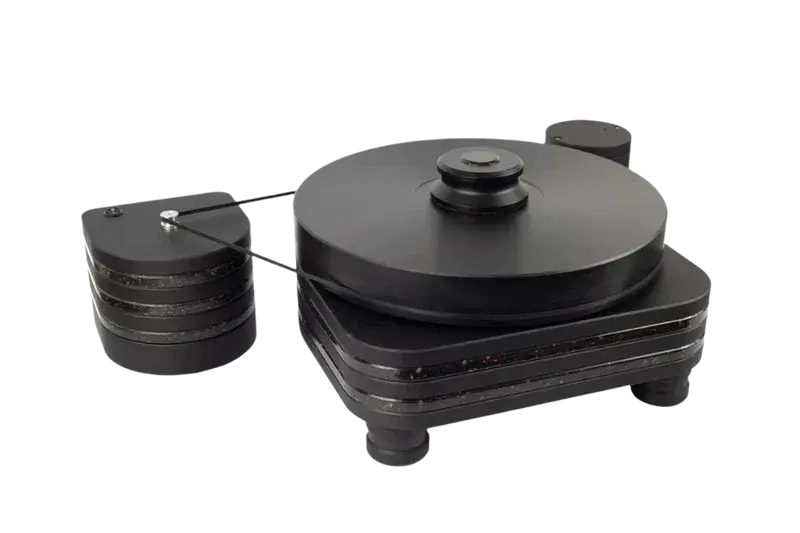
The plinth anchors the entire system. Its material, weight and construction determine how effectively the turntable resists resonance and vibration. Dense, inert plinths provide the cleanest signal path by preventing unwanted mechanical noise.
Motor
The motor drives the platter, either directly or via an elastic belt. It must run smoothly and consistently to avoid pitch instability—known as wow and flutter.
Platter
The platter rotates the record and must be heavy, stable and well-damped. Materials such as acrylic, aluminium and composite alloys reduce resonance and keep rotation accurate.
Tonearm
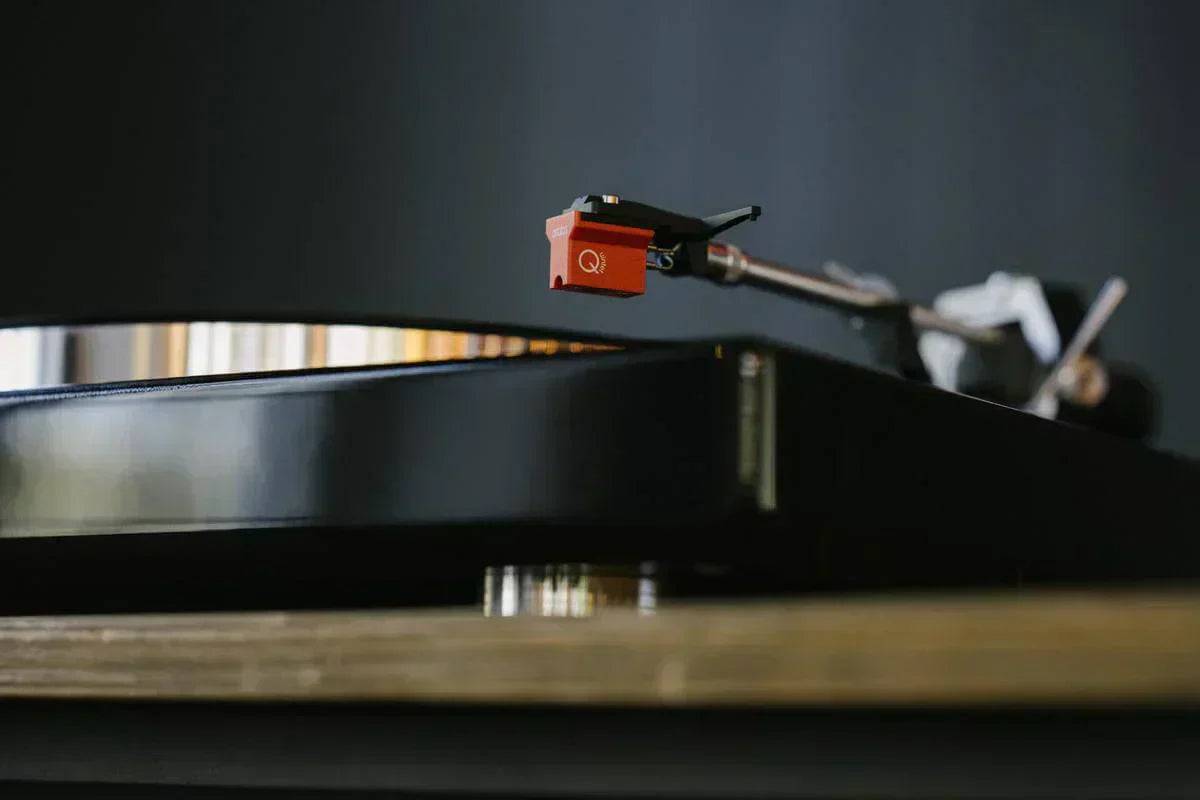
The tonearm ensures the stylus follows the groove precisely. Effective tonearm design reduces friction, maintains the correct geometry and allows accurate adjustments such as tracking force and anti-skate.
Cartridge & Stylus
The cartridge houses the stylus, cantilever and generator system. It converts physical movement into an electrical signal. Stylus shape, suspension compliance and generator type (MM or MC) all contribute to tonal character and resolution.
Why Turntables Are Still Popular
Vinyl offers a tactile, immersive listening experience that digital formats cannot replicate. Many listeners value the warmth, depth and natural dynamics of analogue playback. Turntables also invite personal involvement—choosing cartridges, adjusting tracking, improving isolation and upgrading components.
Key Reasons Enthusiasts Love Turntables
- Analogue warmth and organic sound staging
- Physical connection with recorded music
- Collectability of vinyl records
- Customisation through tonearms, cartridges and mats
- Longevity — vinyl collections remain playable for decades
What Makes a High-Quality Turntable?
Performance depends on engineering, materials and isolation. Key characteristics of a well-designed turntable include:
- Low noise floor from effective vibration damping
- Accurate speed stability with minimal wow and flutter
- Rigid tonearm construction for precise tracking
- High-quality cartridge that complements the system
- Solid plinth and platter design that avoids resonance
These engineering choices determine how faithfully the turntable delivers detail, dynamics and stereo imaging.
Turntables for Different Listeners
For Beginners
Plug-and-play models with pre-mounted cartridges provide a simple introduction to vinyl listening without complex setup.
For Enthusiasts
Belt-drive models with adjustable tonearms, isolation feet and upgrade pathways provide better refinement and control.
For Audiophiles
High-mass plinths, precision bearings, advanced isolation and premium MC cartridges create reference-level analogue performance.
Building a vinyl system? Explore our curated range of Turntables.
Final Thoughts
A turntable is a precision analogue instrument designed to extract music from vinyl with clarity, warmth and realism. Its components work together to control vibration, maintain perfect rotational speed and track the record groove with accuracy. Whether you are rediscovering your record collection or building a high-end listening system, choosing the right turntable provides a uniquely engaging and rewarding musical experience.