
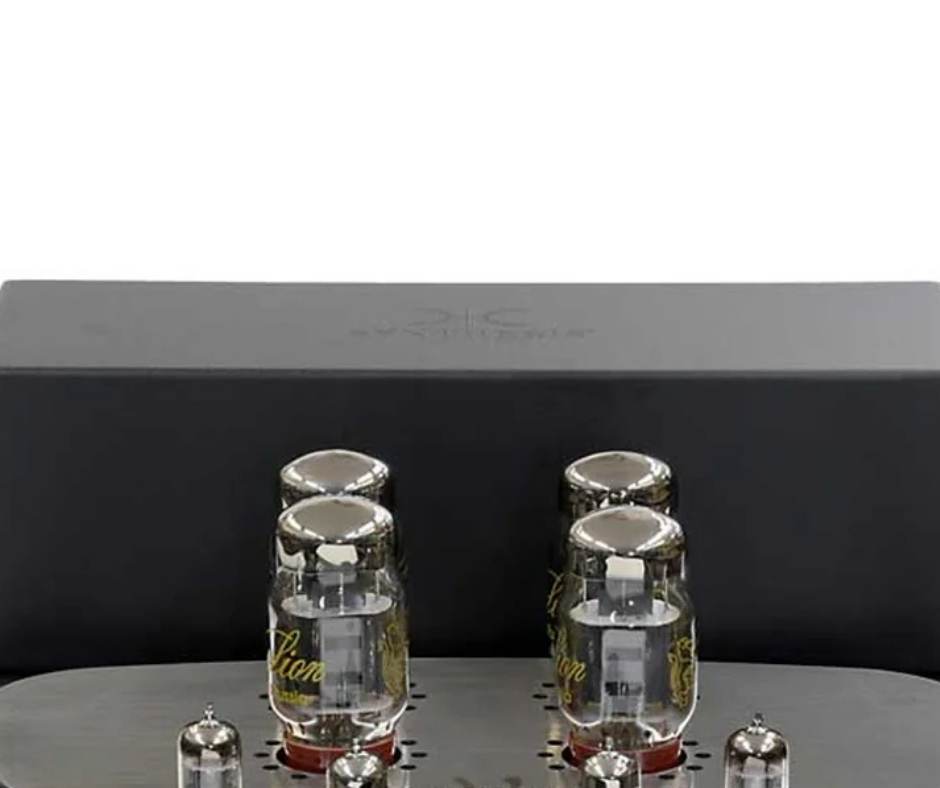
A valve amplifier is an audio amplifier that uses vacuum tubes to increase the strength of an electrical audio signal so it can drive speakers or headphones. Unlike solid-state amplifiers, which use transistors, valve amplifiers rely on heated tubes to control signal flow, shaping how the amplified sound behaves under load.
As an audio signal passes through the valve stages, the tubes introduce characteristic harmonic behaviour and dynamic response. This operating method influences how the amplifier handles transients, distortion, and signal peaks, which is why valve amplifiers are often associated with a distinct sound character compared with solid-state designs.
How a Valve Amplifier Works
Valve amplifiers operate using vacuum tubes (also known as thermionic valves), which control electron flow inside a sealed glass envelope. When the tube heats up, electrons move from the cathode to the anode, allowing the signal to be amplified with a characteristic harmonic structure.
Main Tube Stages
- Preamp tubes — amplify low-level signals and shape tonal character
- Phase inverter tubes — split the signal for push-pull output stages
- Power tubes — deliver current and voltage to drive speakers
Each tube type contributes its own sonic fingerprint, making tube selection an important part of system voicing.
The Sound Signature of Valve Amplifiers
Valve amplifiers are renowned for their smooth midrange, expansive soundstage and pleasing harmonic distortion. Their tonal qualities come from how tubes saturate under load, adding subtle warmth and musicality that many listeners find more engaging than the clean, clinical profile of some solid-state designs.
Key Sonic Characteristics
- Second-order harmonics that contribute sweetness and warmth
- Soft clipping that avoids harshness at high volume
- Natural compression that smooths dynamic peaks
- Enhanced spatial imaging due to tube linearity and wide bandwidth
These qualities make valves especially appealing to listeners who value musicality over absolute neutrality.
Common Valve Types and Their Influence
Different tube designs shape sound in distinct ways. Among the most popular are:
12AX7 / ECC83 (Preamp Tube)
Provides high gain with a signature rich, textured midrange. Used widely in both hi-fi and musical instrument amplifiers.
EL34 (Power Tube)
Known for warm tonality and expressive upper mids, creating a classic British sound.
KT88 (Power Tube)
Offers greater headroom, deeper bass and a more authoritative presentation.
300B (Power Triode)
Highly regarded for its liquid midrange and holographic imaging in SET (single-ended triode) designs.
Tube rolling—replacing tubes to alter sound—is a common way to refine the amplifier’s character.
Types of Valve Amplifier Designs
Single-Ended Triode (SET)
- Powers the entire signal through one tube
- Exceptionally pure, low-distortion midrange
- Usually low wattage (3–10 watts)
- Ideal for high-sensitivity speakers
Push-Pull Amplifiers
- Use two tubes to amplify positive and negative signal halves
- Higher power output
- Tighter bass and improved efficiency
- More suitable for modern rooms and speakers
Ultralinear and Triode Modes
Some amplifiers allow switching between ultralinear (more power, tighter control) and triode mode (warmer tone, sweeter harmonics).
Strengths of Valve Amplifiers
- Organic tone with smooth harmonic behaviour
- Engaging dynamics and expressive microdetail
- Soft clipping that maintains musicality at higher levels
- Customisable sound through tube rolling
- Exceptional synergy with high-sensitivity speakers
Limitations to Consider
- Regular maintenance such as tube replacement
- Heat output due to filament-driven operation
- Lower efficiency compared to solid-state designs
- Less bass authority unless using large push-pull designs
Many listeners accept these trade-offs because the sonic rewards outweigh the practical challenges.
Why Audiophiles Choose Valve Amplifiers
While solid-state amplifiers excel in precision, neutrality and power, valve amplifiers provide an emotional connection that many people describe as more “human” and “alive.” Their harmonic richness, spatial bloom and graceful behaviour under load create a listening experience that feels more intimate and expressive.
Looking to upgrade your system now? Explore our full Valve Amplifiers range.
Valve amplifiers sit within the broader amplifier category, offering classic analogue circuitry, harmonic richness and musical presentation distinct from solid-state designs. If you’re comparing formats, browse our full Amplifiers range to explore every amplifier type in one place.
Final Thoughts
A valve amplifier uses vacuum tubes to amplify audio signals with distinctive warmth, fluidity and harmonic character. Its tonal qualities, tube topology and maintenance requirements create a unique ownership experience that appeals to enthusiasts seeking realism, musicality and emotional engagement. Whether you prefer the purity of SET designs or the power of push-pull amplifiers, valve amplification offers a timeless, compelling approach to high-end audio.


