
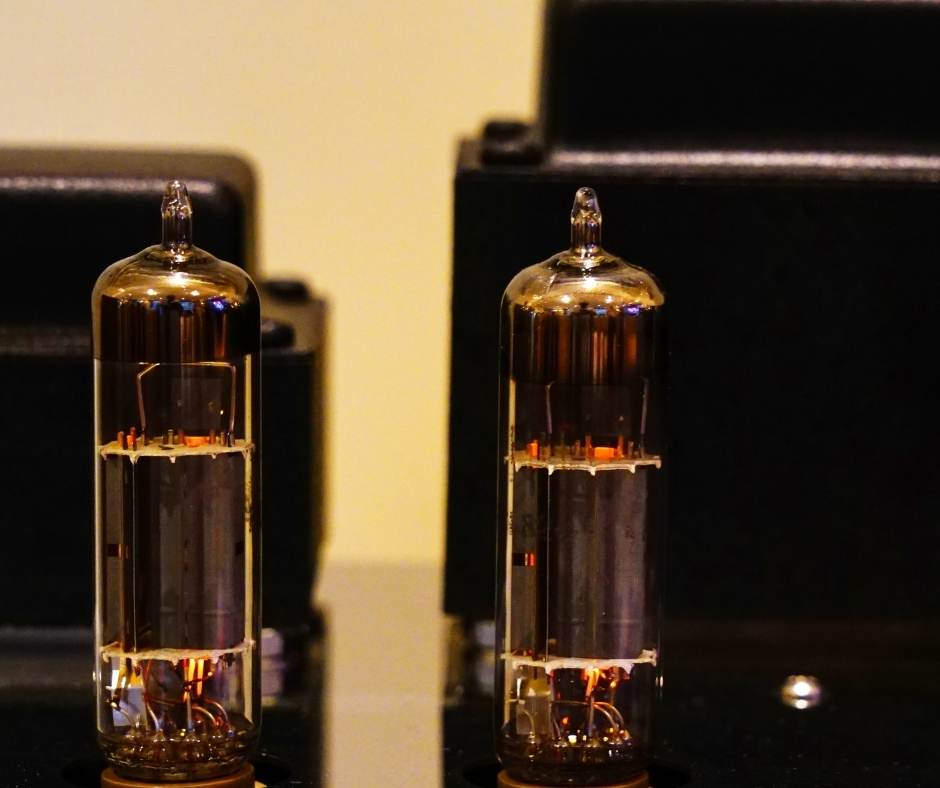
Valve amplifiers pair well with high-sensitivity speakers because tube amplification delivers lower wattage, higher output impedance and softer clipping behaviour that aligns closely with the electrical demands of efficient loudspeakers. These characteristics are fundamental to how valve amplifiers operate, as explained in our guide to what a valve amplifier is, and they allow sensitive speakers to convert modest power into expressive, dynamic sound without strain.This synergy allows valve amplifiers to operate within their optimal power range while enabling the speakers to reproduce music with greater ease, tonal richness and dynamic openness.
In simple terms, high-sensitivity speakers need very little power to play loudly, which allows valve amplifiers to deliver rich, dynamic sound without being pushed beyond their comfort zone.
The Role of Speaker Sensitivity
Speaker sensitivity measures how loud a speaker becomes from one watt of input at one metre. High-sensitivity speakers—typically 90 dB or higher—produce strong output with very little power, making them ideal partners for lower-wattage amplification such as valve or SET (single-ended triode) designs.
Why Sensitivity Matters for Valve Amps
- Valve amps often produce 3–30 watts rather than 100+ watts
- High-sensitivity speakers need less current to reach normal listening volumes
- Tube clipping is softer, making even modest power levels sound natural
- SET amplifiers demand very high efficiency for optimal performance
When paired correctly, the amplifier operates effortlessly, avoiding strain and delivering superior musicality.
Output Impedance and Damping Factor
Valve amplifiers typically have higher output impedance and lower damping factor compared with solid-state amplifiers. These characteristics influence how the amp controls the speaker’s drivers, particularly in the bass region.
How This Affects Pairing
- High-sensitivity speakers often use lighter, more responsive drivers
- These drivers require less electrical damping to remain controlled
- Higher output impedance adds warmth and fullness that complements efficient designs
The result is a natural, flowing presentation that plays to the strengths of both amplifier and loudspeaker.
Valve amplifiers typically exhibit higher output impedance and lower damping factor than transistor designs, shaping how they control loudspeaker drivers—particularly in the bass region. These electrical differences form a key part of the broader comparison between tube and transistor amplification, outlined in our guide to valve vs solid-state amplification, which explains how impedance, damping and control differ between the two approaches.
Tube Amplifier Wattage and Real-World Loudness
Although tube amplifiers produce fewer watts on paper, their soft-clipping behaviour means they can achieve subjectively louder output with less distortion than expected.
Why Tube Watts Feel “Bigger”
- Soft clipping creates a gradual saturation curve
- Even-order harmonics enhance perceived loudness
- Dynamic compression smooths peaks without sounding harsh
High-sensitivity speakers leverage these strengths, delivering room-filling sound without requiring large amounts of headroom.
SET Amplifiers and High-Efficiency Speaker Design
Single-ended triode amplifiers produce extremely low wattage—often between 2 and 8 watts—but provide unmatched midrange realism and holographic imaging. To perform effectively, SET amplifiers need speakers with very high sensitivity and benign impedance curves.
Why SET and High-Sensitivity Speakers Are a Classic Match
- No negative feedback means impedance swings affect sound
- High-sensitivity drivers minimise power demands
- Smooth impedance curves prevent amplifier strain
- Horn-loaded speakers offer ideal efficiency for SET designs
This pairing creates a vivid, highly intimate listening experience valued by purist audiophiles.
Impedance Curves and Stability
Many high-efficiency speakers have stable, high impedance curves that tube amplifiers can drive confidently. In contrast, low-sensitivity speakers often have deep impedance dips that demand high-current solid-state amplification.
Tube-Friendly Speaker Characteristics
- 8–16 ohm nominal impedance
- Minimal dips below 6 ohms
- Wide-band drivers requiring minimal crossover complexity
- Cabinets designed for efficiency rather than brute force
These characteristics ensure the tube amplifier operates without stress, preserving tonal purity.
Why the Combination Sounds So Good
Valve amplifiers and high-sensitivity speakers complement each other in several important sonic areas.
Key Benefits
- Greater immediacy and responsiveness
- More natural tonal balance with enhanced midrange richness
- Improved microdynamics and expressive nuance
- Effortless volume even with low-power amp designs
- Less distortion at normal listening levels
Together, they create the signature "tube magic" many listeners search for.
Speakers Often Paired with Valve Amplifiers
Common design trends found in tube-friendly speakers include:
- Horn-loaded tweeters and midrange drivers
- Full-range drivers requiring no crossover
- Wide-baffle enclosures that enhance efficiency
- Light cone materials that respond quickly to low power
These designs ensure maximum responsiveness from the low wattage of valve amplification.
Looking to upgrade your system now? Explore our full Valve Amplifiers range.
Final Thoughts
Valve amplifiers pair exceptionally well with high-sensitivity speakers because their electrical, dynamic and harmonic characteristics complement each other perfectly. The amplifier operates comfortably within its power limits, while the speakers convert modest wattage into rich, expressive sound. For listeners who prioritise tonal warmth, emotional nuance and effortless musicality, this classic combination remains one of the most rewarding paths in high-end audio.


