Why choose the Rega Planar 6 Turntable
What sets the Rega Planar 6 apart from other turntables in this price bracket?
The Rega Planar 6 is a belt-driven analogue turntable built around engineering carried over from Rega's flagship RP8 and RP10 models. It pairs a foam core plinth with the RB330 tonearm and a dual-layer float glass platter, a combination that places mass and rigidity where they matter for accurate tracking rather than spreading material across a conventional, heavier chassis. Rega designed the Planar 6 to push performance beyond what its position in the range would suggest, using the same lightweight-construction principles found in its higher turntables rather than scaling down a simpler design. Buyers comparing compact, high-fidelity turntables at this level are choosing between mass-loaded designs and Rega's low-mass approach; the Planar 6 represents the point in Rega's line-up where the brand's lightweight philosophy is paired with a hand-assembled tonearm and a dedicated outboard power supply, rather than the simpler fixed-speed motor systems used on entry-level Planar models.
Which tonearm and cartridge options does the Planar 6 support?
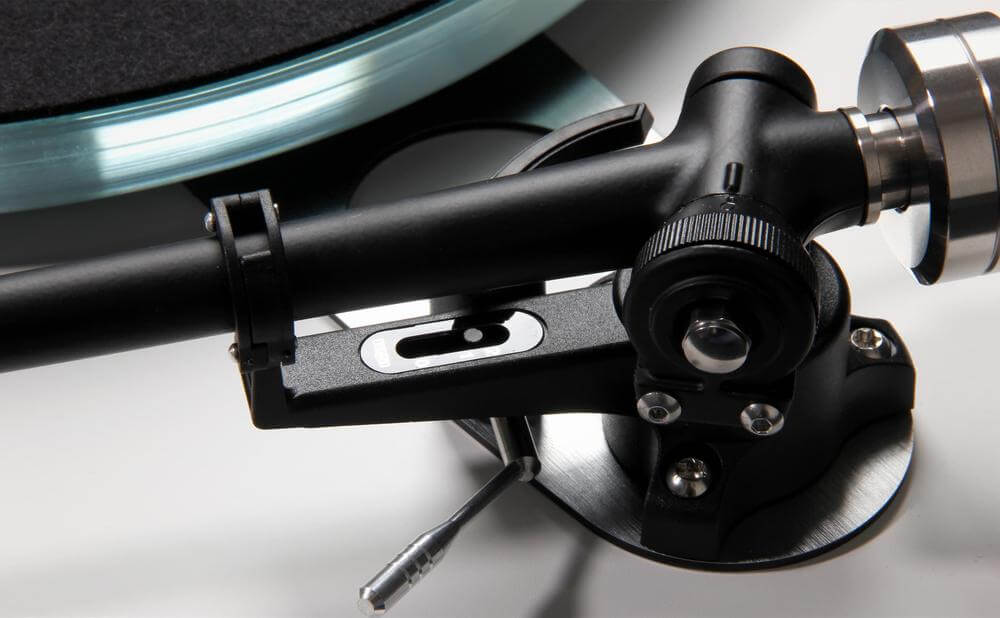
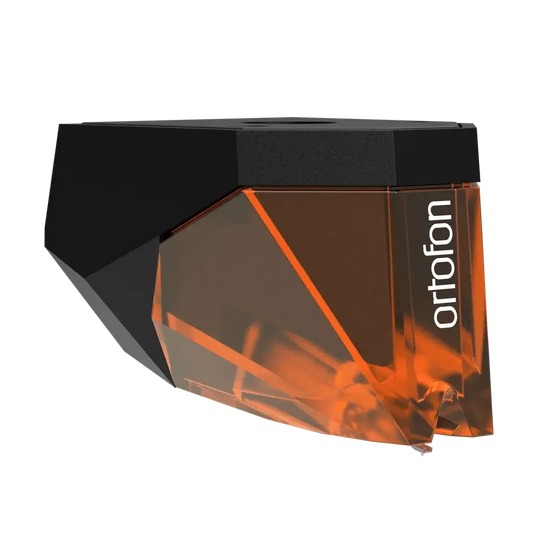
The Planar 6 turntable is fitted with the RB330 tonearm, a hand-assembled arm developed using 3D CAD and CAM design tools and built on more than 35 years of Rega tonearm development. Its bearing housing and tonearm tube use redistributed mass to reduce resonance points along the arm, and the high-precision bearing assemblies are designed to move with very low friction, which keeps the stylus following the record groove with minimal mechanical interference. The arm ships with a stainless balance weight for setting tracking force. Buyers can specify the Planar 6 with a factory-fitted Nd5 or Nd7 moving magnet cartridge, or the Ania Pro moving coil cartridge, allowing the turntable to be matched to a phono stage that supports MM or MC inputs without a separate cartridge purchase or alignment job. Output is via standard RCA phono connections, so the Planar 6 connects directly to any amplifier or separate phono stage with matching inputs.
How does the Neo power supply handle setup and speed changes?
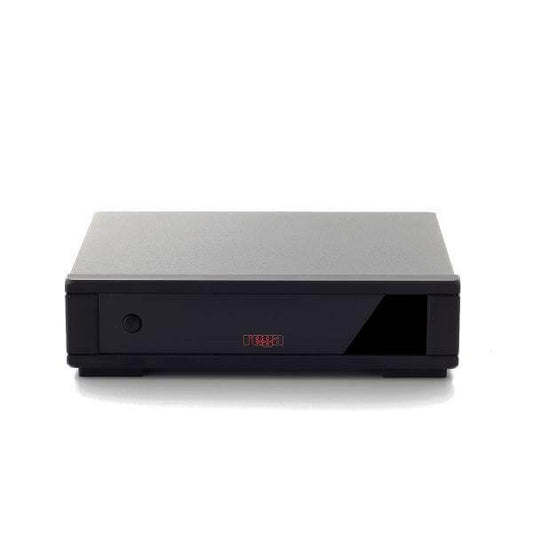
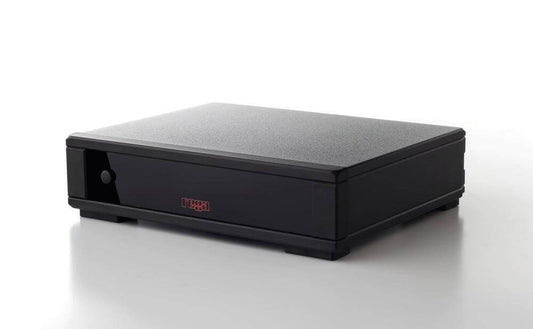
The Planar 6 is supplied with Rega's Neo turntable power supply, an outboard unit connected via a mini DIN cable that handles speed selection electronically rather than through a manual belt-switching pulley. The Neo PSU provides 33⅓ and 45 rpm switching at the touch of a control, along with electronic fine speed adjustment for correcting drift over time, and anti-vibration control that isolates the motor's electrical noise from the platter and tonearm. Because the 24V low-noise synchronous motor is hand-matched to its own individual Neo PSU at the factory, the turntable arrives pre-paired and does not require the owner to calibrate motor and supply separately during setup. The current Planar 6 ships with the Neo MK2 power supply as standard. Owners who want to verify and fine-tune speed accuracy after setup can use Rega's Strobe Kit, a battery-powered accessory designed specifically to work with the Neo PSU's speed adjustment.
What footprint does the Planar 6 need, and how is it sited?
The Rega Planar 6 measures 447 x 120 x 360 mm with the lid closed, and the separate Neo PSU measures 180 x 50 x 155 mm, so buyers need to allow bench or shelf space for both the turntable and its outboard supply rather than a single unit. This two-piece layout is a direct consequence of moving the speed-control electronics off the plinth and into the Neo PSU, which keeps electrical noise away from the low-mass chassis. For wall-mounted installations, Rega's Wall Bracket is designed to fit the Planar 1, Planar 2, Planar 3 and Planar 6, isolating the turntable from shelf-borne vibration in rooms where a rigid equipment rack isn't available.
Who is the Rega Planar 6 turntable designed for?
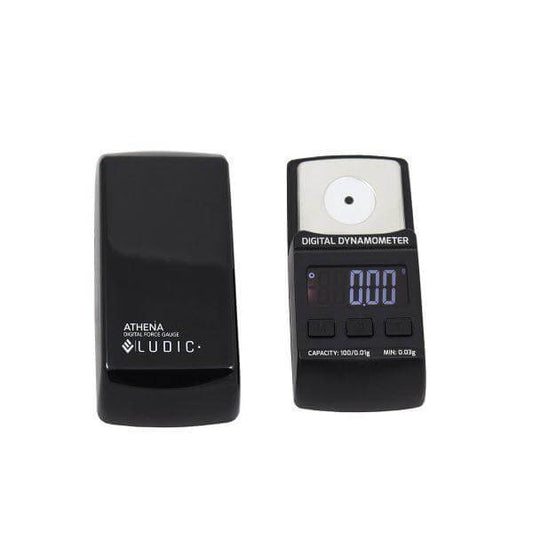
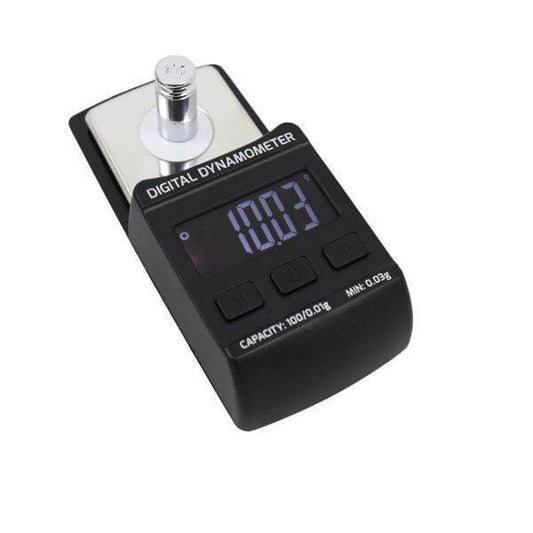
The Rega Planar 6 suits a buyer who already owns, or is building, a system with a defined phono stage and amplifier and wants a turntable that can be specified with either a moving magnet or moving coil cartridge from the outset. Because the tonearm, motor and PSU are matched and supplied as a set, it suits owners who want a turntable ready to use without sourcing and fitting separate components, while still leaving cartridge choice open between the Nd5, Nd7 and Ania Pro options. The Tracking range of Rega's Atlas tool, 0.5g to 10g, is intended for owners setting up or maintaining tracking force on arms such as the RB330 themselves, which fits a buyer comfortable with periodic manual adjustment rather than one seeking a fully sealed, no-maintenance deck.
How does the foam core plinth and double brace technology reduce vibration?
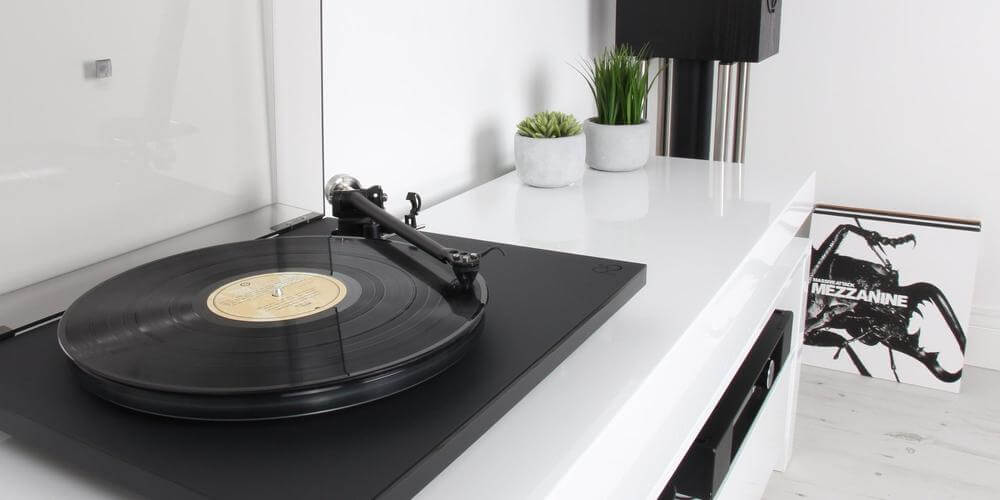
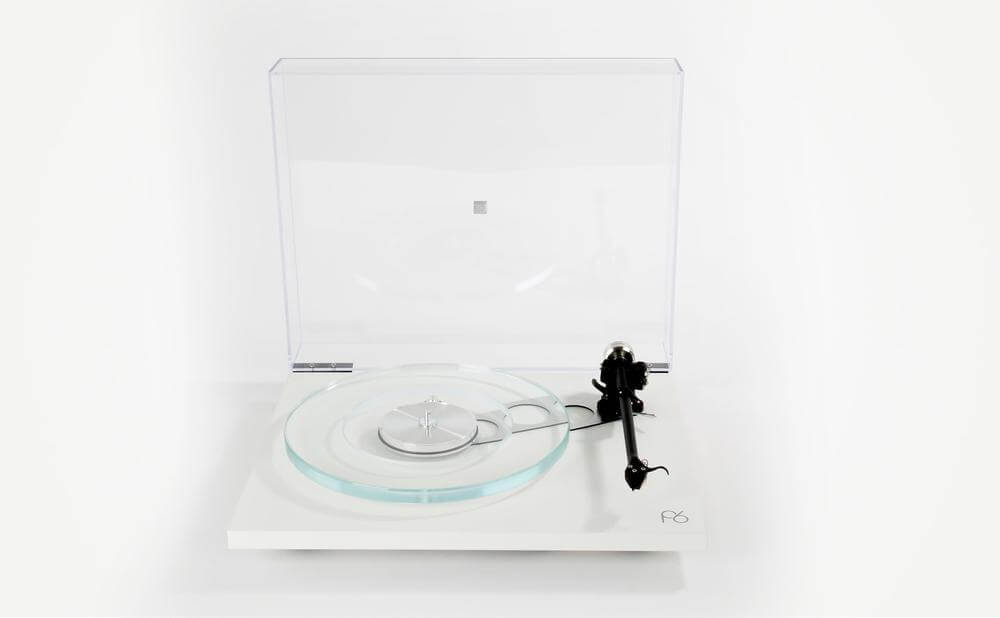
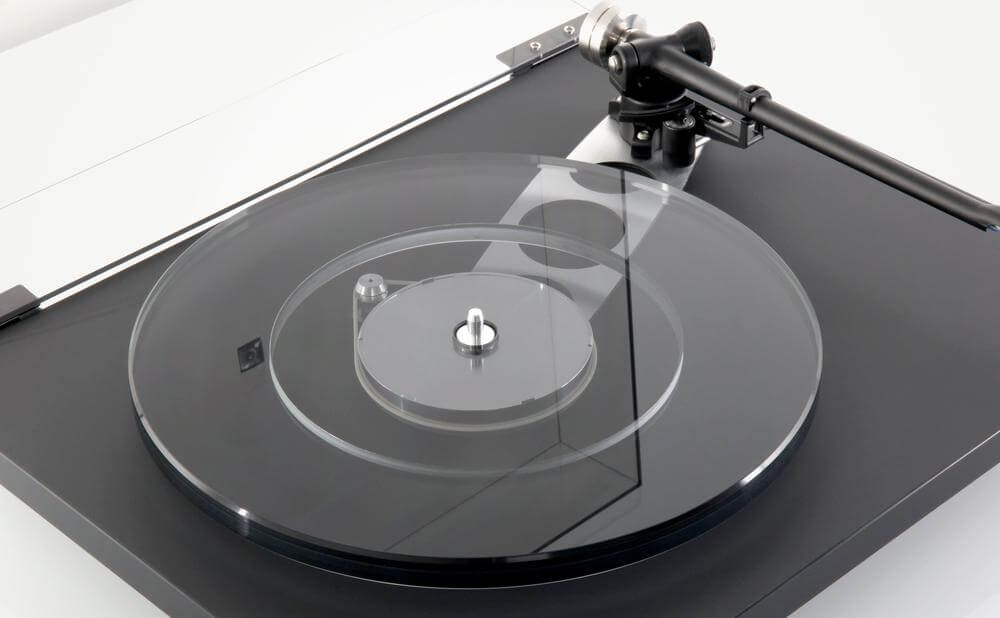
The Planar 6 was the first new Rega turntable built with a Tancast 8 polyurethane foam core plinth, a material originally developed for the aerospace industry. This foam core sits between layers of Polaris HPL, a high-pressure laminate that is thin but highly rigid, finished in matt grey with a high-gloss black polymer edge trim, or in matt white with a clear dustcover and clear platter on the white finish. Reducing plinth mass while keeping it rigid lowers the energy available to resonate and colour the signal picked up by the cartridge. Rega's double brace technology reinforces this further with integral, custom-matched aluminium pillars under the tonearm and the platter hub, holding the geometric relationship between arm and spindle fixed even though the surrounding plinth is lightweight. A single-piece, machined aluminium sub-platter, driven by a custom pulley and Rega's EBLT reference drive belt fitted as standard, transfers motor speed to the platter with minimal slip or flutter.
What is the platter made from, and why does it use two layers?
The Planar 6 turntable uses a dual-layer float glass platter rather than the single acrylic or particleboard platters found on simpler decks. Float glass is dense and self-damping, so it absorbs vibration reaching it from the record and stylus rather than reflecting it back into the groove. Building the platter in two layers, smoked and clear, adds further damping at the junction between the layers compared with a single sheet of equivalent thickness. The white-finish Planar 6 is supplied with a clear dual-layer float glass platter and a clear dustcover to match its lighter cabinet, while the Polaris grey finish pairs its platter with the standard dustcover.
How does the Planar 6 compare with other turntables when planning an upgrade path?
Within Rega's range, the Planar 6 sits above the Planar 3 and below the Planar 8, and it is the entry point into the foam-core-plinth, outboard-PSU construction that Rega also uses on the RP8, RP10-derived Planar 8 and Planar 10. A buyer currently using a Planar 3 or a Planar 2 who wants the option of a moving coil cartridge such as the Ania Pro, or who wants electronic speed switching and fine adjustment via the Neo PSU rather than a manual belt-and-pulley speed change, is the typical candidate for stepping up to the Planar 6. Conversely, a buyer who already owns or is planning to buy the Planar 8 or Planar 10 doesn't gain anything from the Planar 6, since those models use a further lightened plinth structure and different tonearm specification above the RB330. Anyone planning to use accessories such as the Wall Bracket, Atlas tracking force gauge or Strobe Kit can carry them across from a Planar 3 or up to a Planar 6, since these accessories are designed to fit multiple models in the range rather than being specific to one turntable.