Rega Planar 6 Turntable with Ania Pro Cartridge: A Reference-Level Step Up From Rega's Entry Range
Who should choose the Rega Planar 6 Turntable with Ania Pro Cartridge?
The Rega Planar 6 Turntable with Ania Pro Cartridge is built for a buyer who has outgrown an entry-level deck and wants a moving coil front end without moving into Rega's flagship Planar 8 or RP10 territory. Rega supplies the Ania Pro factory-fitted and aligned on the Planar 6, so the cartridge arrives matched to the RB330 tonearm rather than sold as a separate component to fit and set up independently. This combination suits a listener who wants to build a long-term analogue system around a single, coherent turntable and cartridge pairing, rather than someone planning to swap cartridges frequently or experiment across multiple tonearms.
What does the Ania Pro cartridge bring to the Rega Planar 6?
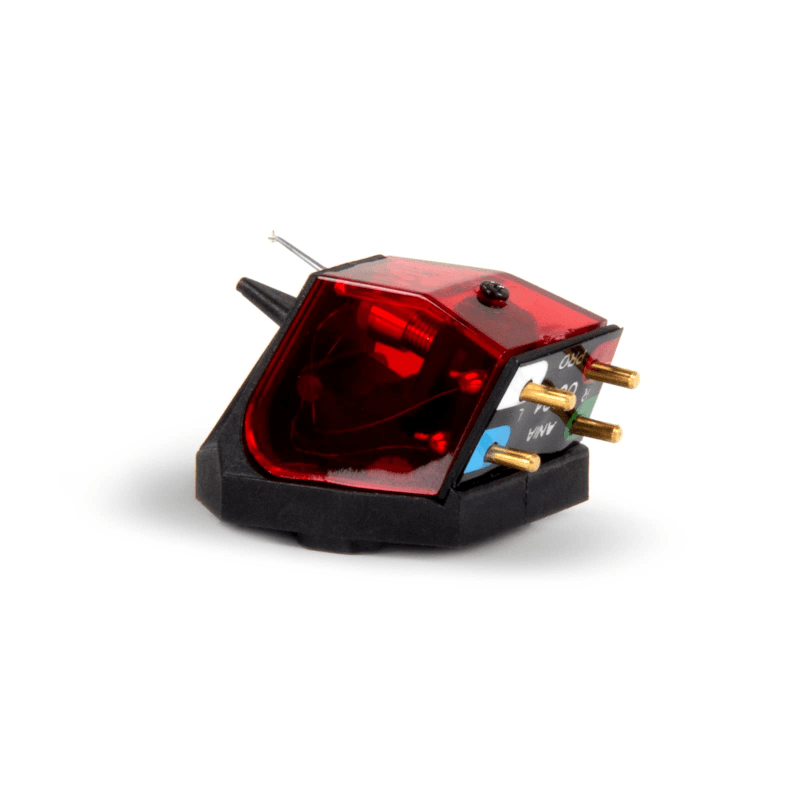
The Ania Pro is a moving coil cartridge that replaces the moving magnet designs Rega offers lower in its range, and that distinction matters because moving coil and moving magnet cartridges connect to a phono stage differently. Inside the Ania Pro, a coil is hand wound onto an iron micro cross and driven by a neodymium magnet, an assembly built around Rega's rhomboid pivot rather than the tie-wire cantilever mounting found on many competing cartridges. This design holds the cantilever in place using a synthetic rubber grommet rather than a tie wire, which keeps moving mass low and lets the stylus follow groove modulation with less resistance. The stylus itself uses a Vital line contact profile, a narrower contact patch than a simpler elliptical tip, which increases the surface area of the groove wall it can read and therefore the fine detail it can recover. The cartridge body is moulded from PPS rather than machined metal, and Rega's three-point fixing locates it on the headshell so that overhang is set automatically when paired with a Rega tonearm, removing one of the more error-prone steps in cartridge installation.
Does the Rega Planar 6 need a particular phono stage?
The Rega Planar 6 with Ania Pro needs a phono stage capable of handling a moving coil input rather than a moving magnet-only stage. The Ania Pro has a nominal output voltage of 350 microvolts and an output impedance of 10 ohms, both substantially lower than a typical moving magnet cartridge, so the connected phono stage must offer enough gain to bring that signal up to line level without adding excessive noise. For adjustable moving coil phono stages, Rega specifies a load impedance of 100 ohms and a capacitance of 1000pF, with the gain setting placed in the high or 'on' position when used with a Rega phono stage. A buyer moving from a moving magnet-only amplifier or phono preamp will need to budget for an MC-capable stage, or for a step-up transformer, before the Planar 6 with Ania Pro can be connected to an existing system.
How does the Neo PSU control speed during playback?
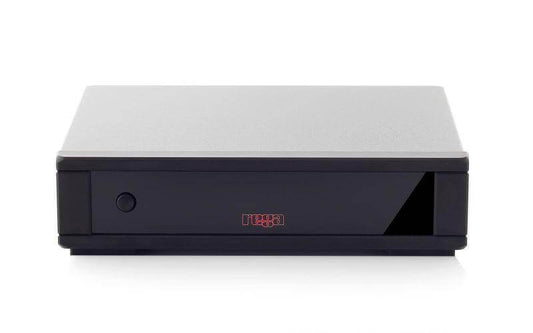
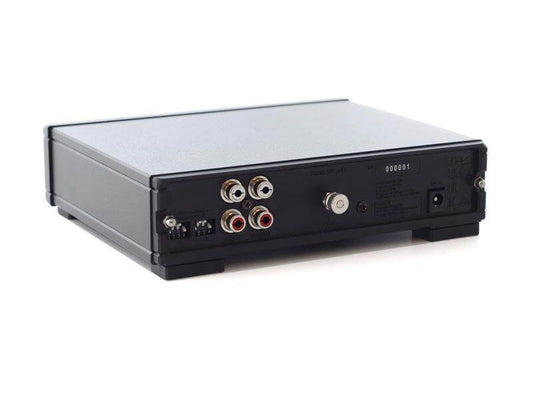
The Neo PSU is the external power supply that ships with the Planar 6 and handles speed switching electronically rather than through a mechanical pulley change. It uses the same DSP generator architecture as Rega's RP10, built on a high-stability crystal, which divides the crystal's signal down to the exact frequency the platter needs to run at the selected speed. That signal then drives an efficient amplifier to produce a 24V AC balanced output with less than 0.15 percent distortion, a signal that stays accurate regardless of fluctuations in mains voltage, and the same unit carries the anti-vibration circuit positioned beneath the turntable. In practical terms, this means a buyer changes speed from 33 ⅓ to 45rpm at the press of a button on the Neo PSU rather than by lifting the platter to move a drive belt, and fine speed adjustment is available electronically if either speed needs calibrating to a specific reference.
What does the RB330 tonearm contribute to tracking accuracy?
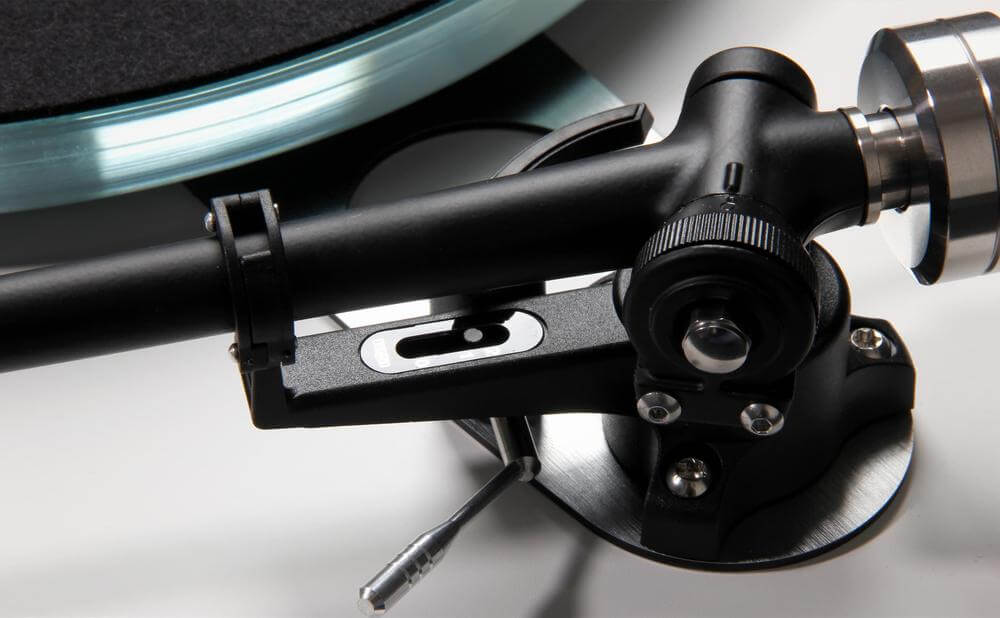
The RB330 is the tonearm Rega fits as standard to the Planar 6, developed using 3D CAD and CAM design tools rather than the manual drafting methods behind earlier Rega arms. It carries a new bearing housing and a tonearm tube engineered with deliberate mass redistribution, reducing the resonance points that can colour playback or reduce tracking stability at the stylus tip. The arm and the hub pillar share Rega's double brace construction, an integral aluminium bracing arrangement that ties the tonearm mounting to the platter bearing for added rigidity. Because the geometry of the RB330 is matched to the three-point fixing on the Ania Pro, the factory-fitted pairing arrives with overhang, azimuth and arm geometry already set to the tolerances the cartridge requires, which removes a setup step a buyer would otherwise need a protractor and a calibrated tracking force gauge to complete.
Why does the Rega Planar 6 use a foam-core plinth?
The Rega Planar 6 uses a plinth built around a Tancast 8 polyurethane foam core, a lightweight material originally developed for aerospace use rather than the denser wood or particleboard plinths found on many turntables in this category. That core is sandwiched between high-pressure laminate skins, a construction that keeps the plinth extremely light while remaining highly rigid, since resonance in a turntable plinth can feed back into the stylus and blur the signal it's tracking. The lighter the plinth, the less energy it stores and re-releases as vibration, so the foam-core sandwich is intended to keep the platform beneath the tonearm and platter as inert as possible without the mass of a conventional solid plinth. The finish, a matt grey laminate with a high-gloss black polymer edge trim, is scratch resistant and non-marking, which matters less for sound than for day-to-day handling during setup or when moving the turntable.
How do the platter and drive system work together?
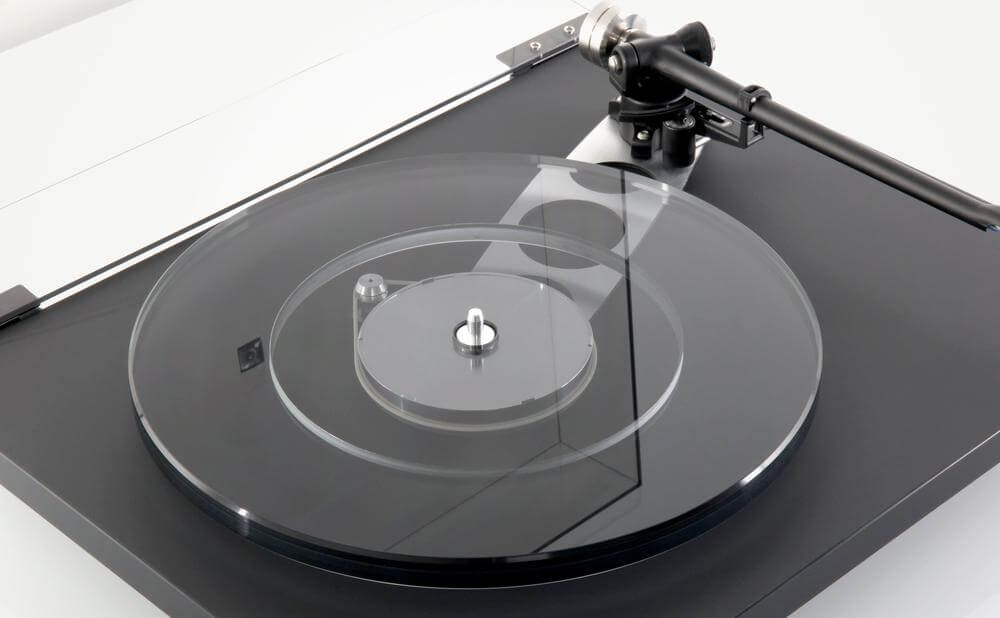
The platter on the Rega Planar 6 is a dual-layer float glass design, paired with a single-piece machined aluminium sub-platter and a custom drive pulley rather than the simpler stamped platters and pulleys found on lower Rega models. A low-friction central brass hub supports the platter assembly, reducing bearing drag that would otherwise translate into speed instability. A custom CNC twin drive pulley working with Rega Reference EBLT drive belts improves drive accuracy and speed control on later production, transmitting the motor's rotation to the sub-platter with less slip than a single belt and pulley arrangement. The 24V motor itself is hand-tuned and matched individually to its own Neo PSU, so the motor and power supply that arrive with a given Planar 6 are calibrated as a pair rather than built to a generic specification, which keeps speed variance and motor noise low enough not to interfere with the Ania Pro's ability to resolve fine groove detail.
Where does the Rega Planar 6 sit against the Planar 3 and Planar 8?
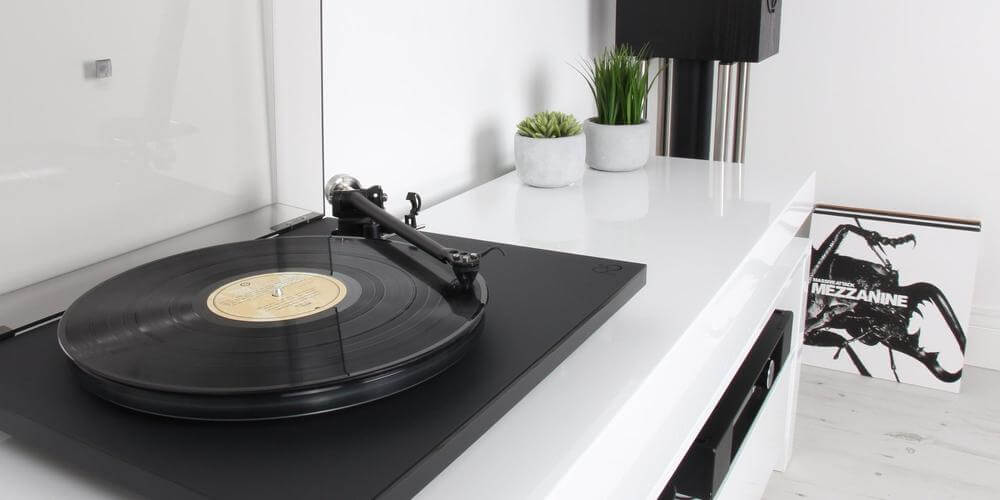
The Rega Planar 6 sits above the Planar 3 and below the Planar 8 in Rega's turntable range, and the practical differences between these tiers centre on plinth construction, drive electronics and cartridge compatibility rather than basic operation. Where the Planar 1, 2 and 3 use glossy plinth finishes, the Planar 6 moves to the foam-core, high-pressure laminate plinth construction described above, and adds the Neo PSU's electronic speed change and fine adjustment, features the Planar 3 doesn't include as standard. The Planar 6 was built on the engineering success of Rega's RP8 and RP10 models, and a buyer who wants the next step beyond the Planar 6's foam-core plinth and twin-pulley drive, including the lighter Planar 8-specification components such as those found in the Planar 6 RS Edition, would need to move up to the Planar 8 itself. For a buyer choosing between the Planar 6 with Ania Pro and the Planar 3, the deciding factor is generally whether a moving coil cartridge and its associated phono stage requirement fit the system being built, since the Planar 3 is typically supplied with a moving magnet cartridge that doesn't carry the same gain and loading requirements.
What's involved in fitting and aligning the Ania Pro cartridge?
Fitting the Ania Pro to the Planar 6 is largely handled before the turntable leaves the factory, since Rega offers the cartridge as a pre-installed option rather than a separate purchase to mount at home. The three-point fixing system locates the cartridge body against the RB330 headshell in a single, repeatable position, which sets overhang automatically rather than requiring the buyer to measure and adjust it with a protractor. The cartridge's PPS body is protected by a CAD-designed rigid cover that shields the internal fine wires during handling, reducing the risk of damaging the suspension or coil leads if the buyer needs to remove the cover to check the stylus or clean the cartridge body after delivery. A buyer who orders the Planar 6 with the Ania Pro factory-fitted therefore skips the cartridge alignment stage entirely, while a buyer adding an Ania Pro to an existing Planar 6 at a later date would still need to set tracking force, within the specified 1.75 to 2 gram range, and confirm azimuth before use.