Rega Planar 6 Turntable with ND7 Cartridge: High-Output Detail Without a Moving Coil Phono Stage
What makes the Nd7 cartridge different from a typical moving magnet design?
The Nd7 is a moving magnet cartridge built around a neodymium N55 magnet, a magnet type more commonly found in moving coil generators than in moving magnet cartridges. Rega spent a decade developing the Nd range specifically to bring the magnet power normally reserved for moving coil designs into a moving magnet topology, and the result is a cartridge that outputs 5 to 6mV, well above what a conventional moving magnet cartridge typically produces. Inside, miniaturised parallel coils are hand wound from 38-micron wire with 1,275 turns, a coil geometry that gives lower inductance and lower impedance than wider, more heavily wound coils, which in turn improves high-frequency response without requiring extra output gain to compensate. The pole gap is optimised for linearity and channel separation, addressing the crosstalk that narrower pole gaps in older Rega moving magnet designs were more prone to.
Why doesn't the Rega Planar 6 with Nd7 need an upgraded phono stage?
The Rega Planar 6 with Nd7 works with any standard moving magnet phono stage, since the cartridge presents a 47kOhm input load impedance, the industry-standard figure most amplifiers and phono preamps are already built around. This matters for a buyer comparing the Nd7 against a moving coil option on the same Planar 6 platform, because moving coil cartridges need dedicated MC gain stages or step-up transformers to bring their lower output up to a usable level, while the Nd7's higher 5 to 6mV output works directly with the MM input already built into most integrated amplifiers and standalone phono stages. A buyer upgrading from an entry-level Rega turntable can therefore move to the Planar 6 with Nd7 without also having to replace or add a phono stage, provided the existing stage already handles moving magnet cartridges.
How is the Rega Planar 6 finished and built?
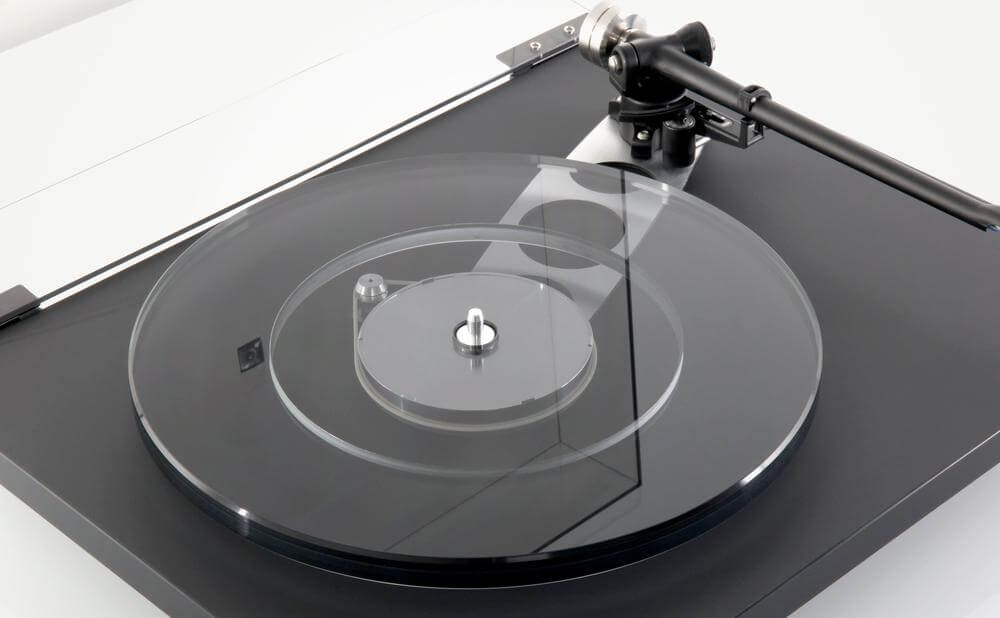
The Rega Planar 6 is built around a plinth core of Tancast 8, a lightweight polyurethane foam originally developed for aerospace applications, sandwiched between high-pressure laminate skins. This construction keeps the plinth light enough to limit the amount of vibrational energy it can store and re-release back into the tonearm and platter, which matters because any resonance reaching the stylus during playback works against the detail the Nd7's improved coil geometry is designed to recover. The Planar 6 is available in a matt white finish with a clear dust cover and clear float glass platter, alongside the standard Polaris grey finish with its high-gloss black polymer edge trim, giving a buyer a colour option without any difference in the underlying plinth construction.
What handles speed accuracy on the Rega Planar 6's Neo PSU?
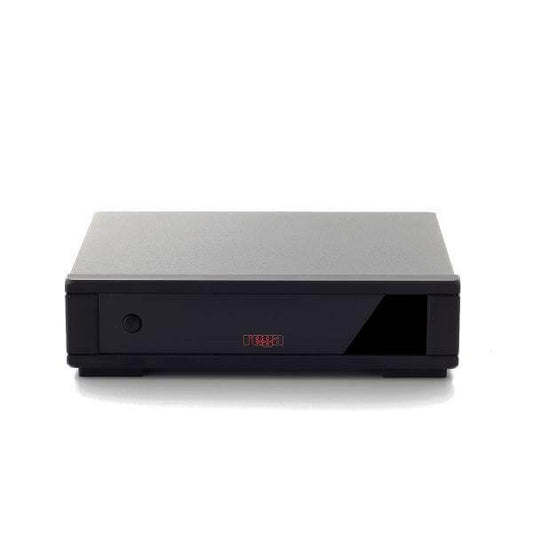
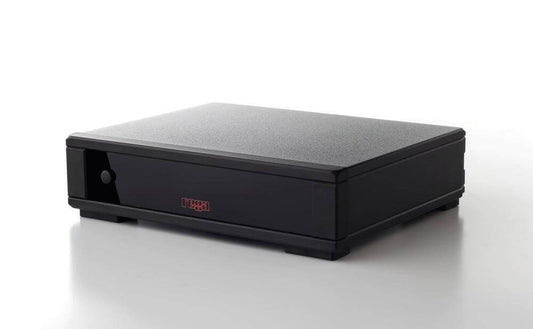
The Neo PSU supplied with the Planar 6 switches speed electronically, removing the need to lift the platter and move a belt by hand between 33⅓ and 45rpm. A DSP generator inside the unit, built on a high-stability crystal, divides the crystal's signal down to the precise frequency the motor needs for the selected speed, then passes that signal through a drive amplifier to produce a 24V AC balanced output with under 0.15 percent distortion. The same power supply houses the anti-vibration control circuit positioned beneath the turntable, and offers fine speed adjustment for a buyer who wants to calibrate either speed against a strobe disc or reference tone.
How does the Rega Planar 6's RB330 tonearm support the Nd7's tracking?
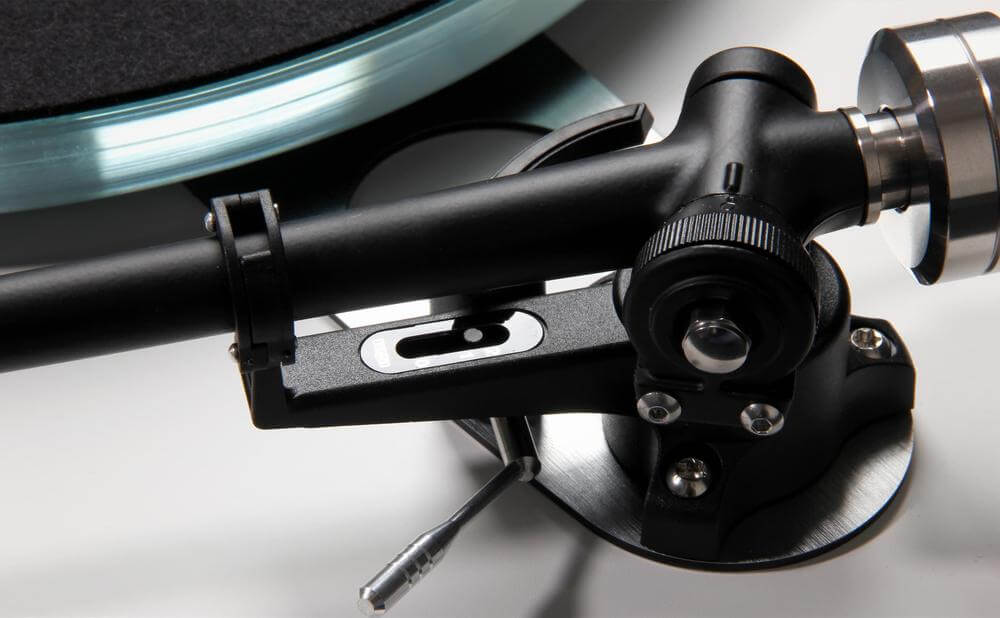
The RB330 tonearm fitted to the Planar 6 was designed using 3D CAD and CAM modelling, with a new bearing housing and a tonearm tube engineered to redistribute mass away from resonance-prone points along its length. Because the Nd7 uses Rega's three-point fixing system, the cartridge locates onto the RB330 headshell in one fixed position, which sets overhang automatically rather than leaving it to be measured and adjusted by hand. The tonearm and platter bearing share Rega's double brace construction, an integrated bracing arrangement between the arm mount and hub pillar that adds rigidity to the area under the most mechanical load during playback, supporting the stable tracking the Nd7's fine line stylus needs to follow tightly cut groove modulation.
What's already set up before the Rega Planar 6 with Nd7 arrives?
Ordering the Planar 6 with the Nd7 factory-fitted means the cartridge arrives mounted, aligned and ready to play rather than supplied separately for the buyer to fit. Rega's three-point fixing removes the overhang measurement step, and because the Nd7's tracking force is specified at 1.75g, a buyer only needs to confirm that figure on a stylus gauge before use rather than work out a starting point from scratch. The cartridge body is an injection-moulded, glass-filled PPS shell, a lightweight and rigid material that keeps stress on the tonearm bearings low and supports the free movement the cartridge needs to follow groove modulation accurately, and it arrives ready to connect through the standard RCA phono output and Neo PSU mini-DIN power connection.
How do the platter, sub-platter and drive belt work together on the Rega Planar 6?
A dual-layer float glass platter sits above a single-piece machined aluminium sub-platter on the Planar 6, supported by a low-friction central brass hub that reduces bearing drag during rotation. The motor drives this assembly through a custom precision drive pulley and Rega's Reference EBLT drive belt, a belt and pulley combination intended to transmit rotation with less slip than a simpler stamped pulley arrangement. Each 24V motor is hand-tuned and matched to its own individual Neo PSU rather than built to a shared generic specification, so the motor and power supply paired with a given Planar 6 are calibrated together, which keeps speed variance low enough that it doesn't undermine the detail the Nd7 is designed to extract.
Rega Planar 6 with Nd7 compared to the Ania Pro and Nd5 cartridge options
A buyer choosing between the Planar 6's factory-fit cartridge options is mainly deciding between moving magnet and moving coil generator types rather than between different build qualities of turntable, since the plinth, tonearm and Neo PSU stay the same across Nd5, Nd7 and Ania Pro variants. The Nd5 sits below the Nd7 in Rega's moving magnet range and shares its parallel coil and neodymium magnet design, but the Nd7 uses a finer line contact stylus profile, the same profile used on Rega's higher-end Apheta 3 and Aphelion 2 moving coil cartridges, for closer contact with the groove wall. Against the Ania Pro, the Nd7's main practical advantage is system simplicity, since it avoids the MC-specific gain and loading requirements an Ania Pro would introduce, making the Nd7 the more straightforward choice for a buyer who wants to keep an existing moving magnet phono stage rather than add or upgrade one.
Can the Nd7 cartridge be serviced or rebuilt over time?
The Nd7 is covered by Rega's lifetime warranty against manufacturing defects, separate from wear items such as the stylus and cantilever that degrade with normal use. When the stylus wears or the cartridge is damaged, Rega's dealer network offers a rebuild service that replaces the cantilever, stylus and pivot pad and tests the rebuilt cartridge to the same standard as a new unit, sold at a reduced price compared with buying a replacement stylus through other manufacturers' service routes. This gives a buyer a defined ownership path for the cartridge once the original stylus eventually wears, rather than requiring a full cartridge replacement at that point.