
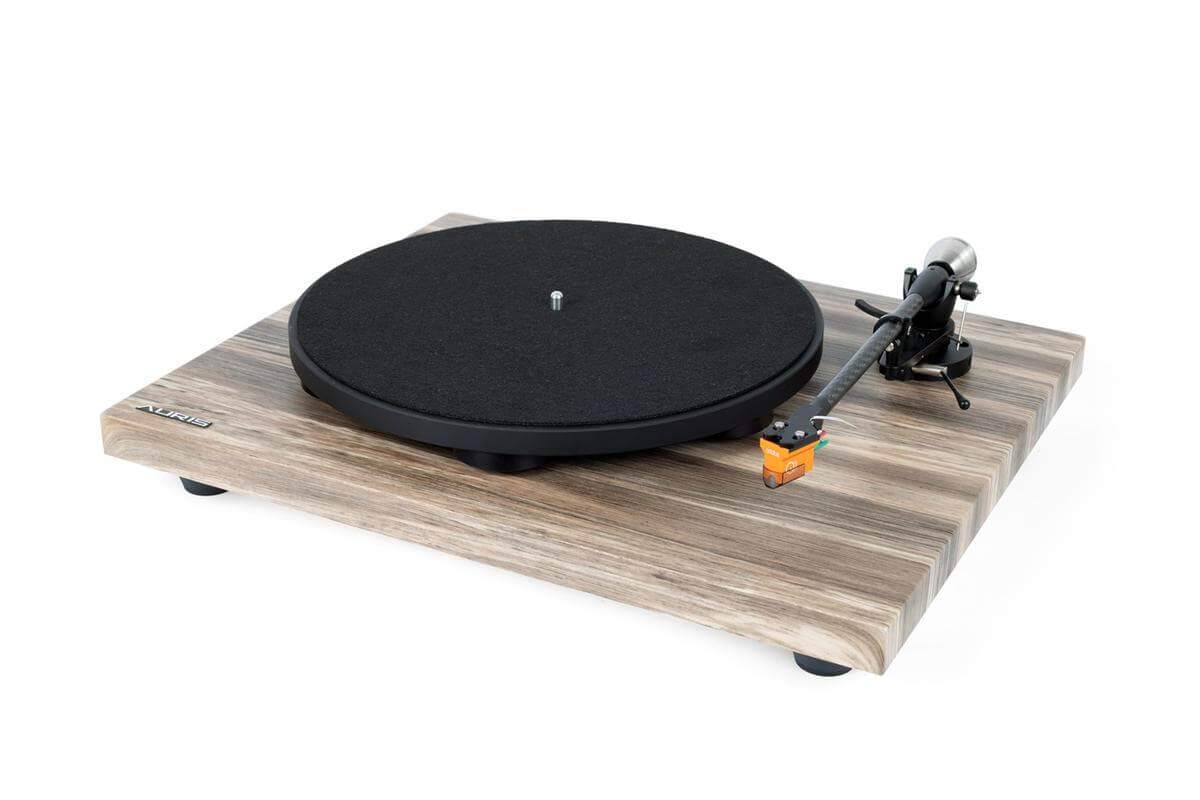
The plinth is the structural foundation of a turntable, designed to support its components while minimising vibration, resonance and mechanical noise that can contaminate the stylus signal. Because vinyl playback is a mechanical process operating at microscopic tolerances, the plinth’s material, mass and construction quality directly influence clarity, dynamics and overall listening realism. Understanding what a turntable is helps explain why the plinth plays such a critical role in analogue performance.
The Plinth’s Primary Role: Stability and Vibration Control
Every element of a turntable relies on a stable base. The motor must rotate smoothly, the platter must spin with consistent inertia and the tonearm must track the groove without contamination from external or internal resonance.
When the plinth is insufficiently rigid or poorly damped, vibration enters the system and becomes audible as:
- blurred bass or reduced impact
- smearing of transients
- increased surface noise
- tonearm chatter or mistracking
- low-frequency acoustic feedback
A well–engineered plinth isolates the stylus from these disturbances, preserving musical detail.
How Plinth Material Affects Sound
Different plinth materials exhibit unique mechanical properties—mass, stiffness, damping and resonance behaviour—all of which shape sonic performance.
MDF and Wood Composites
MDF and engineered wood are widely used because they offer good internal damping and are cost-effective to machine. Their advantage lies in naturally absorbing mid-frequency vibration without ringing.
- Warm, quiet resonance profile
- Good damping, stable structure
- Often used in entry-level and mid-range decks
Solid Wood
Solid timber offers visual appeal but introduces variable density and resonance patterns. Without engineered damping layers, it can produce colouration.
Acrylic
Acrylic is dense, uniform and resonant in a frequency band that complements vinyl playback. It rejects airborne vibration well and often eliminates the need for a platter mat.
- Clean, neutral sound
- Excellent internal damping
- Strong synergy with acrylic platters
Aluminium and Metal Composites
High-end turntables often incorporate aluminium, steel or constrained-layer metal composites for exceptional rigidity.
- Very low flex and high stability
- Precise control over resonance
- Often paired with internal damping materials
Constrained-Layer Damping (CLD) Plinths
CLD combines layers of materials with dissimilar mechanical properties—metal, elastomers, composite woods—to dissipate vibration effectively.
- Superior energy dissipation
- Reduced ringing and micro-vibration
- Sought-after in reference-grade turntables
How Plinth Build Quality Influences Playback
Beyond materials, the execution of the plinth determines performance: machining tolerances, bonding, fastener rigidity and overall mass distribution.
1. Rigidity and Structural Integrity
The plinth must resist flexing. Any movement—even microscopic—affects motor alignment, platter bearing stability and tonearm resonance.
2. Bearing and Motor Mount Precision
High-quality plinths provide perfectly machined recesses or mounting points for:
- platter bearings
- motor housings
- tonearm bases
Misalignment introduces noise, speed instability and tracking distortion.
3. Mass Distribution
Mass is essential for stability but must be applied intelligently. Some performance decks use:
- localized mass blocks beneath the bearing or tonearm
- decoupled motor pods
- multi-layer bases with tuned damping
This minimises vibration pathways while maintaining structural rigidity.
4. Isolation From External Vibration
A premium plinth integrates isolation through feet, damping inserts or floating sub-chassis systems.
- reduces footfall sensitivity
- blocks low-frequency energy from speakers
- protects the stylus from airborne resonance
A well–engineered plinth isolates the stylus from external disturbances. Many of these principles are explored further in our guide on reducing turntable noise .
Why Plinth Material Matches System Scale
The plinth must match the performance level of the rest of the turntable. A revealing cartridge or tonearm exposes weaknesses in low-mass or poorly damped bases.
Entry-Level Decks
MDF or composite plinths offer excellent value and controlled resonance.
Mid-Range Decks
Acrylic or hybrid plinths balance mass, rigidity and damping for cleaner detail.
High-End Turntables
Metal composites, CLD structures and multi-layer designs provide reference-level stability and ultra-low noise floors.
What Happens When Plinth Quality Is Poor?
A weak or resonant plinth leads to audible degradation such as:
- bloated or muddy bass
- harsh or smeared highs
- unstable imaging
- increased rumble and hum
- early stylus wear
- susceptibility to acoustic feedback
Because the stylus amplifies every tiny vibration, a compromised plinth undermines even the best cartridges and tonearms.
Building a vinyl system? Explore our curated range of Turntables.
Final Thoughts
The plinth is more than a cosmetic component—it is the mechanical backbone of the entire turntable system. Its material composition, mass, rigidity and damping determine how effectively the deck resists vibration and supports precise motor and tonearm operation. Choosing a turntable with a well-engineered plinth unlocks deeper clarity, wider soundstage performance and more stable, lifelike musical presentation from your vinyl collection.